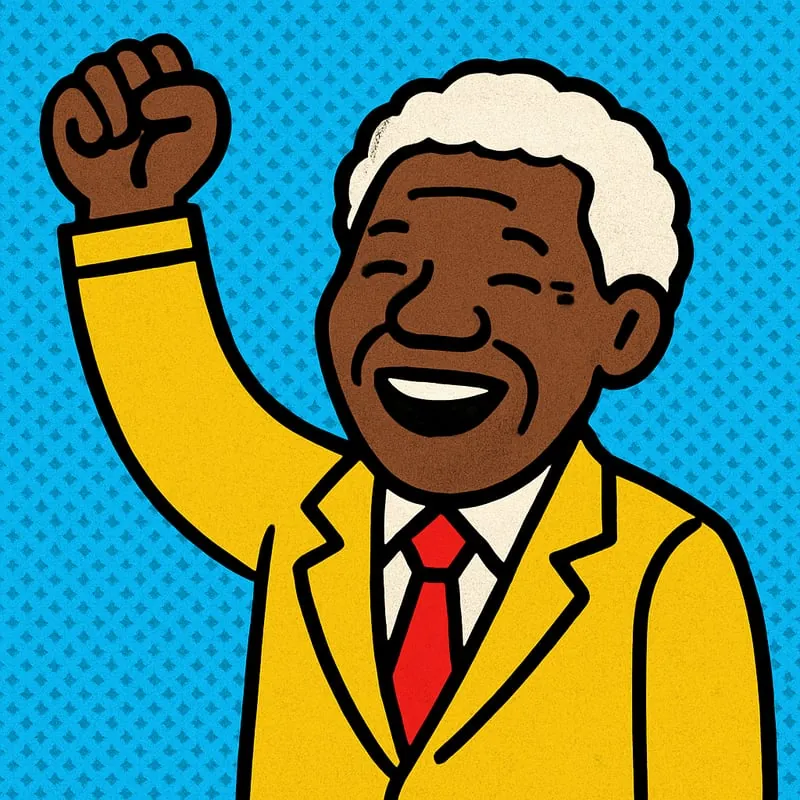
On February 11, 1990, a tall, gray-haired man walked through the gates of Victor Verster Prison in South Africa, holding his wife Winnie's hand and raising a fist to the sky. Crowds roared. TV cameras from every country in the world beamed the moment to billions of people. Nelson Rolihlahla Mandela was 71 years old, and it was the first time he'd taken a free step in 27 years.
Mandela had been locked up for fighting against apartheid, a brutal system of laws that kept Black South Africans separate from white South Africans and gave them almost no rights. He'd spent 18 of those prison years on rocky Robben Island, breaking limestone in a quarry under a blazing sun. Even behind bars, he never gave up. He studied law by candlelight, taught fellow prisoners, and refused offers to be released if it meant giving up the cause.
Four years after his walk to freedom, in 1994, Mandela was elected South Africa's first Black president in the country's very first fully open election. People stood in lines miles long, some for hours, just to cast a ballot for him. Instead of seeking revenge against the people who'd jailed him, Mandela invited them to dinner and worked to heal his country. He won the Nobel Peace Prize, met every world leader who'd listen, and showed the planet that forgiveness can be stronger than anger. One walk through prison gates changed history.