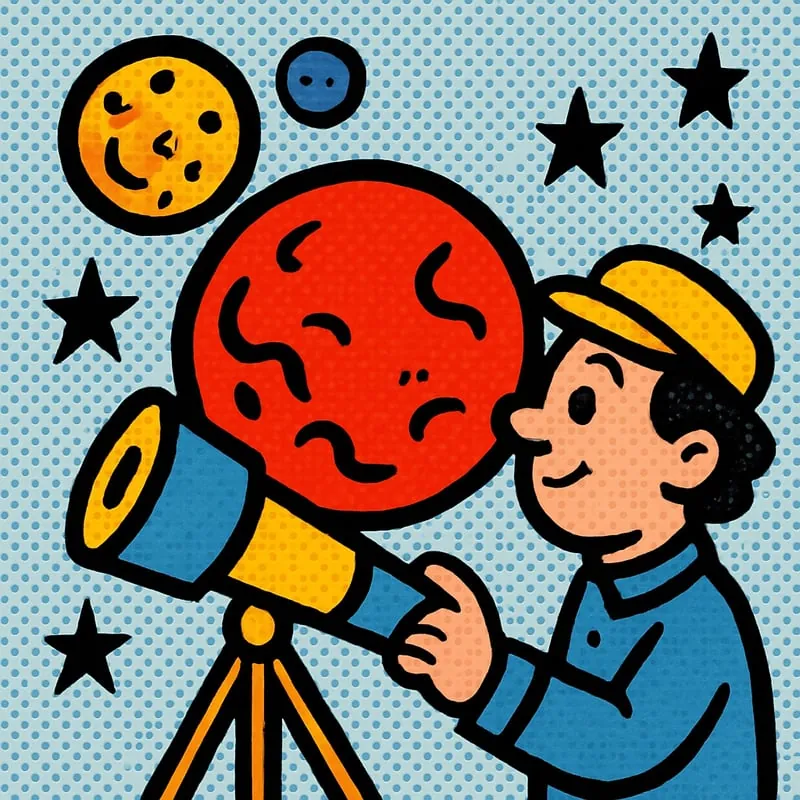
On the warm, clear night of August 11, 1877, an American astronomer named Asaph Hall sat hunched over the massive 26-inch telescope at the U.S. Naval Observatory in Washington, D.C. He'd been hunting for moons around Mars for nights on end and was about to give up. His wife Angeline, called Chloe, told him to go back and try one more time. He listened. Hours later, a tiny pinprick of light flickered next to the red planet. Mars had a moon.
Six nights later he spotted a second one. Hall named them Phobos and Deimos, Greek words for 'fear' and 'panic,' after the two horse-pulling sons of the war god Mars in ancient myths. Phobos turned out to be a lumpy potato of a moon only 14 miles across. Deimos is even smaller, just 7 miles wide. They are by far the tiniest moons in our solar system, so small that for years astronomers had completely missed them in the glare of Mars itself.
More than a century later, those two little potato moons are still fascinating scientists. Phobos orbits Mars so closely and so fast that it actually rises in the west and sets in the east, twice a day, and it's slowly spiraling closer. In about 50 million years it will either crash into Mars or break apart into a ring. Future astronauts may even land on Phobos before they land on Mars itself, all because one tired astronomer's wife told him to give it one more night.