On August 30, 1797, a girl named Mary was born in London to two famous writers. Her mother died just days later, so Mary grew up reading her mother's books in her father's library, dreaming up wild stories of her own. She had no idea that one of those stories would launch a whole new kind of fiction.
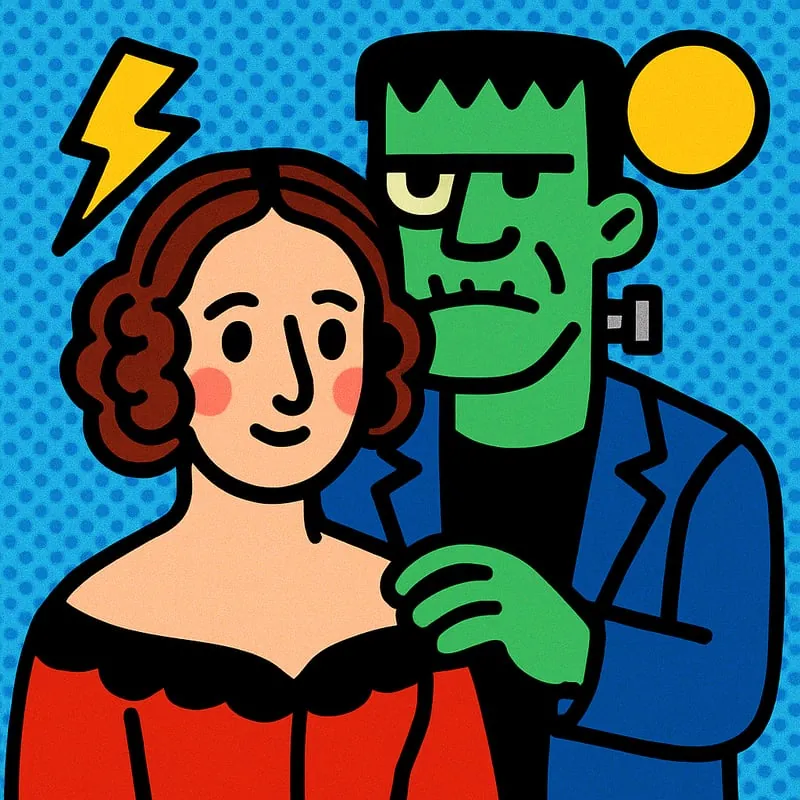
When Mary was 18, she went on a rainy summer holiday at a lake in Switzerland with the poet Percy Shelley and Lord Byron. Stuck inside for days, they challenged each other to write the scariest story they could. Mary had a vivid daydream of a scientist named Victor Frankenstein piecing together a creature from spare parts and shocking it into life. She wrote it down, and in 1818 the novel Frankenstein was published. People couldn't believe a teenager had written such a powerful book, and at first many refused to put her name on it.
Mary Shelley basically invented science fiction. Every time a movie shows a mad scientist in a lab, a robot that learns feelings, or a creature that turns on its creator, it owes something to her. Her story also asked a big question that still matters today: just because we can build something amazing, does that mean we should? More than 200 years later, scientists working on artificial intelligence and gene editing still bring up Frankenstein when they talk about being careful with new powers.