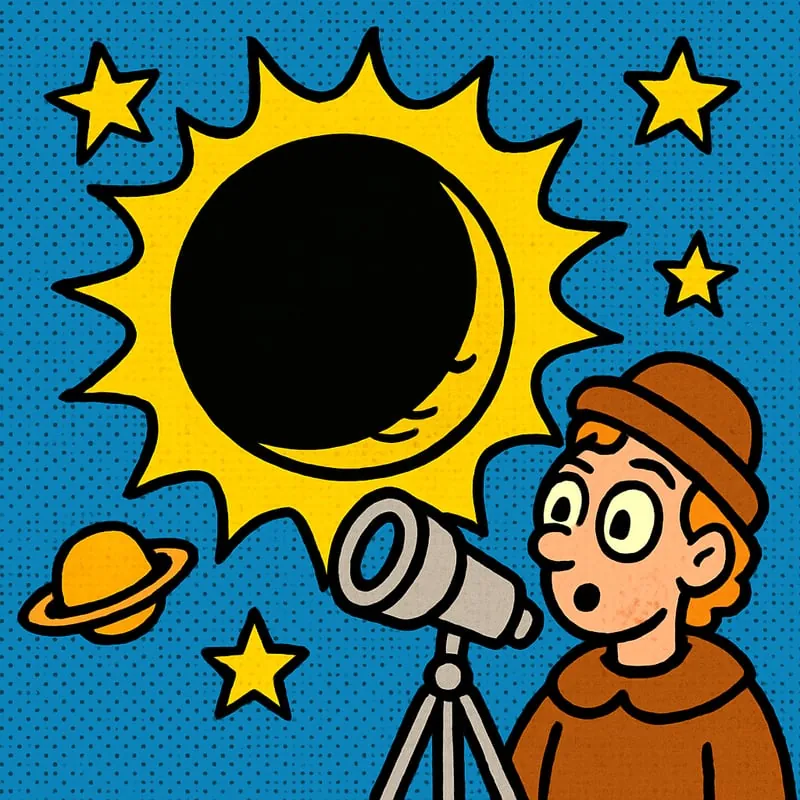
On the morning of April 16, 1178, a group of monks at the Canterbury Cathedral in England looked up just as the sky began to dim in the middle of the day. The sun disappeared behind the moon in a total solar eclipse, and the world went strangely dark for several minutes. Birds went quiet, the air grew cool, and stars popped out overhead. The monks scribbled down detailed notes of what they had seen - including a careful sketch of the sun's blazing corona ringing the moon.
Medieval astronomers didn't have telescopes, but they were sharper sky-watchers than people sometimes give them credit for. Across Europe and Asia, observers were tracking the movements of the sun, moon, and planets. The 1178 eclipse was witnessed by people from England to the Middle East, and many of them recorded what they saw in chronicles and church records. Their notes have helped modern astronomers calculate, very precisely, how Earth's rotation has slowly changed over the centuries.
A different account from that same year - written by a Canterbury monk named Gervase - described what may have been a meteor strike on the moon visible from Earth. Modern scientists are still debating whether what he saw was a real cosmic event. Either way, the medieval monks remind us that humans have been craning their necks at the sky and writing down what they see for as long as we've been around. A dark afternoon in 1178 is now data scientists use 850 years later.