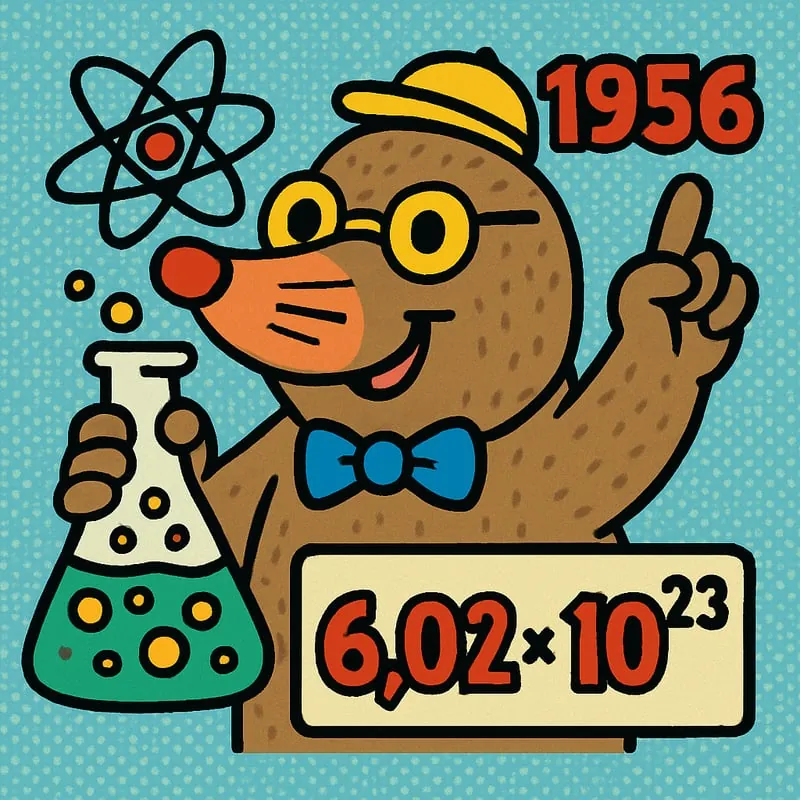
On October 23, chemistry classrooms across the world break out cupcakes, googly-eyed plush moles, and goofy puns. The date 10/23 between 6:02 a.m. and 6:02 p.m. - written 6:02 10/23 - is a tribute to one of the most useful numbers in all of science: Avogadro's number. Written out, it's about 6.02 followed by 23 zeros. That's how many tiny particles make up one 'mole' in chemistry - a kind of bundle, like a 'dozen' but enormously, ridiculously bigger.
The idea behind the mole goes back to Italian scientist Amedeo Avogadro, who in 1811 figured out that equal volumes of different gases at the same temperature and pressure contain the same number of molecules. His insight let chemists count atoms even though atoms are way too small to see. A century later, scientists measured the exact number - and found it was about 602,200,000,000,000,000,000,000. To picture it: if you had that many marbles, they would cover all of Earth in a layer 50 miles deep.
Mole Day itself was invented in 1991 by a high-school chemistry teacher named Maurice Oehler in Wisconsin, who wanted to make the topic fun for students. Kids dress up as moles. Teachers tell mole jokes ('What is Avogadro's favorite sport? Golf, because he loves a hole-in-one'). Cakes are decorated with little mole faces. It's a holiday built around appreciating the strange and beautiful fact that the universe is made of tiny things - and that with one clever number, we can count them all.