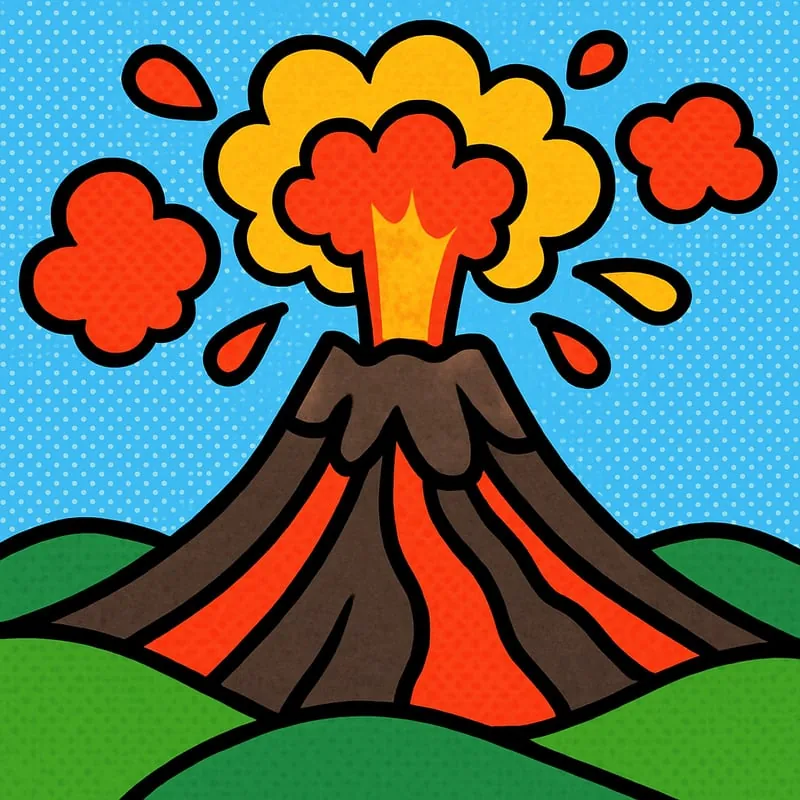
On the morning of May 18, 1980, in southwestern Washington State, a snow-capped mountain called Mount St. Helens did something no one alive had ever seen. At 8:32 a.m., a 5.1 magnitude earthquake shook the volcano. The entire north side of the mountain - billions of tons of rock - slid away in the largest landslide ever recorded. Beneath it, hot pressure that had been building for weeks finally burst out sideways. A blast of superheated gas and rock blew across the landscape at over 300 miles per hour.
The explosion flattened 230 square miles of forest. Trees as tall as houses were snapped like toothpicks and laid down all pointing in the same direction. A towering cloud of ash shot 15 miles into the sky and drifted east, turning day into night in cities hundreds of miles away. Drivers in Spokane needed headlights at noon. The mountain itself lost 1,300 feet of its height in a single morning. A volcanologist named David Johnston, watching from a ridge, radioed in one of the most famous lines in science history: Vancouver! Vancouver! This is it! Sadly, he and 56 others didn't survive.
The area looked like the moon afterward - gray, lifeless, buried under inches of ash. But scientists watched something amazing happen. Fireweed, wildflowers, and tiny pocket gophers came back faster than anyone expected. Frogs reappeared in the new lakes. Today the blast zone is a living laboratory where biologists study how nature recovers. Mount St. Helens is still an active volcano, and it gently steamed and grumbled again in 2004. The mountain is a reminder that the Earth is alive - sometimes quietly, sometimes with a roar.