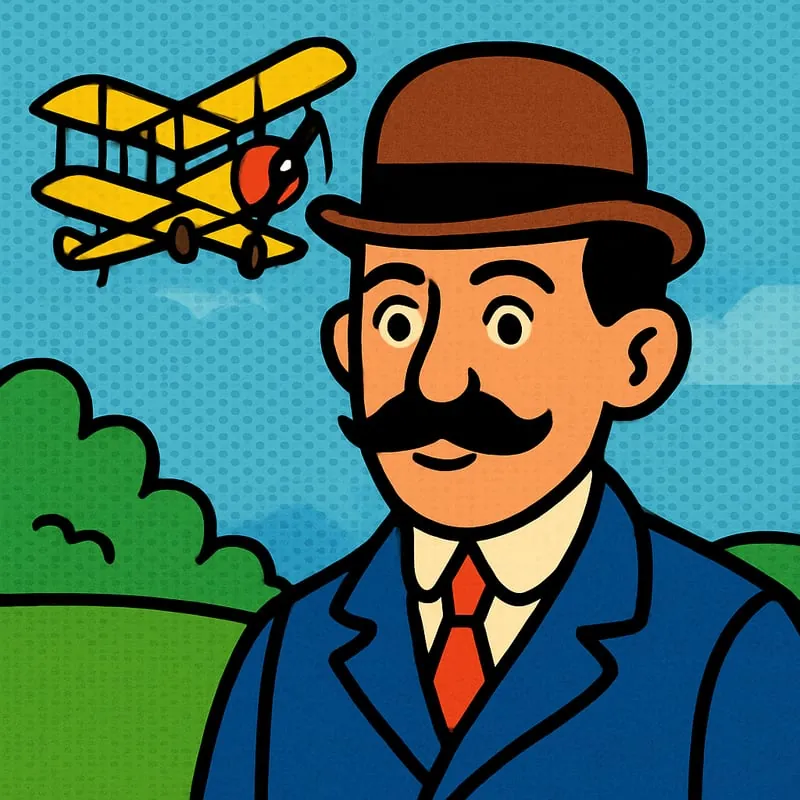
On August 19, 1871, in Dayton, Ohio, a baby named Orville Wright was born into a houseful of curious siblings. The Wright family loved tinkering. Orville and his older brother Wilbur built kites, model helicopters, and printing presses in their backyard. Their father once brought them home a toy that flew on twisted rubber bands, and the boys were hooked. Flying machines became their obsession.
The brothers opened a bicycle repair shop to pay the bills, then started designing gliders in their spare time. They studied birds for hours, read every book on flight they could find, and even built their own wind tunnel out of a wooden box. They picked Kitty Hawk, North Carolina, for testing, because of its strong steady winds and soft sandy beaches. After four years of failed gliders and broken parts, on a chilly December morning in 1903, Orville lay flat on the lower wing of their machine and the engine roared. The plane lifted into the air for 12 seconds, the first powered, controlled human flight in history.
Orville lived all the way until 1948, long enough to see his invention turn into airliners, fighter jets, and rockets. He even saw planes break the sound barrier. Today the Wright Flyer hangs in the Smithsonian's Air and Space Museum in Washington, D.C., looking small and fragile beside the giant jets it inspired. Every single airplane in the world, every helicopter, every drone, every spacecraft traces its family tree back to two bicycle-shop brothers from Ohio.