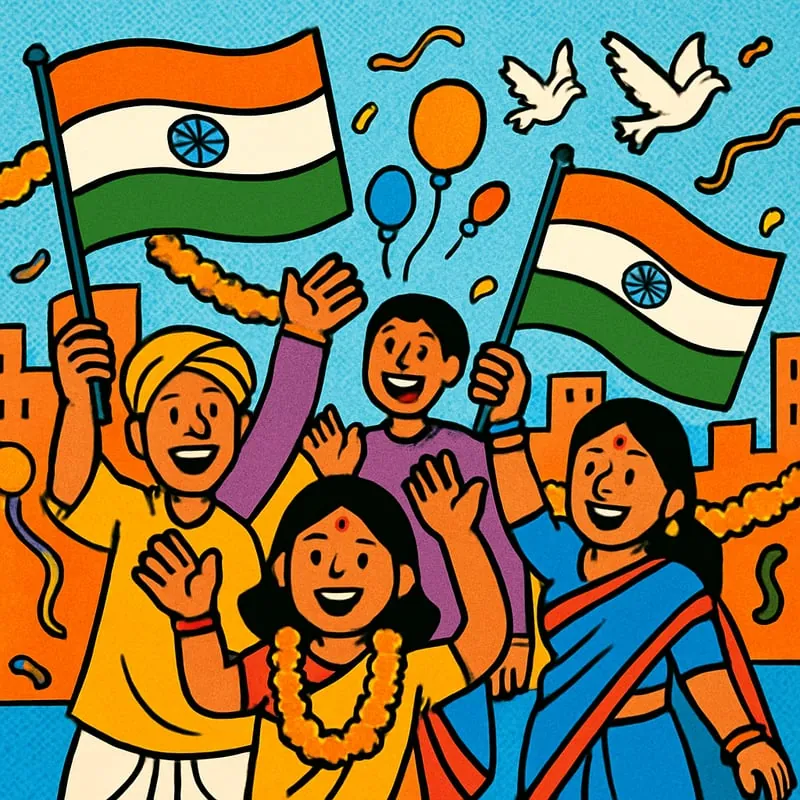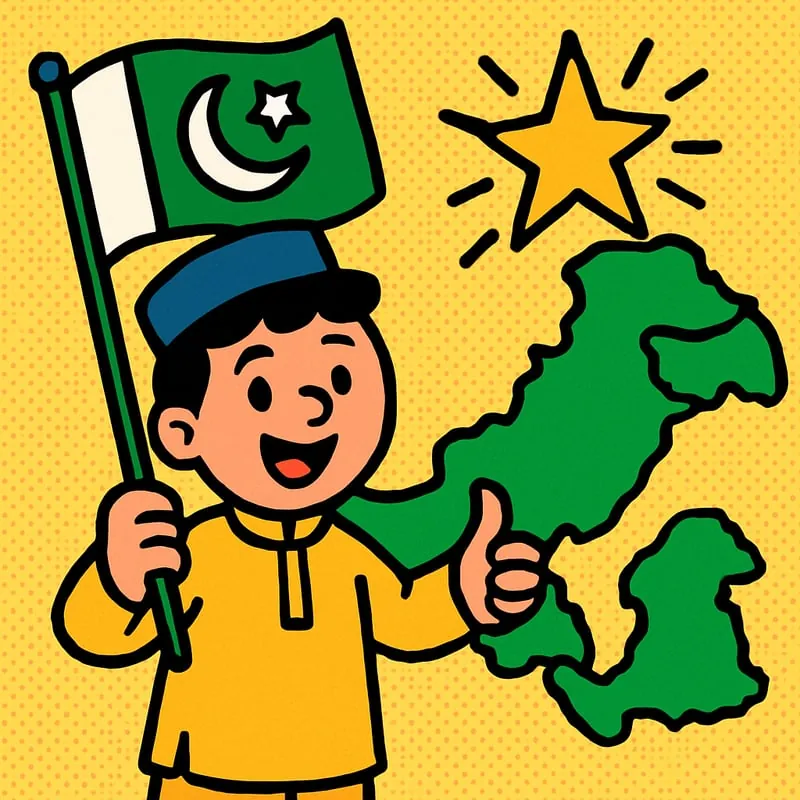
Late on the night of August 14, 1947, in the city of Karachi, a brand-new country woke up to its first morning. After almost 200 years of British rule, South Asia was being split into two independent nations. Pakistan, a homeland for the region's Muslim majority, came first by just a few hours, with India following at midnight. Crowds packed the streets waving green-and-white flags, and Muhammad Ali Jinnah, the lawyer who had led the fight for Pakistan, was sworn in as its first leader.
The birth was joyful and painful at the same time. Millions of people had to move across the new borders, Muslims heading toward Pakistan and Hindus and Sikhs toward India, in one of the largest human migrations ever. Whole families packed everything they owned onto trains and ox carts. Jinnah and his sister Fatima worked around the clock to set up a government from scratch, in offices that didn't even have enough chairs.
Today Pakistan is home to over 240 million people, the fifth most populous country in the world. It stretches from the icy mountains of K2, the second-highest peak on Earth, down to the warm coast of the Arabian Sea. Pakistanis celebrate August 14 every year with green-and-white flags hanging from every balcony, fireworks over Islamabad, and crowds singing the national anthem. The country has had a bumpy history, but the dream that started on that long-ago summer night, of building a new homeland together, is still alive.