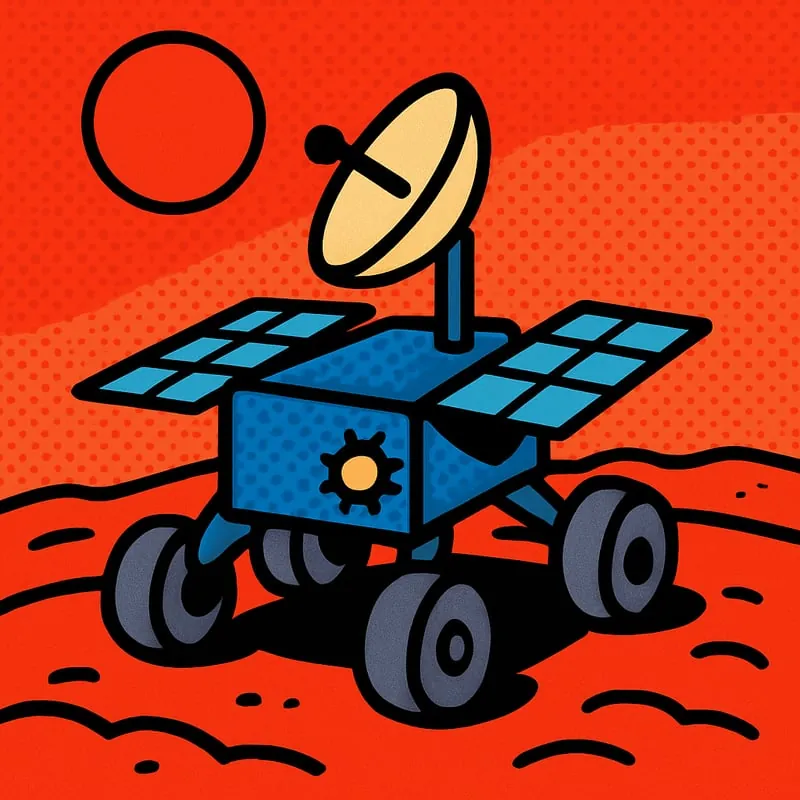
On July 4, 1997, while Americans below were busy lighting fireworks, something even more spectacular was happening 119 million miles away. NASA's Mars Pathfinder spacecraft came screaming toward the red planet at 16,600 miles per hour, then deployed a parachute, fired retro-rockets, and bounced down inside giant airbags - bing-bong-bing - across the rocky Martian surface. It rolled to a stop in an ancient flood plain called Ares Vallis, completely intact.
Once the airbags deflated, the lander unfolded like a metal flower and rolled out its precious cargo: a microwave-oven-sized rover named Sojourner, named after civil rights hero Sojourner Truth. Weighing just 23 pounds, Sojourner became the first wheeled vehicle to ever drive on another planet. She trundled around at a top speed of about half an inch per second, sniffing rocks with her spectrometer and giving them silly nicknames like Yogi, Barnacle Bill, and Scooby Doo. Scientists discovered that those rocks looked a lot like Earth rocks, suggesting Mars once had liquid water flowing across its surface.
Pathfinder was supposed to last 30 days but kept going for nearly three months and beamed back 2.3 billion bits of data and over 16,500 photos. Millions of people followed along on this new thing called the World Wide Web, crashing NASA's servers with curiosity. The mission proved you could land on Mars cheaply and reliably, paving the way for every Mars rover since - Spirit, Opportunity, Curiosity, and Perseverance. One bouncy landing changed space exploration forever.