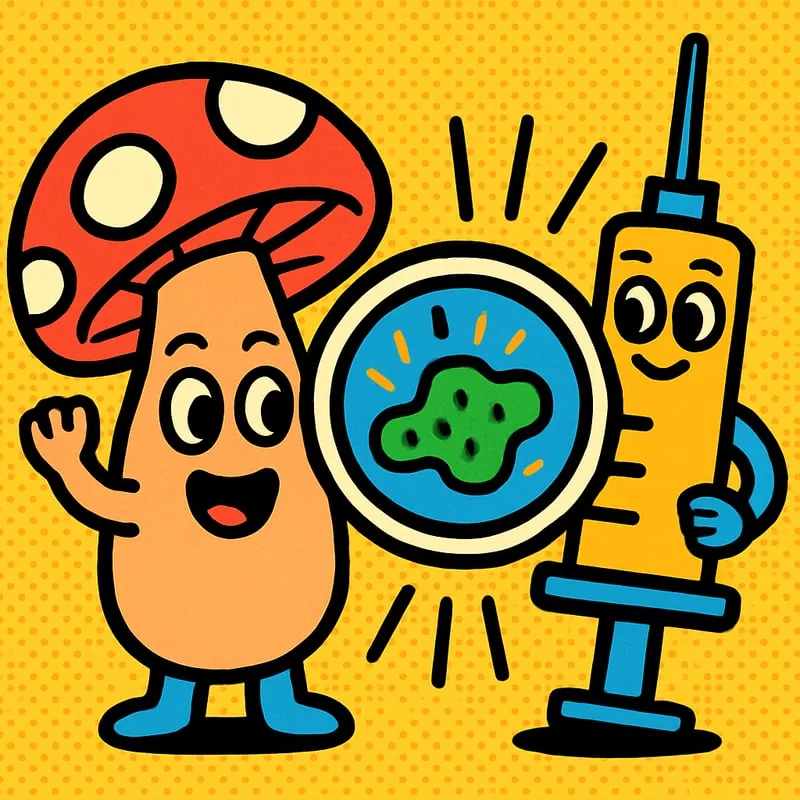
On September 28, 1928, a Scottish scientist named Alexander Fleming walked back into his cluttered London lab after a two-week vacation. Stacks of petri dishes covered his bench, and one of them caught his eye. A fuzzy blue-green mold had crept across the dish - and in a clear circle all around the mold, the bacteria he had been growing were dead. Most scientists would have tossed the contaminated dish into the sink. Fleming peered closer instead.
The mold was a strain of Penicillium, and it was leaking something that punched holes in bacterial cell walls. Fleming named the mystery juice 'penicillin' and published his findings, but he couldn't figure out how to make it in big enough batches to use as medicine. For almost a decade, the discovery sat on a shelf. Then, in the early 1940s, Oxford researchers Howard Florey and Ernst Chain figured out how to purify penicillin and test it on patients. By 1944, factories were churning out millions of doses to treat wounded soldiers in World War II.
Before penicillin, a scraped knee or a strep throat could turn deadly. After it, doctors had a weapon against infections that had killed people for thousands of years. The age of antibiotics had begun, and it all started with a messy desk, an open window, and a scientist who paused long enough to ask, 'Huh - what's that?'