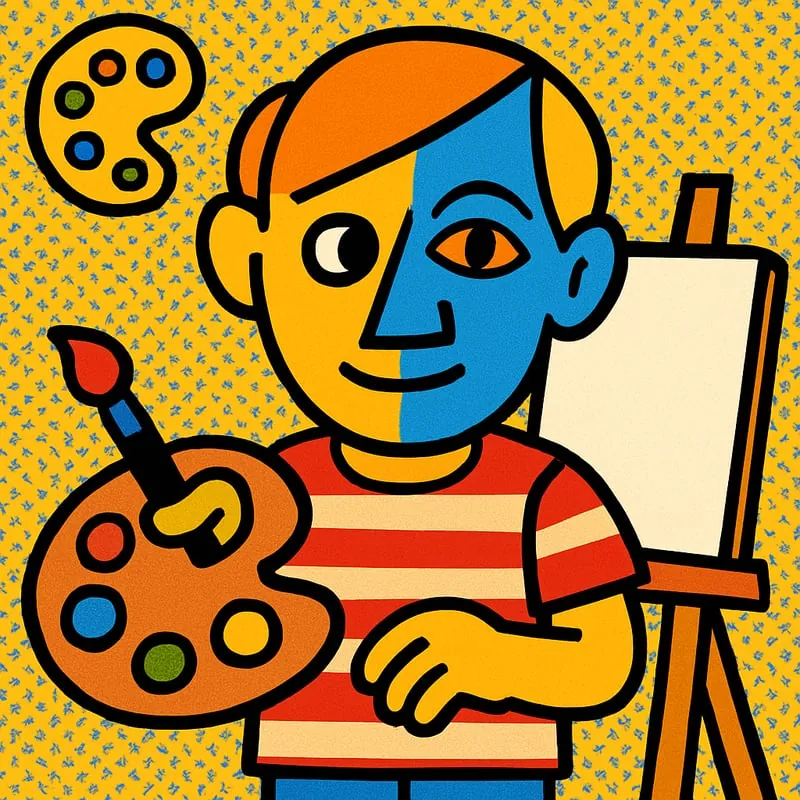
On October 25, 1881, a baby boy was born in the seaside town of Málaga in southern Spain. His full name was Pablo Diego José Francisco de Paula Juan Nepomuceno María de los Remedios Cipriano de la Santísima Trinidad Ruiz y Picasso. The world would just call him Picasso. By the time he died 91 years later, he had created more than 13,500 paintings, 100,000 prints, 34,000 book illustrations, and 300 sculptures - and changed art forever.
Picasso's father was an art teacher who once said his son could draw better than he could by the age of 13. Picasso moved to Paris as a young man and rented a freezing studio. His paintings during this cold-and-hungry time were tinted blue - historians now call it his Blue Period. Then he met a girl, fell in love, and started using pinks and oranges - his Rose Period. In 1907 he and his friend Georges Braque shattered the rules of painting altogether. They invented Cubism, where faces and bodies are broken apart into flat, angular shapes, as if you could see all sides of a person at once.
His huge 1937 painting Guernica, showing the horror of war in black, white, and gray, hangs in Madrid today and is one of the most famous protest paintings ever made. Picasso kept reinventing himself for the rest of his life, jumping between styles, materials, and ideas. He once said, 'Every child is an artist. The problem is how to remain an artist once we grow up.' He spent his whole life trying never to grow up.