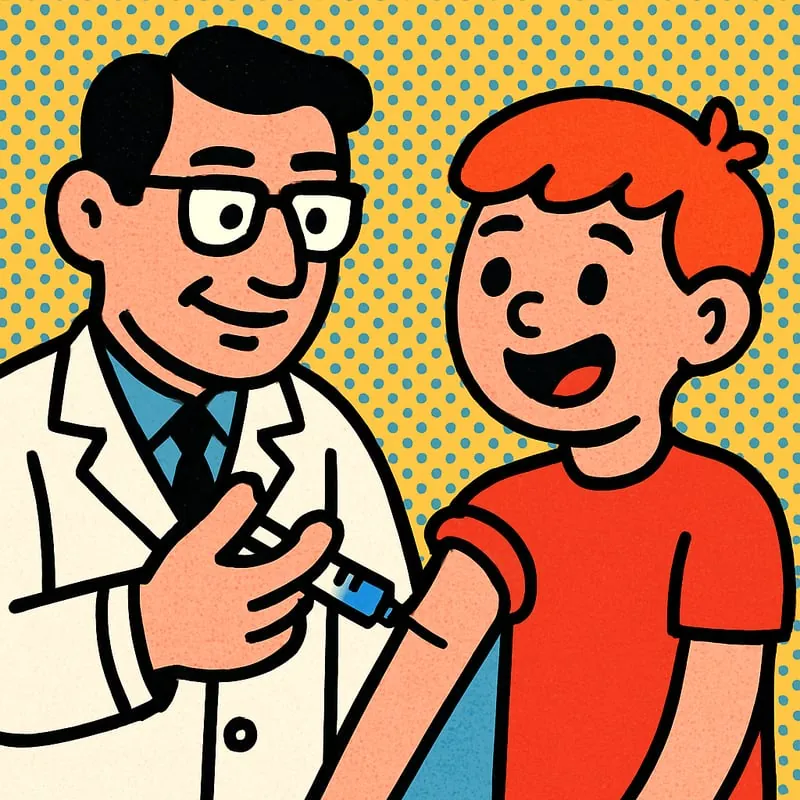
On February 23, 1954, in a quiet elementary school in Pittsburgh, Pennsylvania, a six-year-old boy named Randy Kerr rolled up his sleeve and got the first official dose of Dr. Jonas Salk's brand-new polio vaccine. He was the first of nearly two million American kids who would line up that spring as part of the biggest medical trial in history. The country was terrified of polio, a disease that paralyzed thousands of children every summer and sometimes left them unable to breathe without a giant machine called an iron lung.
Jonas Salk had been working on the vaccine for years at the University of Pittsburgh, growing the polio virus in dishes and then killing it so it couldn't make people sick but could still teach their bodies to fight back. To prove his shot worked, scientists had to inject huge numbers of children and compare them with kids who got a fake shot. Parents signed up by the millions. Kids who took the trial were nicknamed 'Polio Pioneers,' and many got special pins to wear at school.
On April 12, 1955, scientists announced the results: the vaccine worked. Church bells rang, factory whistles blew, and parents wept with relief. Within a few years, polio cases in the United States dropped by more than 90 percent. Jonas Salk became a hero, and when asked who owned the patent to his vaccine, he answered, 'The people. Could you patent the sun?' Today polio has been almost completely wiped out worldwide, all because one young boy in a school gym was brave enough to go first.