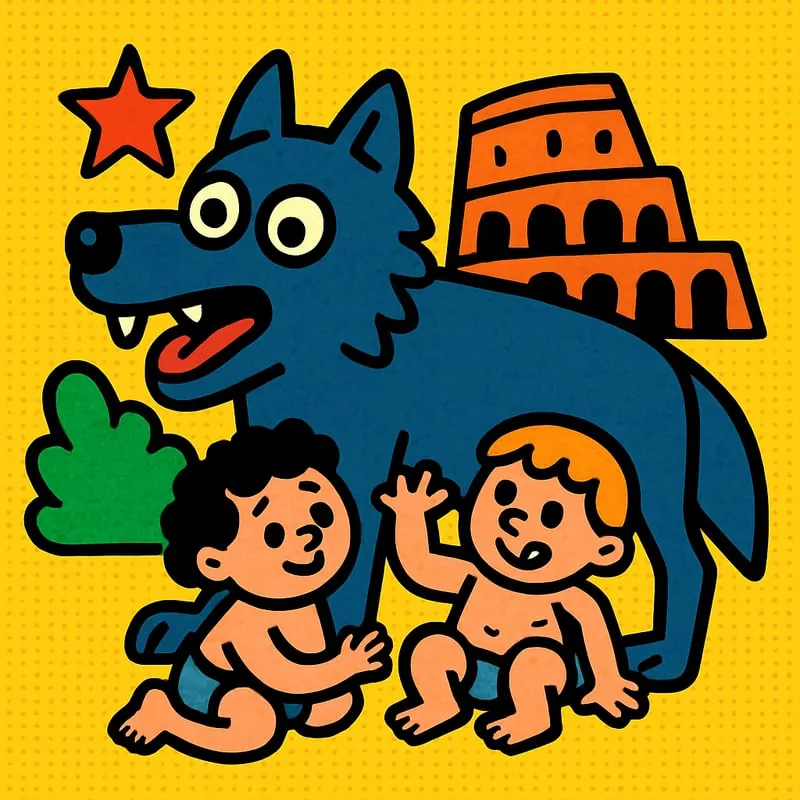
According to ancient legend, on April 21 in the year 753 BC, a young man named Romulus dug a trench in the dirt on top of a hill in central Italy and declared the spot a new city. He named it after himself: Roma. His twin brother Remus had argued with him about where to build, and the fight ended badly - but Romulus went on to become Rome's first king. The Romans celebrated this birthday, the Parilia, every April 21 for centuries.
The legend has even better backstory. The twins were said to be the sons of Mars, the god of war, and were abandoned as babies by a wicked uncle on the banks of the Tiber River. A she-wolf found them, nursed them, and a shepherd raised them as his own. A famous bronze statue called the Capitoline Wolf, showing the wolf with the two baby boys, has stood in Rome for hundreds of years and become one of the city's most recognized symbols.
The real history is messier - archaeologists think people settled the seven hills of Rome over many years, not in one ceremony - but the date stuck. From a small village, Rome grew into an empire that ruled 70 million people across Europe, North Africa, and the Middle East. Today, modern Romans still throw a giant birthday party every April 21, with chariot races, parades, and feasts. Few cities can claim a candle on their cake going back nearly 2,800 years.