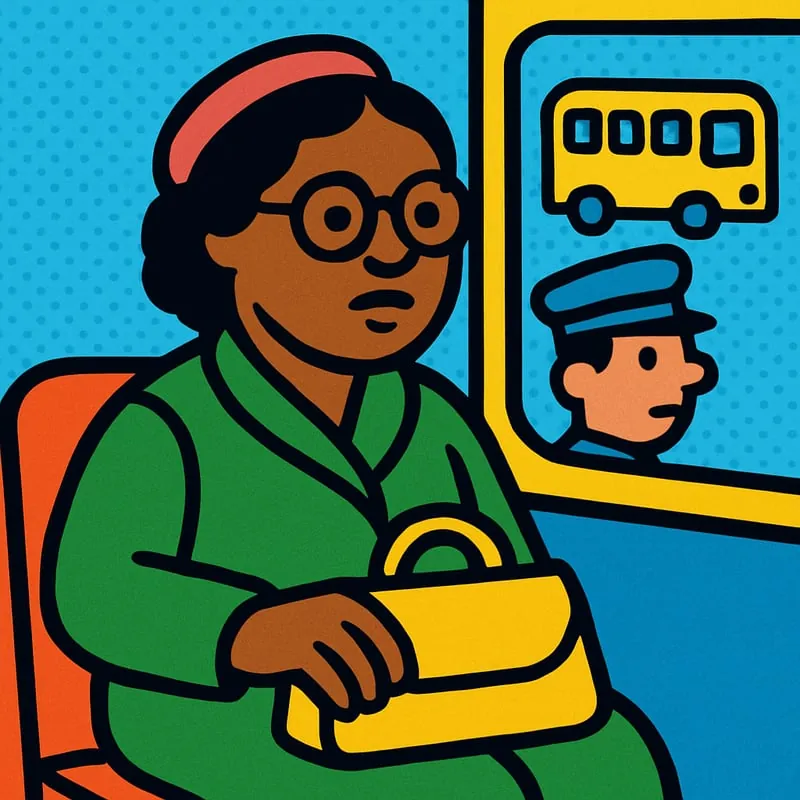
On the chilly evening of December 1, 1955, a 42-year-old seamstress named Rosa Parks finished her shift at a Montgomery, Alabama department store and climbed onto the Cleveland Avenue bus to head home. She sat in the middle row. When the bus filled up, the driver ordered Black passengers to give up their seats so white riders could sit. Three people stood up. Rosa stayed put. "No," she said quietly. The driver called the police, and Rosa was arrested.
Rosa was not just tired that day, the way the legend sometimes tells it. She had spent years working as the secretary of the Montgomery NAACP and training in civil rights workshops. She knew exactly what she was doing. That night, Black leaders including a young 26-year-old preacher named Martin Luther King Jr. organized a bus boycott. For 381 days, Black residents of Montgomery walked, carpooled, and rode bicycles instead of taking the buses, even in pouring rain.
The boycott emptied the buses and squeezed the city's wallet until the Supreme Court ruled that segregated buses were unconstitutional. Rosa's calm "no" had launched the modern civil rights movement and turned Dr. King into a national leader. Today, the actual Cleveland Avenue bus sits in a museum in Michigan, and millions of visitors climb aboard to sit in Rosa's seat. One quiet refusal, one woman who would not stand up, helped a whole country finally sit down and listen.