On December 30, 1865, a baby named Joseph Rudyard Kipling was born in Bombay, India, where his English father taught art at a local school. Little Rudyard grew up surrounded by the colors, smells, and sounds of India - bustling bazaars, jungle birds, monsoons, and the bedtime stories told by his Indian nanny in Hindi. He thought the world was magical until age 6, when his parents sent him back to England to attend school. He hated it. He scribbled stories instead of doing homework.
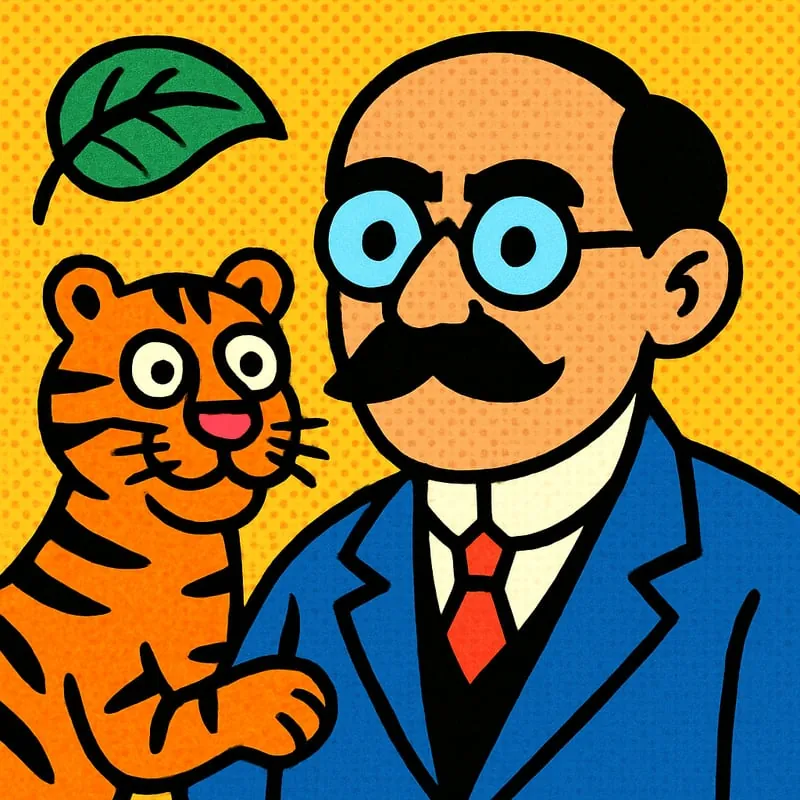
As a teenager, Rudyard returned to India and became a newspaper reporter. He started writing short stories and poems about Indian life that quickly became famous. Then, in 1894, while living in Vermont with his American wife, he published The Jungle Book. The collection of stories featured a boy named Mowgli, raised by wolves in the forests of central India, along with Baloo the bear, Bagheera the panther, and Shere Khan the tiger. The book was such a hit that Rudyard followed it up with The Second Jungle Book and dozens of other tales for children, including the Just So Stories and Kim.
Rudyard Kipling became the first English-language writer ever to win the Nobel Prize for Literature, in 1907 when he was just 41 years old. His poem "If-" became one of the most-quoted poems in the English language. Walt Disney later turned The Jungle Book into a beloved animated movie that introduced Mowgli to a whole new generation. Today, the bear hugs of Baloo and the slinky wisdom of Bagheera still echo in books, songs, and films, all traced back to a boy who never forgot the magical India of his childhood.