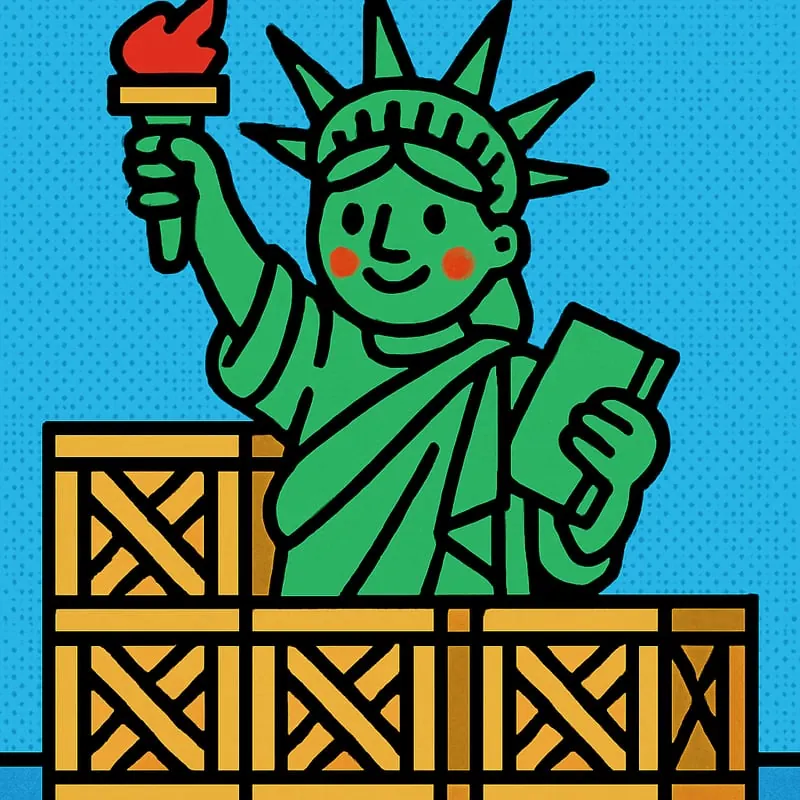
On June 17, 1885, a French steamship called the Isère sailed into New York Harbor with a very strange cargo. Packed in its hold were 214 enormous wooden crates filled with copper sheets, iron bars, and one giant face. New Yorkers crowded the docks, leaning over the rails to catch a glimpse. Inside those crates, taken apart like the world's biggest jigsaw puzzle, was the Statue of Liberty - a gift from the people of France.
The idea had been dreamed up twenty years earlier by a French writer named Édouard de Laboulaye, who admired America for ending slavery during the Civil War. A young sculptor named Frédéric Auguste Bartholdi designed the statue, and the engineer Gustave Eiffel - the same man who would build the Eiffel Tower a few years later - figured out the iron skeleton inside. The French raised money to build her; the Americans had to raise money to build the giant pedestal she would stand on. A newspaper editor named Joseph Pulitzer collected dimes and pennies from over 120,000 ordinary people to finish the base. By the spring of 1886, builders started reassembling Lady Liberty piece by piece on Bedloe's Island in the harbor.
On October 28, 1886, President Grover Cleveland unveiled her in front of fireboats and brass bands. She stood 305 feet tall from the ground to the tip of her torch. For the next four decades, millions of immigrants arriving by ship saw her green silhouette first - a quiet promise of a new life. Today she is still standing in the same spot, watching ferries chug across the harbor, raising her torch into the New York sky.