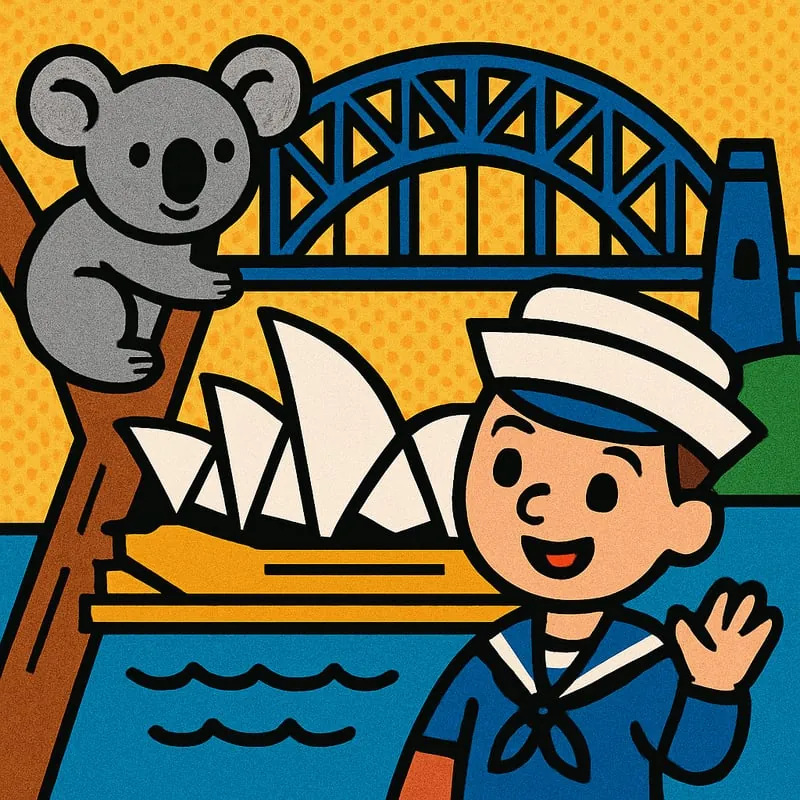
On 26 January 1788, a fleet of eleven creaking wooden ships rolled into a wide blue harbour on the east coast of Australia. They had been at sea for eight long months, all the way from England. On board were around 1,500 people - sailors, soldiers, officers, and 736 convicts who had been sentenced to be shipped to the other side of the world for crimes as small as stealing a loaf of bread. Their leader, Captain Arthur Phillip, stepped ashore, raised the British flag, and named the spot Sydney Cove after a politician back home.
For the people already living there, the Gadigal of the Eora Nation, this was no founding at all. Their families had been fishing the harbour and painting on rocks for tens of thousands of years. The arrival of the First Fleet brought disease, fences, and conflict that would change their world forever. The new settlement struggled at first - crops failed, food ran out, and Captain Phillip had to send a ship out for emergency supplies. But slowly the colony stuck.
From that shaky beginning grew the modern city of Sydney - today home to over 5 million people, the famous white sails of the Opera House, the great steel arch of the Harbour Bridge, and beaches like Bondi that pull in surfers from across the globe. Every 26 January is now marked as Australia Day, though it is also called Survival Day or the Day of Mourning by many Aboriginal Australians. The harbour where eleven ships once anchored is still the heart of the city - busy, blue, and full of ferries.