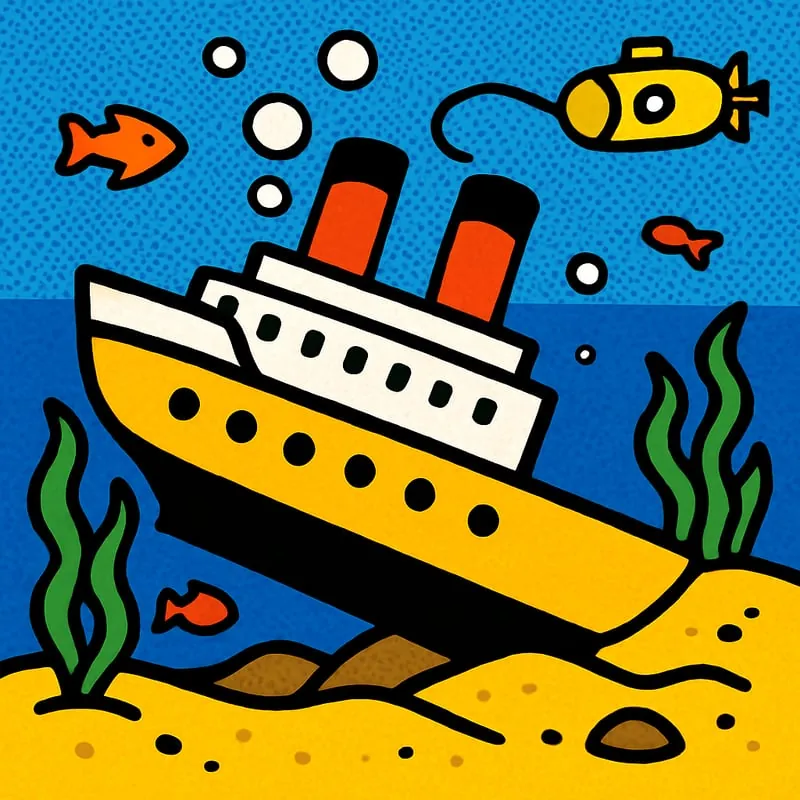
On September 1, 1985, deep in the cold black of the North Atlantic, a robotic camera named Argo flickered to life two and a half miles below the surface. Scientist Robert Ballard and his French and American crew had been searching for weeks, towing the camera behind their ship like a kite on a very long string. Then a giant round shape rolled across the screen. It was a Titanic boiler. After 73 years, the most famous shipwreck in the world had finally been found.
The team stayed up all night cheering, then went quiet when they realized they were floating above a grave: more than 1,500 people had died when the Titanic sank in 1912. Ballard had actually been on a secret U.S. Navy mission to find two lost submarines, and he used the leftover days to hunt for the Titanic. By following a trail of debris like breadcrumbs, he and his team spotted the bow sitting upright on the seafloor, its railings still in place and its grand staircase rotted away.
The discovery changed deep-sea exploration forever. Ballard's idea of using tough little robots instead of risking people in submarines is now how scientists explore hydrothermal vents, hunt for new species, and study underwater volcanoes. The Titanic itself is slowly being eaten by metal-munching bacteria and may be gone within a few decades, but thousands of photographs and 3D scans mean the ship will keep telling its story long after the wreck dissolves.