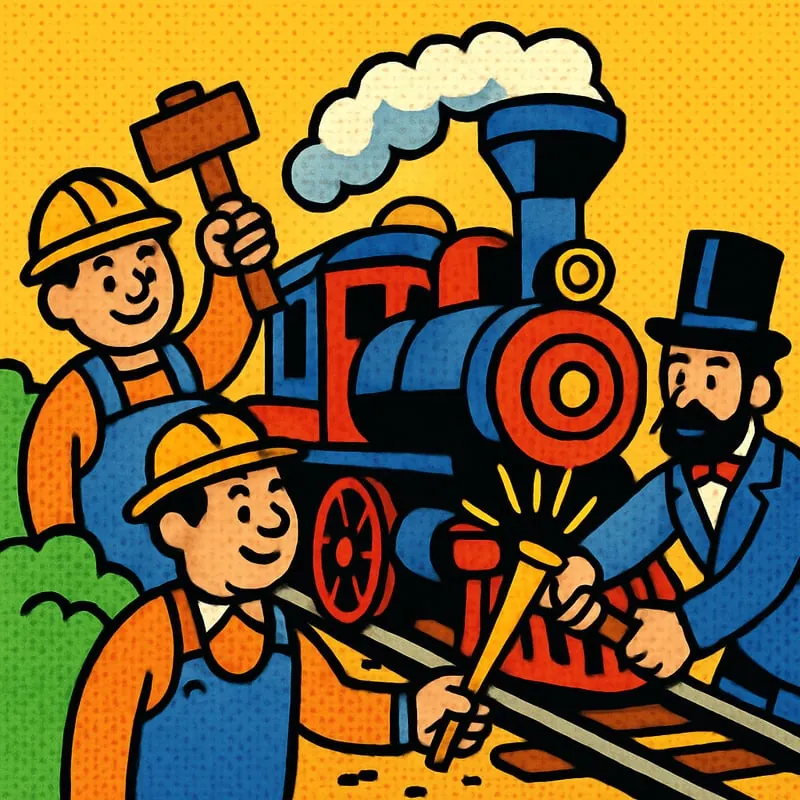
On May 10, 1869, at a dusty spot called Promontory Summit in Utah, two locomotives nosed up to each other on a single set of tracks. One had come from the east, built by the Union Pacific. The other had come from the west, built by the Central Pacific. After six years of brutal work, the rails finally met. A man swung a silver hammer, drove a ceremonial golden spike into the last railroad tie, and a telegraph clattered out a single word to the whole country: Done.
The railroad changed America overnight. Before it, traveling from New York to California meant a six-month wagon trip across plains and mountains, or a long sea voyage around the tip of South America. After it, you could cross the continent in about a week. Newspapers, mail, fruit, cattle, and people zoomed back and forth at speeds nobody had dreamed of. Towns popped up wherever the train stopped for water and coal.
The builders paid a steep price. Thousands of Chinese workers laid track for the Central Pacific, blasting tunnels through the Sierra Nevada mountains in freezing winters. Irish immigrants laid most of the Union Pacific track. They worked for low pay, often in dangerous conditions, and many died. Native American tribes, whose lands the railroad sliced through, watched as buffalo herds were destroyed and settlers poured into territory their families had lived on for generations. The golden spike celebration was glorious, but the real story of the Transcontinental Railroad is also a story of the many people whose lives were forever changed when those two engines finally touched.