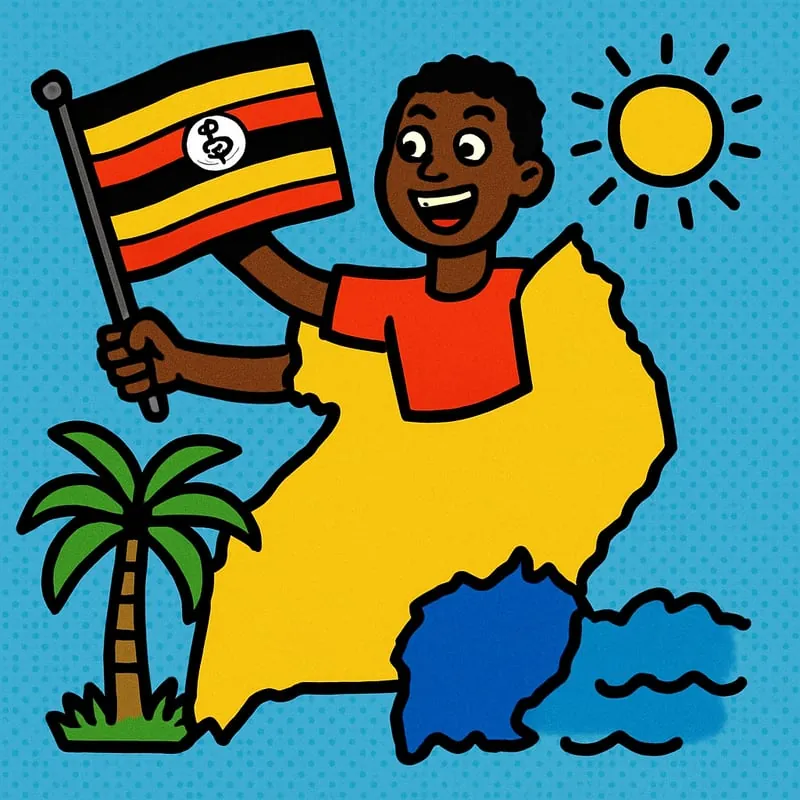
Just before midnight on October 8, 1962, the British flag was lowered slowly from a pole in Kampala, the capital of Uganda. Bands played. Crowds cheered. As the clock struck twelve and October 9 began, a brand-new black, yellow, and red flag rose in its place, with the gray crested crane of Uganda at its center. After 68 years as a British protectorate, Uganda was now a free and independent country.
The land along the shores of Lake Victoria had been home to powerful kingdoms long before any European arrived. The Buganda kingdom in particular was famous for its kings, called kabakas, and its skilled craftworkers. In 1894 Britain took control of the region, drawing borders that included dozens of different peoples and languages. Uganda's independence leader, a teacher and politician named Milton Obote, became the new country's first prime minister, while the Buganda king Mutesa II served as president. Independence was peaceful - no war, no violence - settled with negotiations and signatures rather than bullets.
Uganda has had a complicated road since that night. There have been hard times and strong leaders, struggles and recoveries. But every year on October 9, Independence Day, the country pauses to remember the moment the new flag first climbed into the sky. Schools hold parades, families gather, and the crested crane on the flag - chosen because it stands proudly on one leg, never tipping over - reminds Ugandans of their balance, beauty, and freedom.