On the evening of March 13, 1781, a German-born musician living in England pointed his homemade telescope at the night sky from his backyard in the town of Bath. William Herschel was a professional oboe player who'd taught himself astronomy as a hobby and ground his own telescope mirrors by hand. He spotted a fuzzy little dot in the constellation Taurus that didn't quite look like a star. At first he thought it might be a comet. After watching it for weeks and tracking its movement, he realized he'd discovered something nobody in human history had ever found: a brand-new planet.
For thousands of years, people had counted only six planets - Mercury, Venus, Earth, Mars, Jupiter, and Saturn - all visible without a telescope. Suddenly the solar system was almost twice as big. Herschel wanted to name his discovery Georgium Sidus ("George's Star") after King George III, who was so pleased he gave Herschel a royal salary. Astronomers in other countries refused to call a planet after a British king, and eventually everyone settled on Uranus, named after the Greek god of the sky.
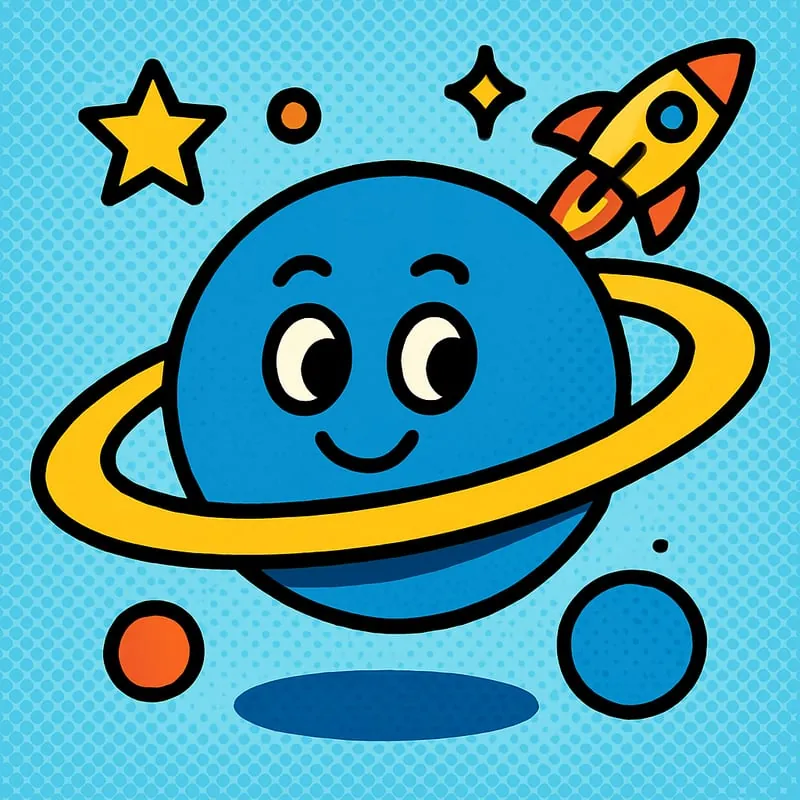
Uranus is so far away it takes 84 Earth years to circle the Sun once, and it's tipped on its side like a rolling ball. It has 27 known moons named after characters from Shakespeare and the poet Alexander Pope. Voyager 2 zoomed past it in 1986 and is still the only spacecraft to visit. William Herschel's lucky look up from his garden didn't just add a planet to our maps - it proved that the solar system could still surprise us, a lesson we keep relearning every time a new world swims into view.