On March 28, 1797, an American inventor named Nathaniel Briggs of New Hampshire received the very first U.S. patent for a washing machine. Sadly, we don't know exactly what his machine looked like - the original patent papers were destroyed in a fire at the Patent Office in 1836. But we know that before Briggs's invention, doing laundry was one of the hardest chores a family could face. Clothes were scrubbed by hand for hours on rough wooden boards, boiled in giant pots of soapy water, and beaten with sticks called "battling staffs" to knock the dirt loose.
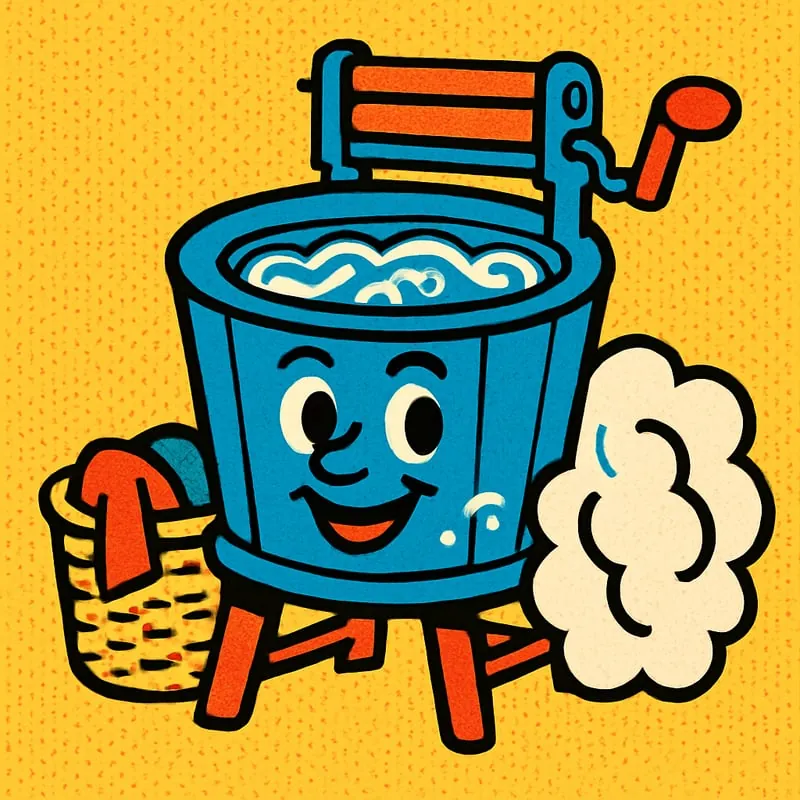
Early washing machines were powered by hand. Someone had to turn a crank that spun a drum full of soapy water and clothes. By the 1850s, James King had patented a drum machine that looked a lot like a modern washer. In 1908, Alva Fisher built the first electric washing machine, called the Thor - finally, no more cranking. By the 1950s, automatic washers that filled, spun, and drained themselves became affordable for most American families, and Saturdays stopped being all-day laundry marathons.
Before washing machines, doing the laundry for one family could take a whole day or more, every single week. Most of that work fell on women and girls. Historians have argued that machines like the washing machine did as much to free up time for women to pursue education and careers as any social movement. Today, around 80 percent of homes worldwide have a washing machine, and the average household runs about 300 loads of laundry a year - all because of a long line of inventors, starting with a New Hampshire man whose papers went up in flames.