← All topics

SPACE

Planets, stars, black holes and the wild edges of the universe - bigger and weirder than you'd ever guess.

54 facts

MORE SPACE FACTS

53 facts
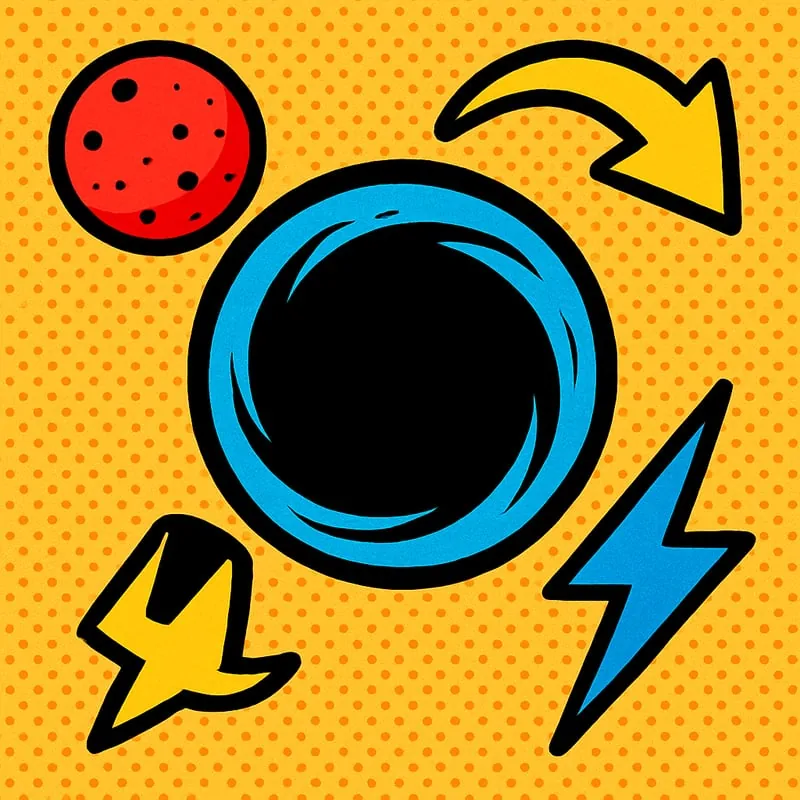
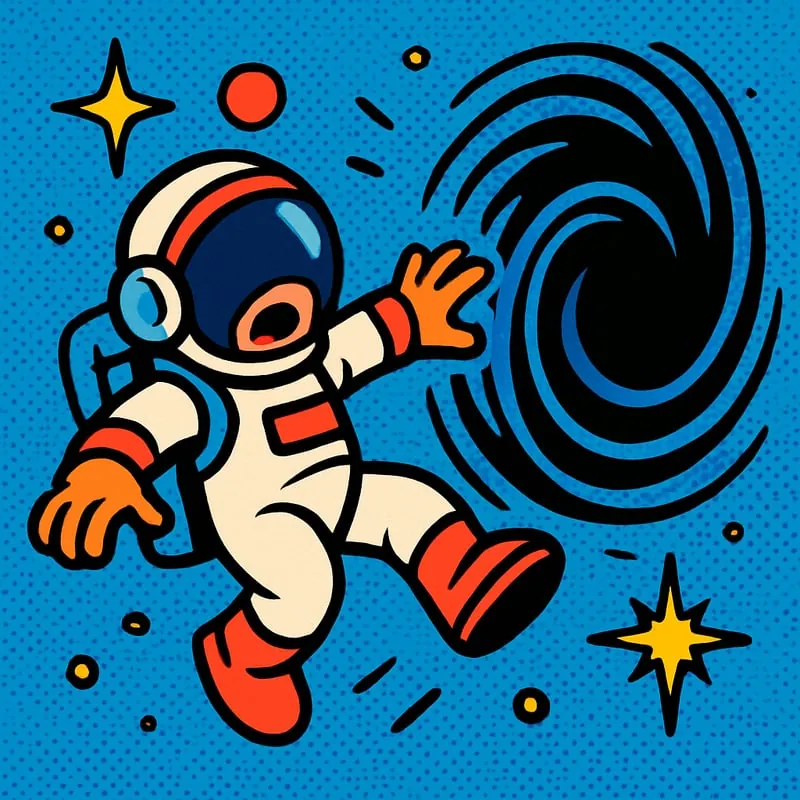
A vibrant black hole swirls at the center, surrounded by a red planet, lightning bolts, and arrows, showcasing its…
DID YOU KNOW? A black hole has only three properties - mass, spin, and charge. Physicists call this the "no-hair theorem" - black holes are the simplest objects in the universe. 2 min read
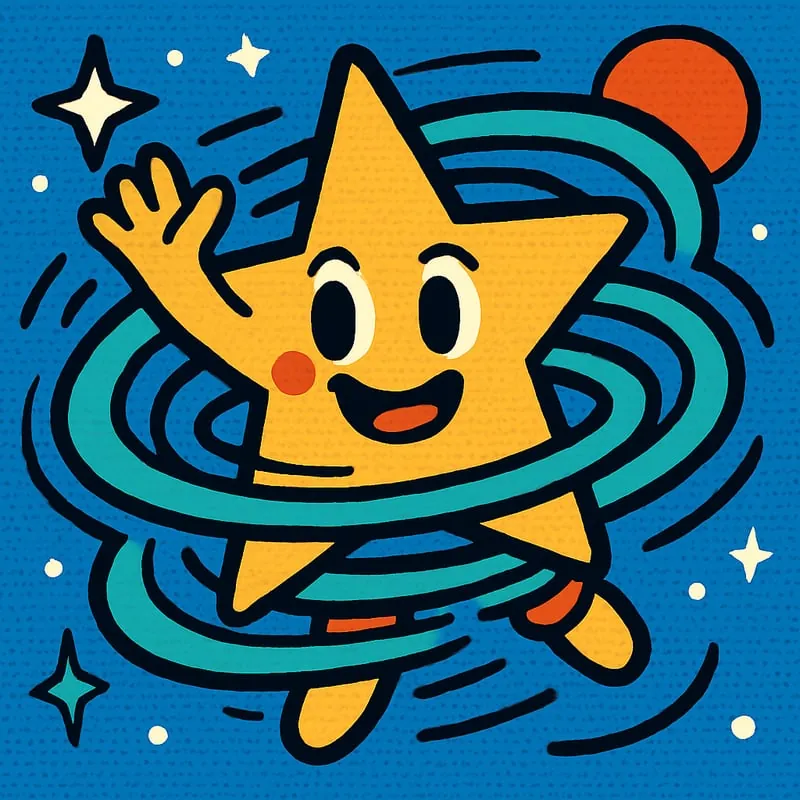
A cheerful yellow star spins joyfully, surrounded by swirling rings and twinkling stars on a bright blue background.
DID YOU KNOW? A dead star can spin 700 times a second. Millisecond pulsars are city-sized stars that whirl faster than a kitchen blender. 2 min read
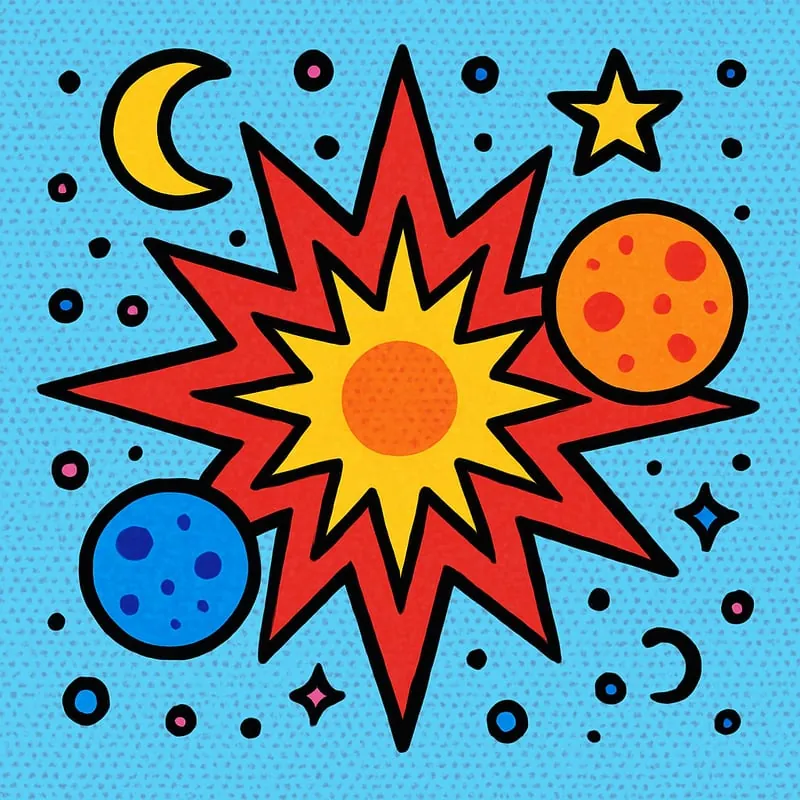
A bright explosion of yellow and red bursts from a central sun, surrounded by colorful planets and twinkling stars on a blue…
DID YOU KNOW? The universe started 13.8 billion years ago - in an instant. Everything we see today expanded from a tiny, ultra-hot beginning. 2 min read
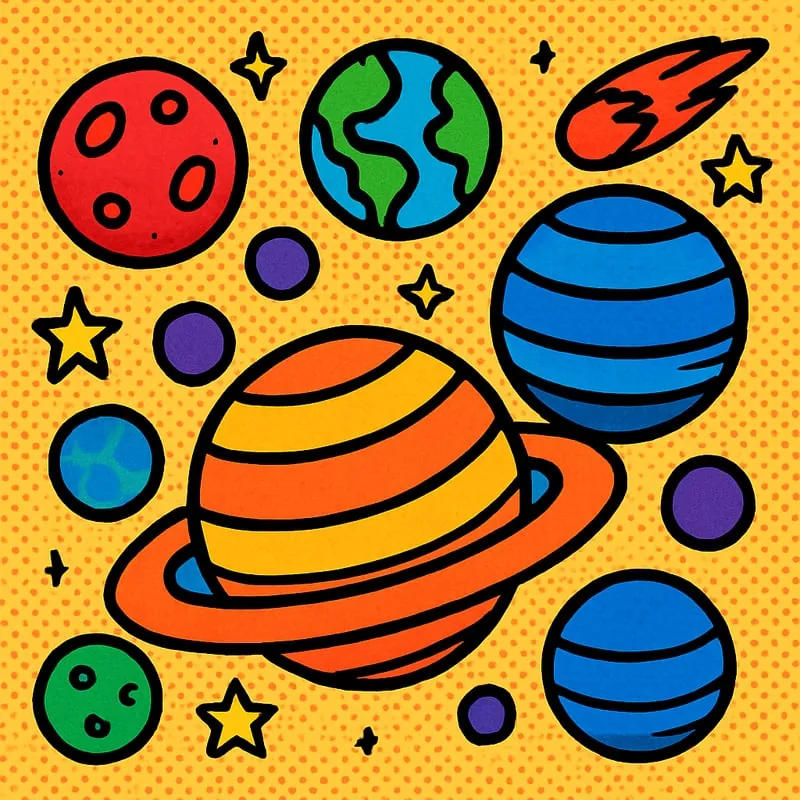
A colorful array of planets, including a striped orange and blue planet, surrounded by stars, moons, and a comet on a bright…
DID YOU KNOW? There are probably more planets in our galaxy than stars. Astronomers now estimate over a trillion planets orbiting Milky Way stars. 2 min read
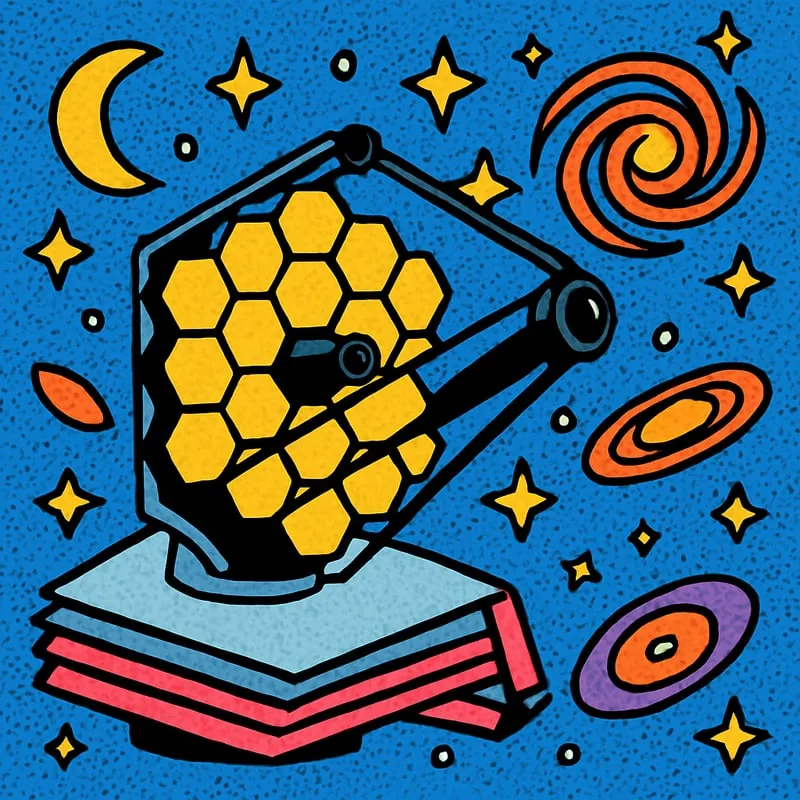
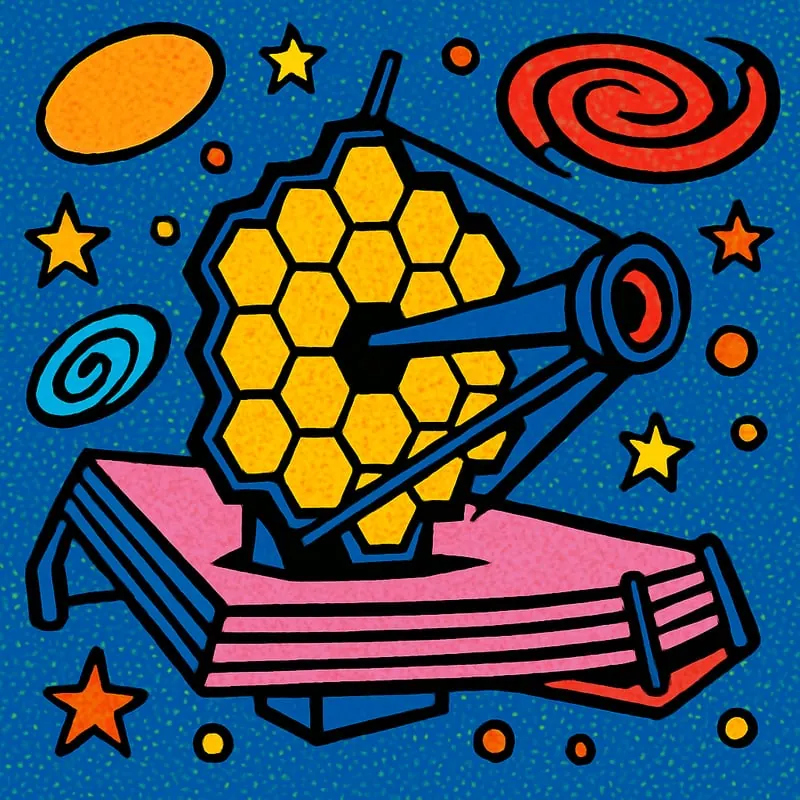
A colorful cartoon of the James Webb Telescope with a honeycomb mirror, surrounded by swirling galaxies and stars in a blue…
DID YOU KNOW? The James Webb Telescope has spotted galaxies from 13.5 billion years ago. The light we're seeing left those galaxies almost as soon as the universe formed. 2 min read
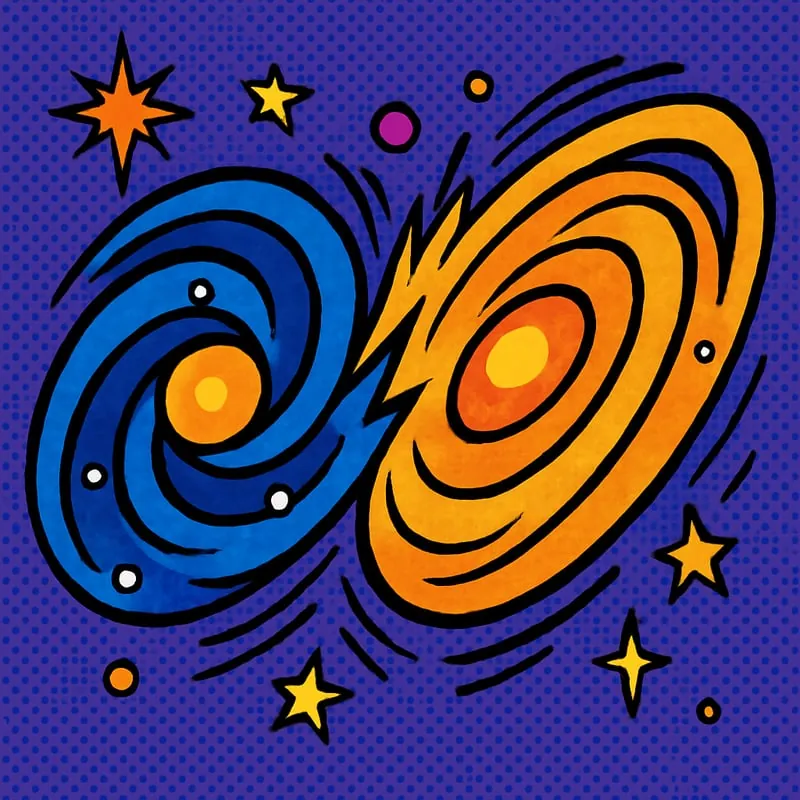
Two vibrant galaxies, one blue and one orange, swirl towards each other with bright stars twinkling in the cosmic background.
DID YOU KNOW? Andromeda will collide with the Milky Way in 4 billion years. Two huge galaxies, both moving at 250,000 mph, are heading right for each other. 2 min read
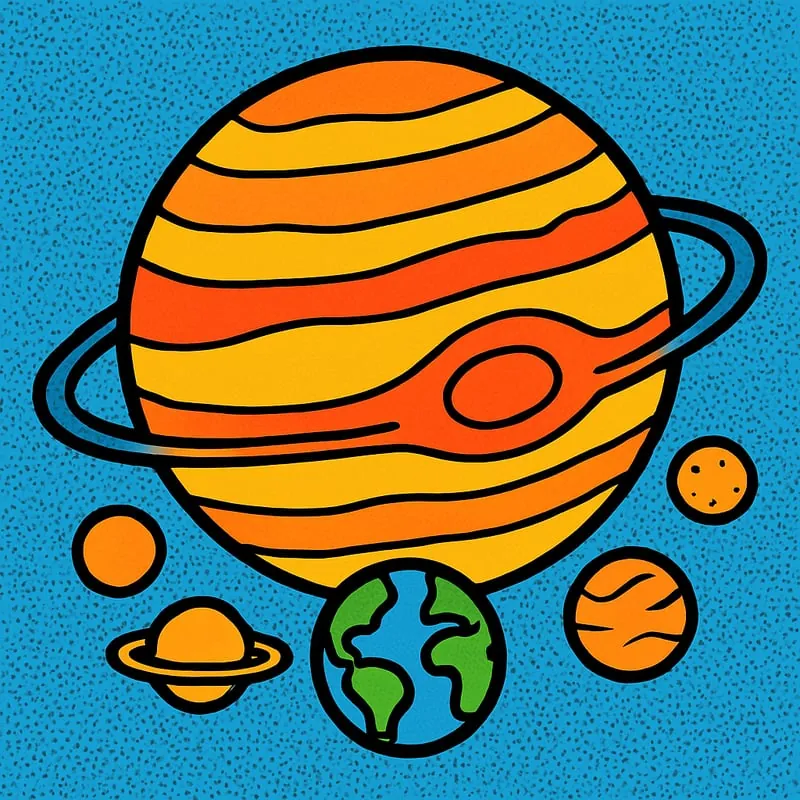
Jupiter, with bold orange and yellow stripes, dominates the scene surrounded by smaller planets, including Earth and Saturn.
DID YOU KNOW? Jupiter could fit 1,300 Earths inside it. It's bigger than all the other planets in the solar system combined. 2 min read
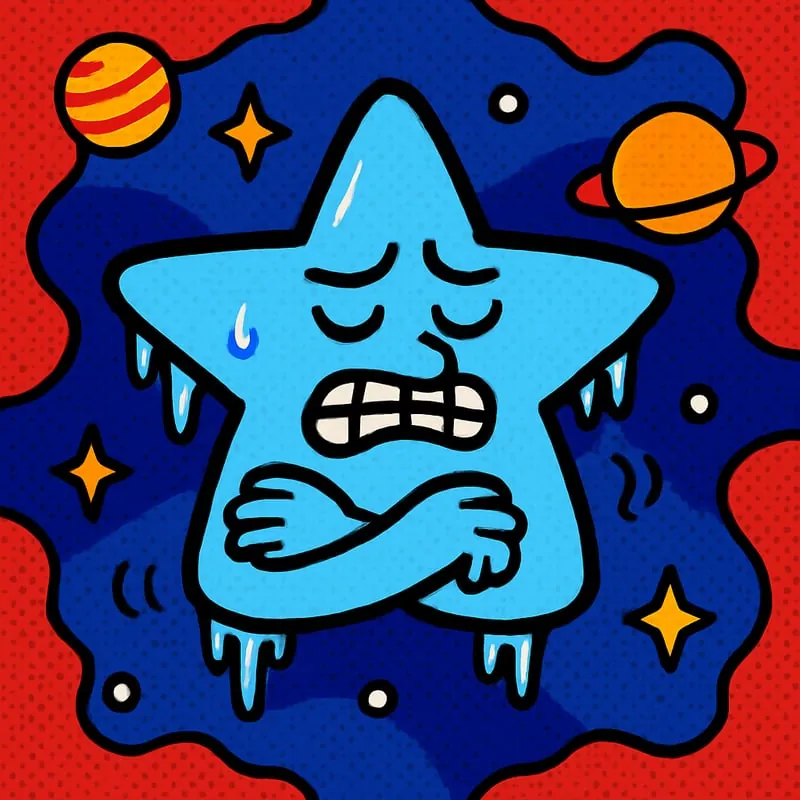
A sad blue star with icicles and a worried expression shivers in a colorful cosmic scene filled with planets and stars.
DID YOU KNOW? The coldest known place in the universe is a star's dying breath. The Boomerang Nebula is just one degree above absolute zero. 2 min read
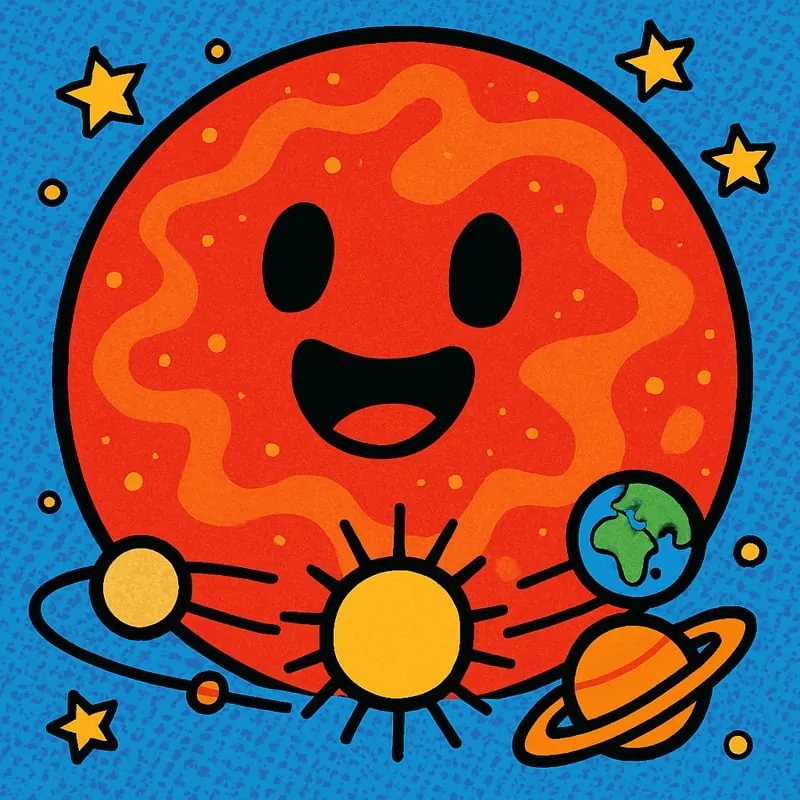
A cheerful red hypergiant star with a big smile dominates the scene, surrounded by a tiny Sun, Earth, and Saturn, all…
DID YOU KNOW? The biggest known star would swallow our entire inner solar system. Stephenson 2-18 is a red hypergiant about 2,150 times wider than the Sun - if it replaced the Sun, its surface would reach past Saturn. 2 min read
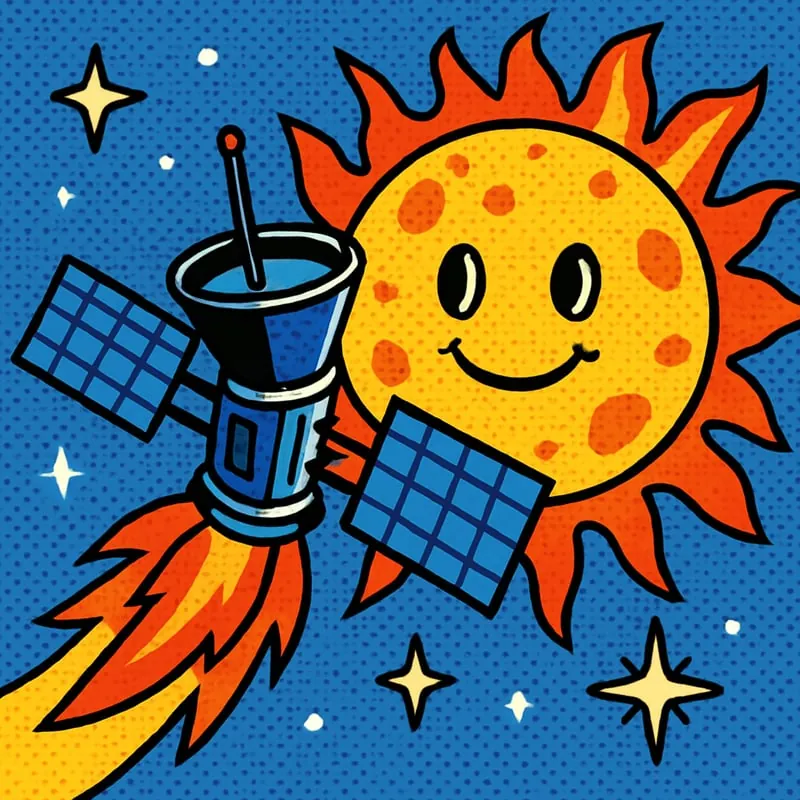
A cheerful, smiling sun beams down as the Parker Solar Probe zooms past, trailing fiery rocket flames and solar panels.
DID YOU KNOW? The Parker Solar Probe is the fastest object humans have ever made. At its closest approach to the Sun, the Parker Solar Probe zooms at a staggering 430,000 mph, breaking records for human-made objects. 2 min read
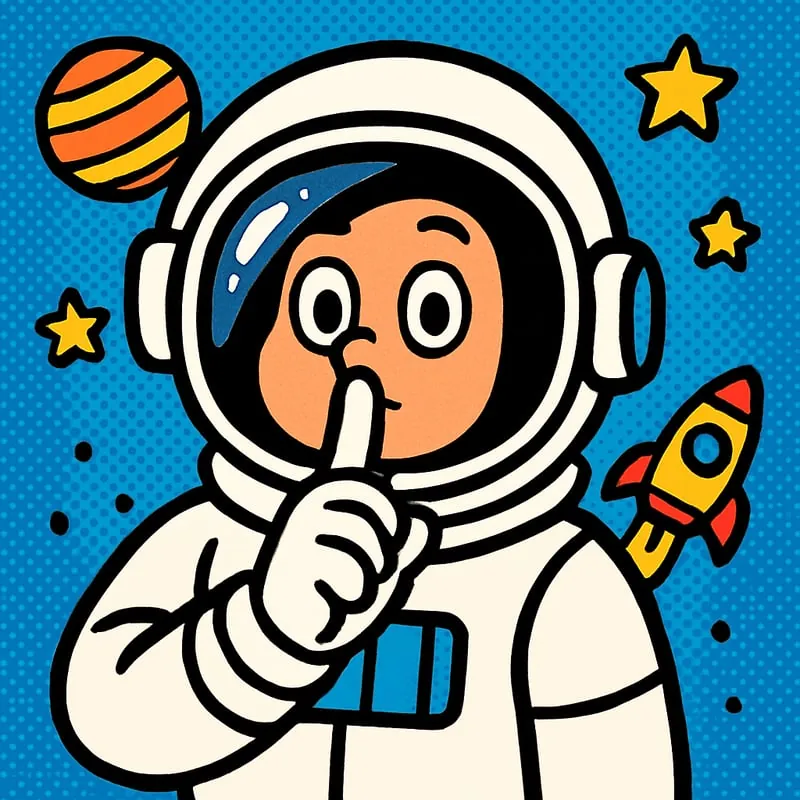
An astronaut in a white spacesuit holds a finger to their lips, surrounded by colorful planets and stars, signaling silence.
DID YOU KNOW? Space is completely silent. In the vacuum of space, sound waves have no air to travel through, making it completely silent - even during epic space battles in movies. 2 min read
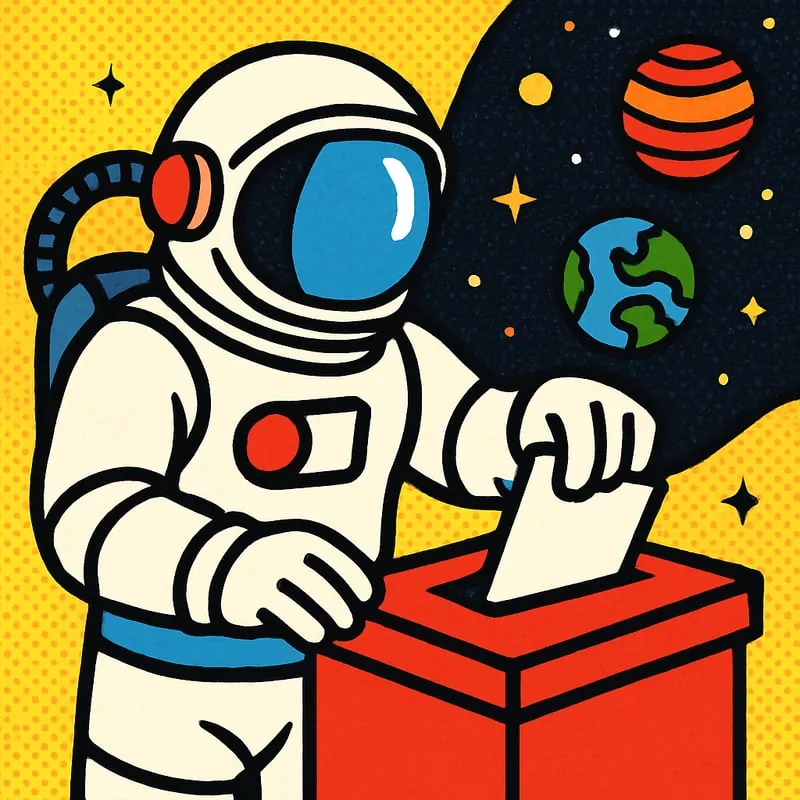
An astronaut in a white suit drops a ballot into a bright red box, with Earth and colorful planets swirling in space behind.
DID YOU KNOW? Astronauts can vote in elections from space. Texas passed a special law in 1997 so its astronaut citizens could mail in ballots from orbit. 2 min read
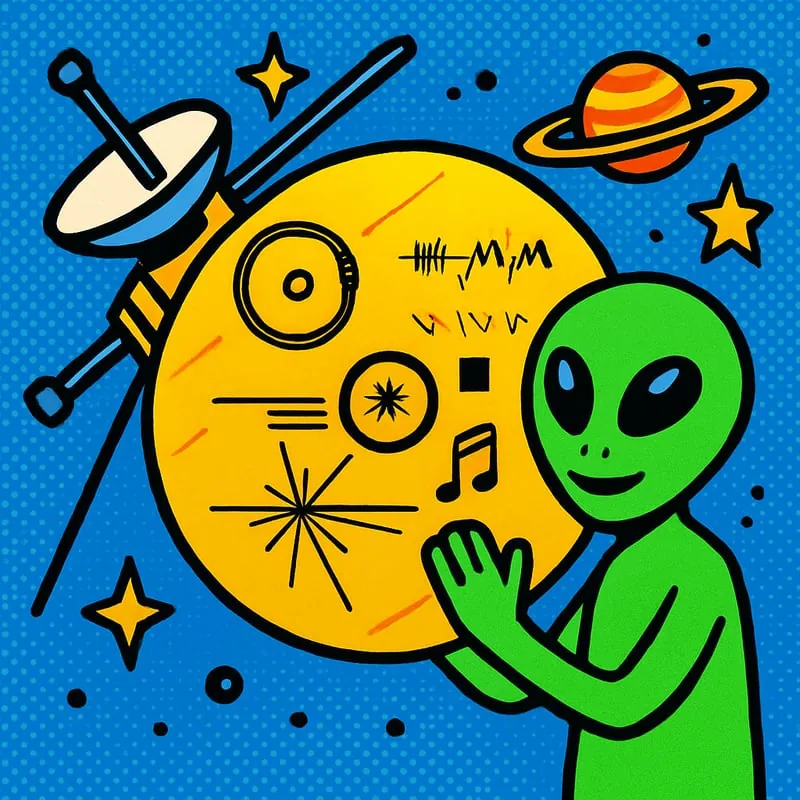
A friendly green alien stands beside a large golden record, featuring symbols, music notes, and a spacecraft against a…
DID YOU KNOW? We sent music for aliens to find - on a golden record glued to a spacecraft. Voyager carries greetings in 55 languages, songs, whale calls, and our calling card. 2 min read
A colorful cartoon of the James Webb Telescope with a honeycomb mirror, surrounded by vibrant planets and swirling galaxies.
DID YOU KNOW? The James Webb Telescope can see back almost to the Big Bang. It looks in infrared light - and shows us galaxies as they were 13 billion years ago. 2 min read
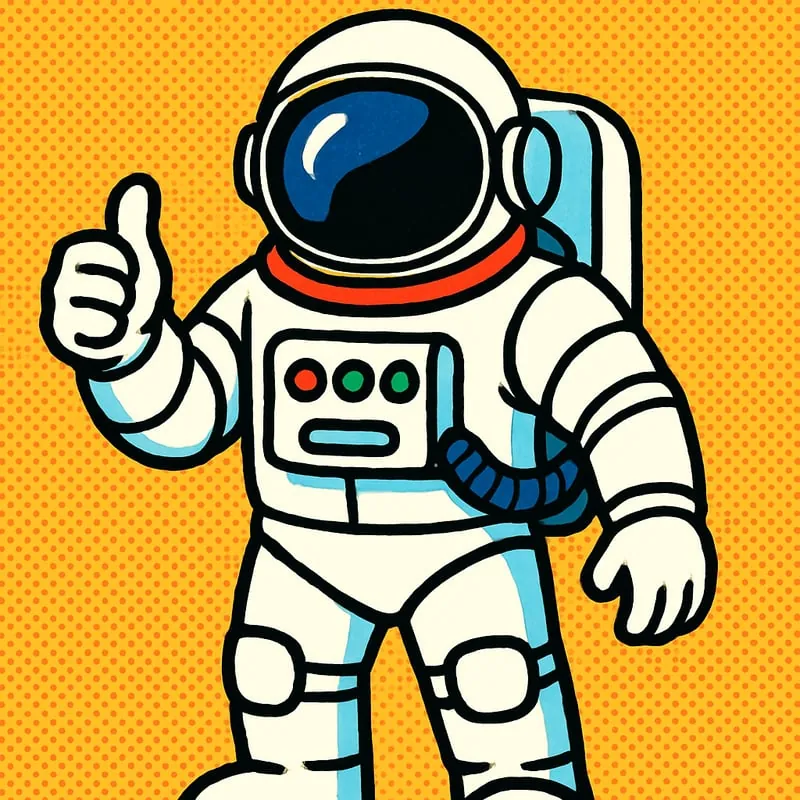
A cheerful astronaut in a sleek, white spacesuit gives a thumbs-up against a bright yellow, dotted background.
DID YOU KNOW? A modern spacesuit costs over $12 million. NASA's Extravehicular Mobility Unit, or EMU, costs between $12 to $15 million, making it one of the priciest outfits ever designed for space! 2 min read
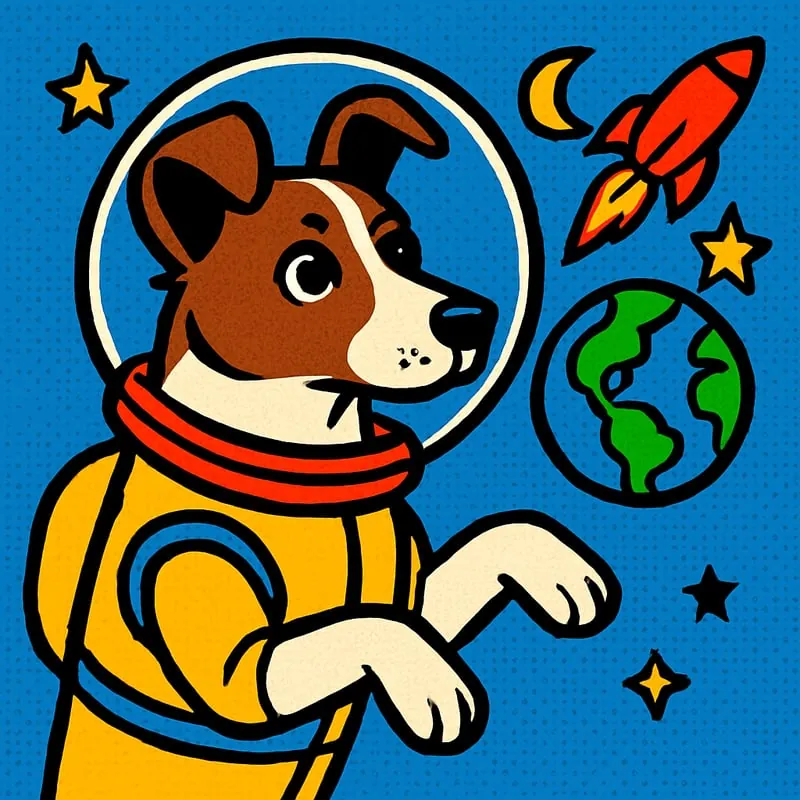
A brave dog in a yellow spacesuit floats in space, gazing at Earth and a rocket zooming past stars and a crescent moon.
DID YOU KNOW? A stray dog named Laika was the first creature to orbit Earth. She was picked up off the streets of Moscow in 1957 and trained to ride a rocket. 2 min read
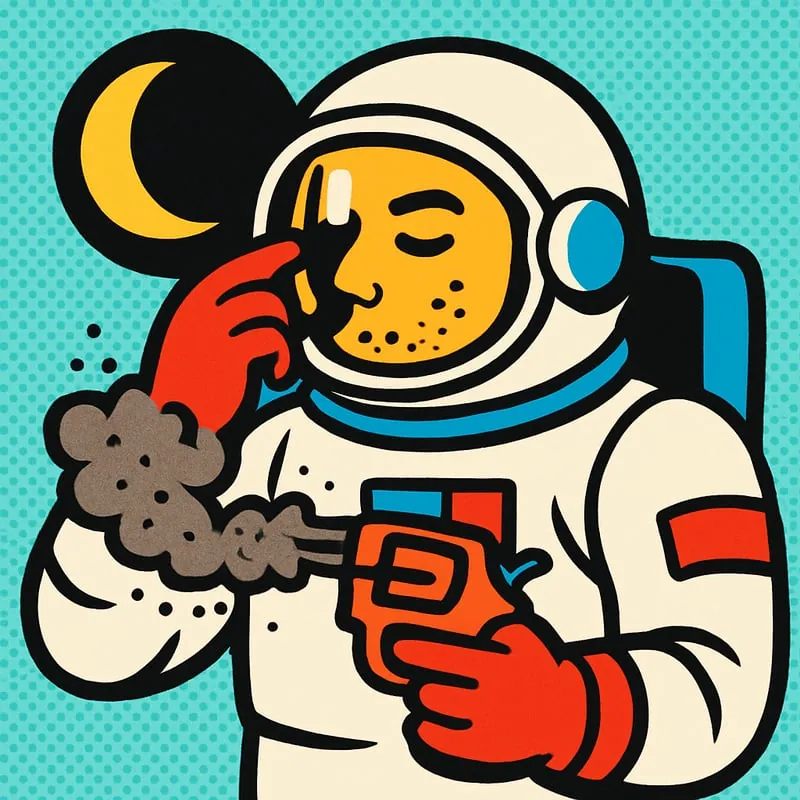
An astronaut in a space suit sniffs a cloud of gray moon dust while holding a futuristic gun-like device, with a crescent…
DID YOU KNOW? Moon dust smells like gunpowder. Apollo astronauts tracked it inside their lander and noticed the strange scent. 2 min read
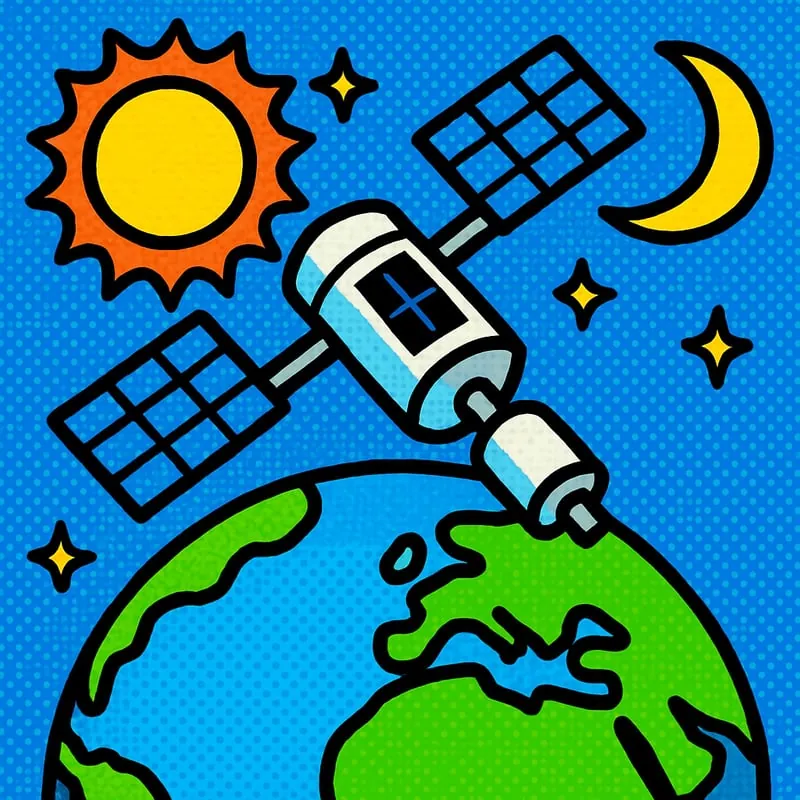
A colorful space station orbits a vibrant Earth, with a bright sun and crescent moon shining in a starry blue sky.
DID YOU KNOW? The Space Station orbits Earth every 90 minutes. Astronauts on board see 16 sunrises and 16 sunsets every day. 2 min read
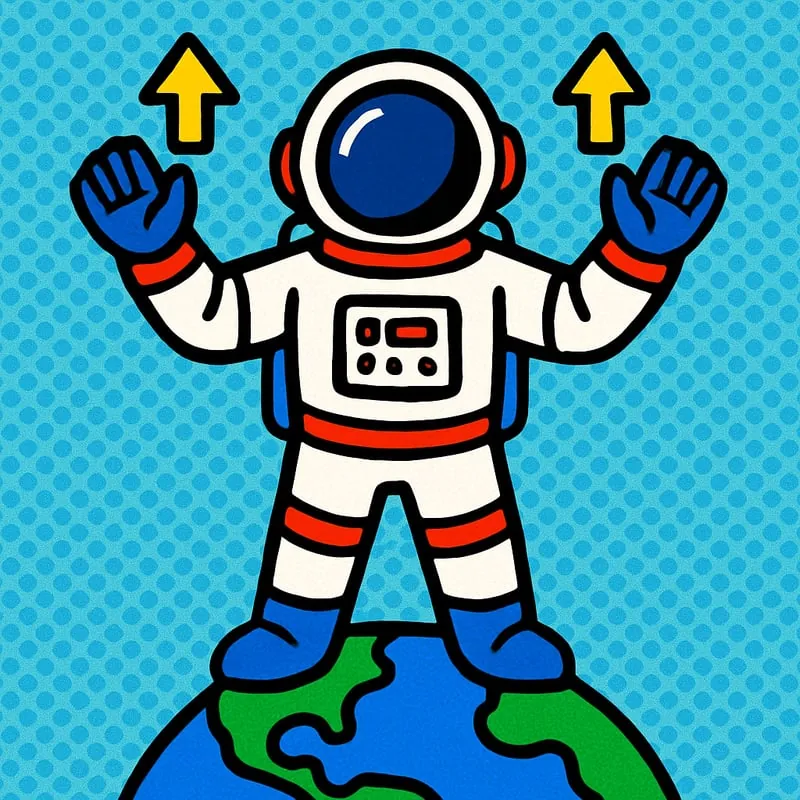
An excited astronaut stands on Earth, arms raised with arrows pointing upward, showcasing their newfound height in space.
DID YOU KNOW? Astronauts grow up to 2 inches taller in space. Without gravity squashing their spines, they stretch out - until they come back home. 2 min read
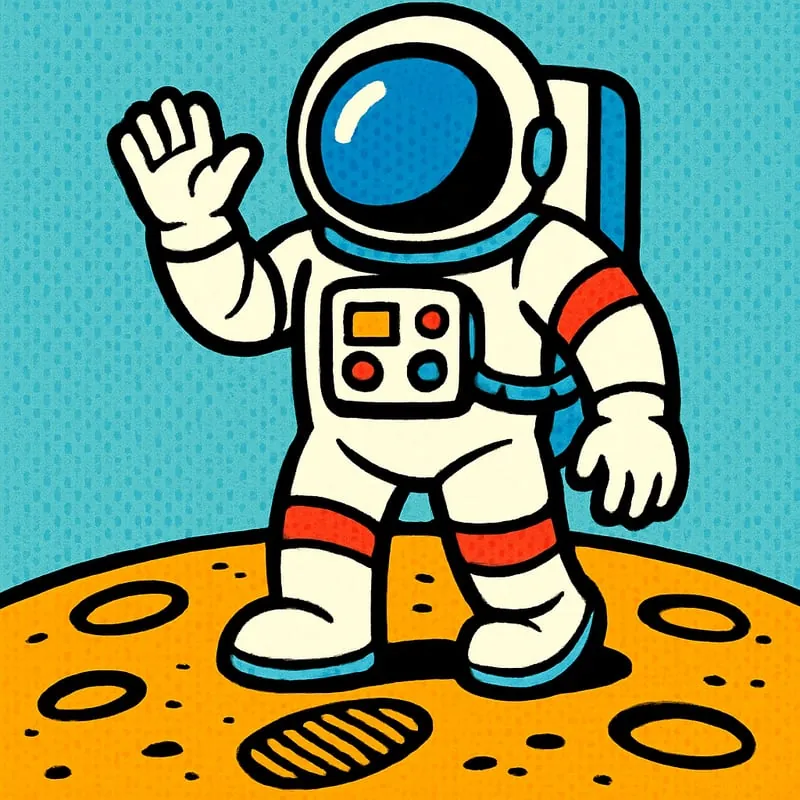
An astronaut waves cheerfully while standing on a bright yellow moon surface, leaving a distinct footprint behind.
DID YOU KNOW? Twelve people have walked on the Moon - all between 1969 and 1972. Nobody's been back since. The footprints they left are still there. 2 min read
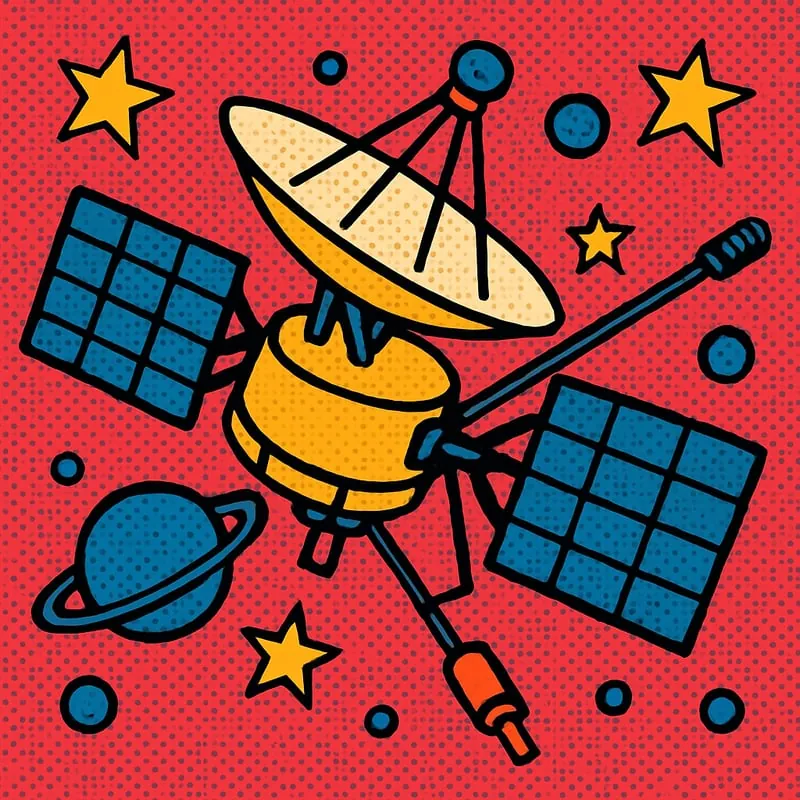
A colorful cartoon of the Voyager 1 spacecraft with its iconic dish and solar panels, surrounded by stars and planets in…
DID YOU KNOW? Voyager 1 is the farthest human-made object in space. Launched in 1977, it's now over 15 billion miles from Earth. 2 min read
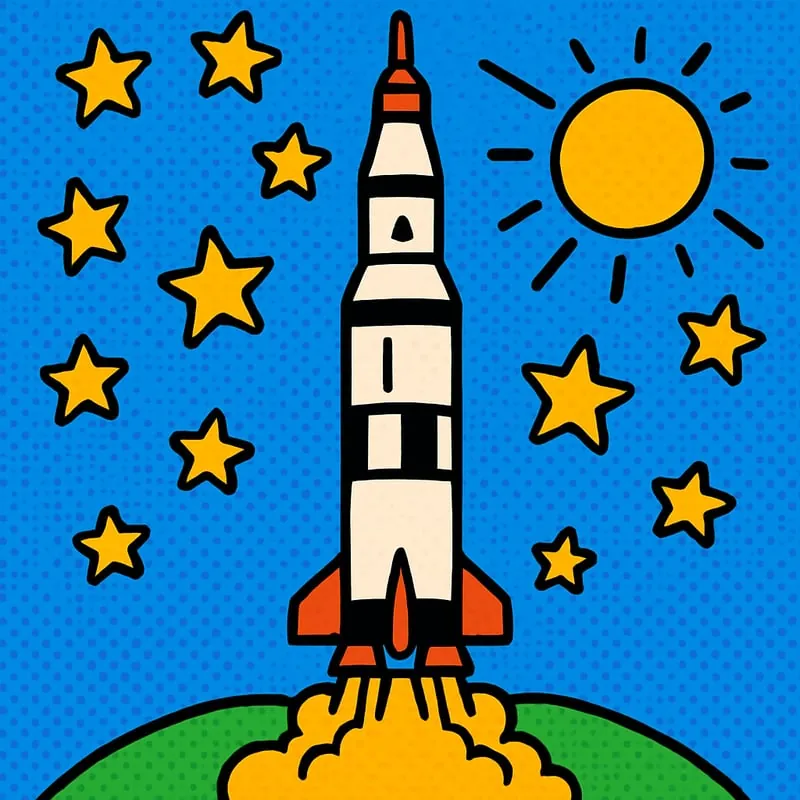
A towering Saturn V rocket blasts off from a green hill, surrounded by bright stars and a shining sun in a blue sky.
DID YOU KNOW? The rocket that took astronauts to the Moon was 36 stories tall. At 363 feet tall, Saturn V towers over the Statue of Liberty and weighs as much as 6.5 million pounds when fully fueled for its lunar journey. 2 min read
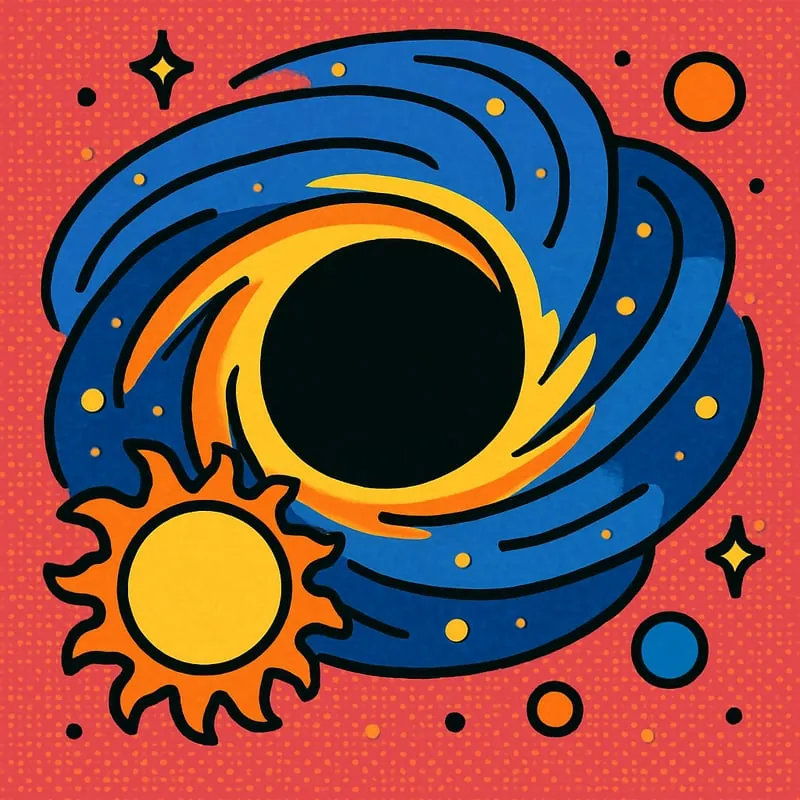
A swirling cosmic scene features a massive black hole at the center, surrounded by colorful stars and planets.
DID YOU KNOW? Some black holes have masses of billions of suns. They sit at the centers of galaxies and might be older than the galaxies themselves. 2 min read
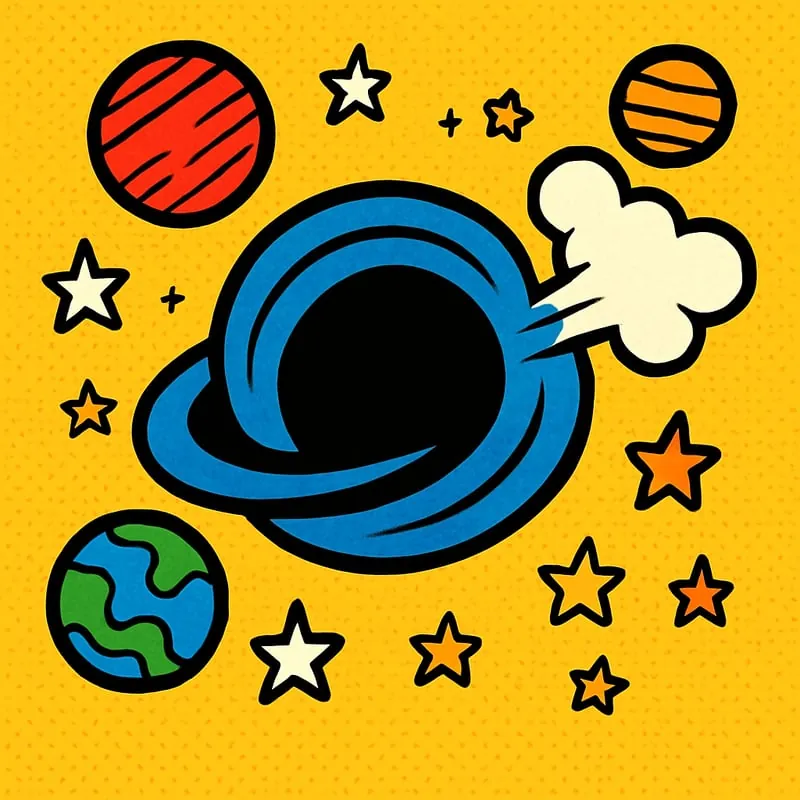
A cartoon black hole with a blue swirling edge emits puffs of energy, surrounded by colorful planets and twinkling stars.
DID YOU KNOW? Black holes slowly evaporate over trillions of years. Stephen Hawking figured out they leak energy and eventually disappear. 2 min read
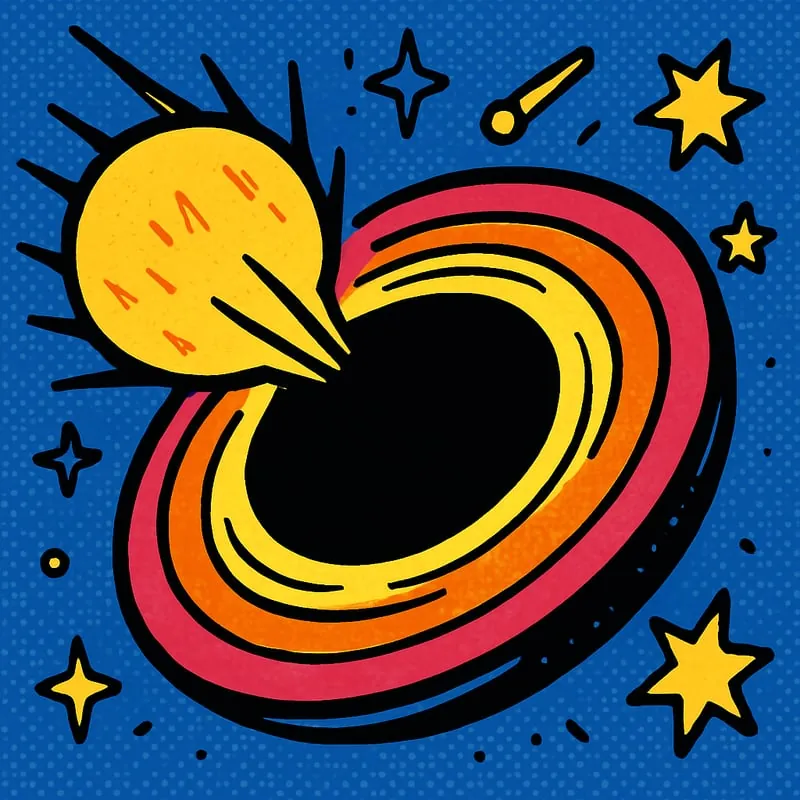
A vibrant black hole swirls with colorful rings, as a bright yellow star explodes nearby, sending energy into space.
DID YOU KNOW? Most black holes form when massive stars die. A really big star runs out of fuel, collapses, and crushes itself into a singularity. 2 min read
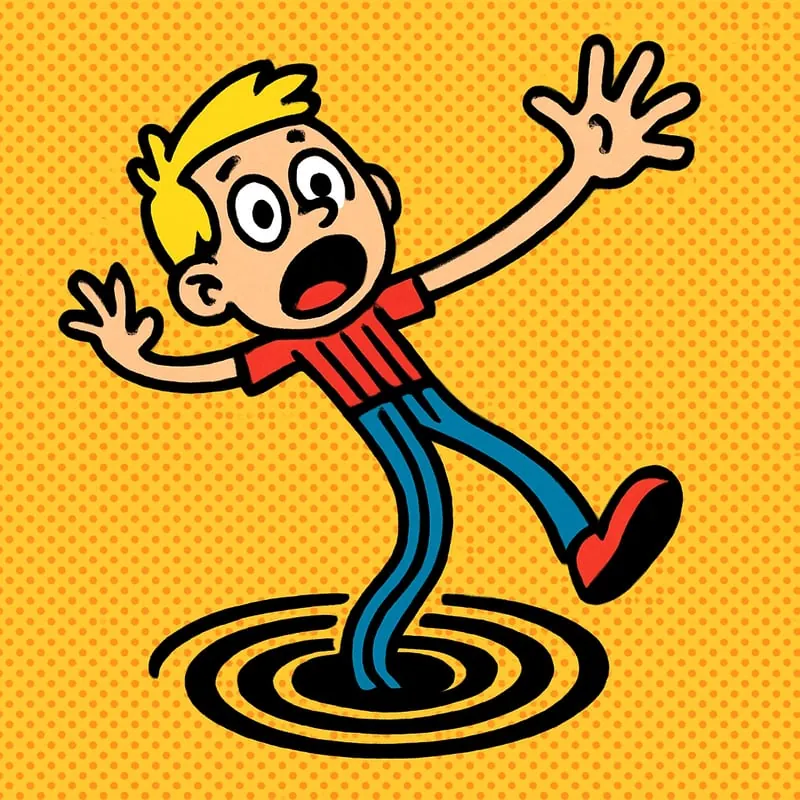
A cartoon boy with a shocked expression flails his arms as he tumbles into a swirling black hole on a bright yellow…
DID YOU KNOW? Falling into a black hole would stretch you like spaghetti. Astronomers actually call it "spaghettification." That's the technical term. 2 min read
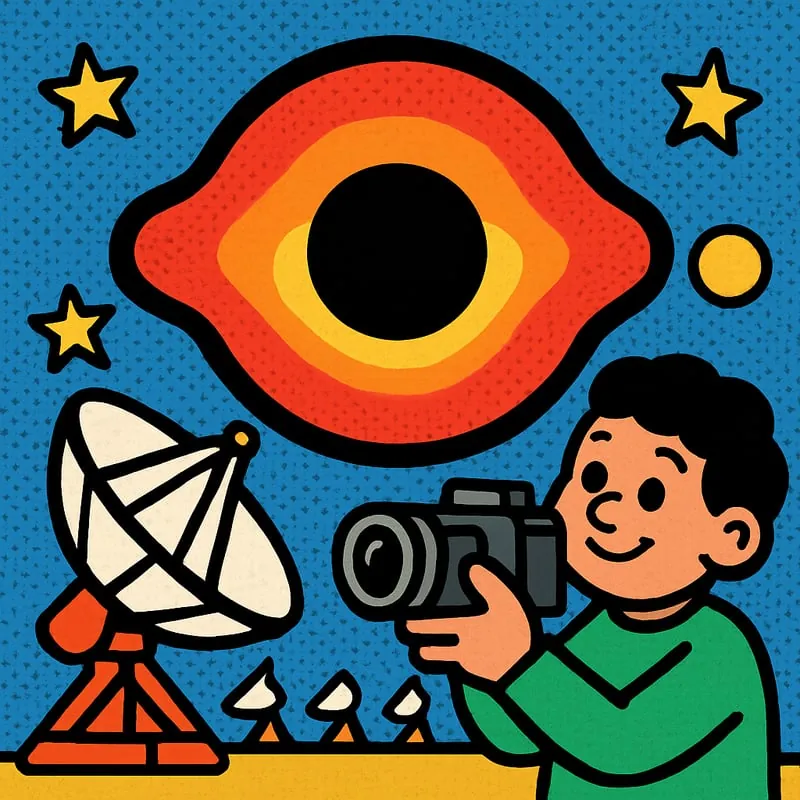
A cheerful kid with a camera snaps a photo of a glowing black hole surrounded by colorful stars and a radio telescope.
DID YOU KNOW? The first photo of a black hole was taken in 2019. It took eight radio telescopes around the world working as one to capture the image. 2 min read
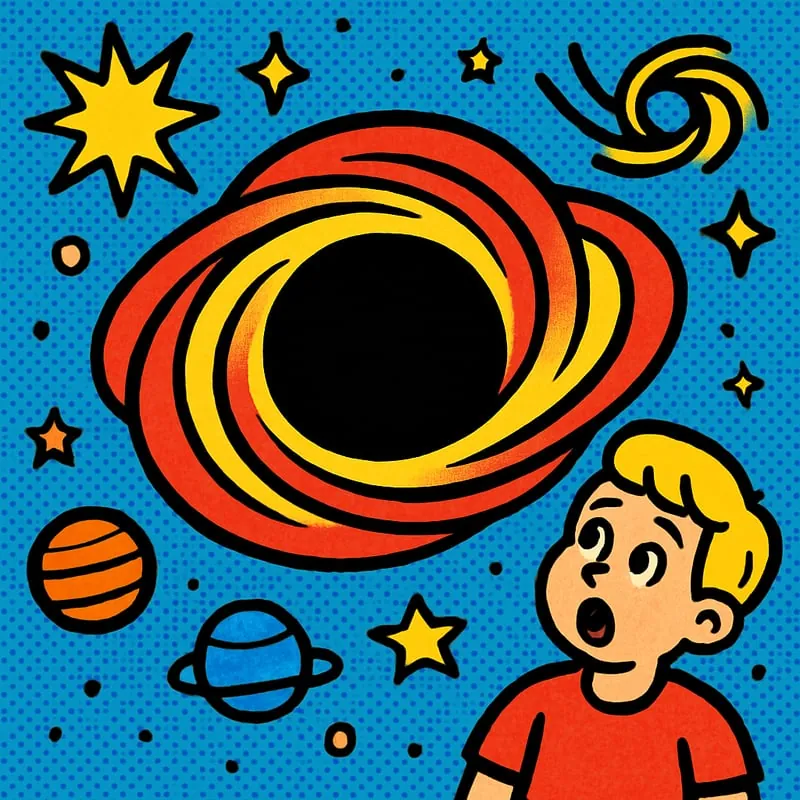
A surprised boy in a red shirt gazes up at a swirling black hole surrounded by colorful stars and planets in space.
DID YOU KNOW? There's a giant black hole at the center of our galaxy. It's 4 million times the mass of the Sun - and we live 26,000 light-years from it. 2 min read
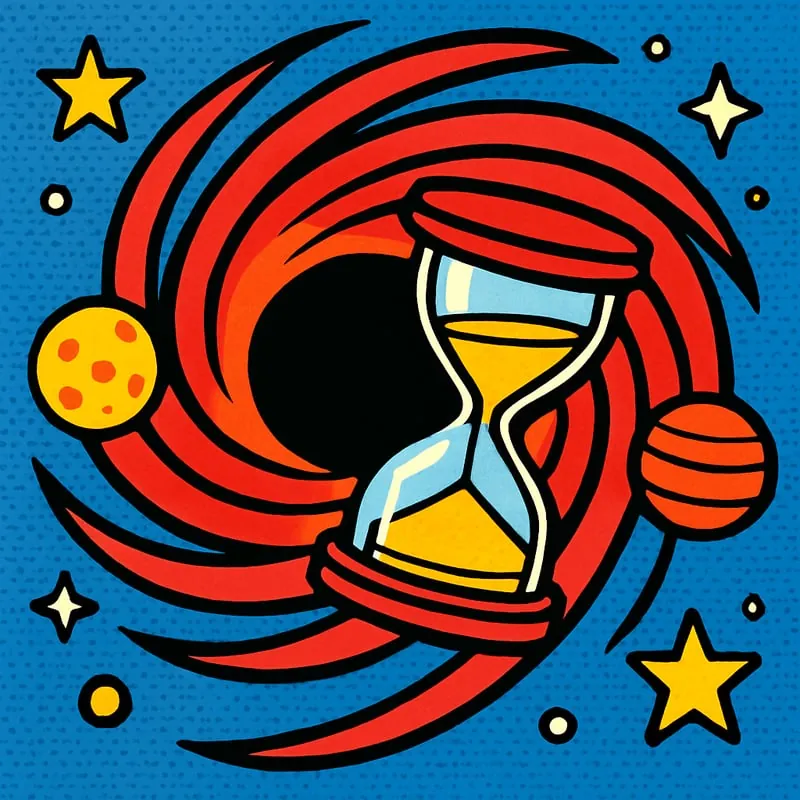
A swirling vortex of red and black surrounds an hourglass, with planets and stars scattered across a bright blue background.
DID YOU KNOW? Time literally slows down near a black hole. An hour spent close to one could be a year - or a thousand years - outside. 2 min read
An astronaut in a white space suit floats in space, reaching out toward a swirling black hole, surrounded by bright stars.
DID YOU KNOW? Past a black hole's "event horizon," even light can't escape. Cross that invisible line and you can never come back. Not even at the speed of light. 2 min read
A cheerful, cartoon sun beams brightly surrounded by colorful planets, including Earth and Saturn, against a vibrant blue…
DID YOU KNOW? The Sun makes up 99.8% of all the mass in our solar system. Everything else - all the planets, moons, asteroids - is just 0.2%. 2 min read
A cheerful, cartoon sun with a big smile and rosy cheeks shines brightly among colorful planets and twinkling stars.
DID YOU KNOW? The Sun is a "yellow dwarf" - and that's actually a compliment. It's middling in size and middling in age, but that's exactly why life could exist around it. 2 min read
A cheerful yellow star with a smile floats in a colorful, fluffy nebula surrounded by smaller stars and a crescent moon.
DID YOU KNOW? Stars are born inside giant clouds of gas called nebulae. Some of the most beautiful images from space are stellar nurseries. 2 min read
A big, cheerful yellow star with a wink and a smile sparkles among smaller stars and a planet, all against a bright blue sky.
DID YOU KNOW? Sirius is the brightest star in our night sky. It's only 8.6 light-years away - practically next door, in space terms. 2 min read
A bright red explosion bursts against a blue background, surrounded by twinkling stars and a swirling galaxy.
DID YOU KNOW? Betelgeuse - the bright red star in Orion - is about to explode. When it goes supernova, it will be bright enough to see during the day. 2 min read
A cheerful astronaut in a white suit and helmet zooms through space with a jetpack, reaching out to a smiling yellow star.
DID YOU KNOW? The closest star to us (besides the Sun) is 4.2 light-years away. Even at the speed of light, getting there would take over four years. 2 min read
Two cheerful yellow stars smile at each other above a bright, grinning sun, surrounded by smaller twinkling stars on a blue…
DID YOU KNOW? Most stars come in pairs - or even bigger groups. Most sun-like and bigger stars have a companion - though the tiny red dwarf stars that make up most of the galaxy tend to be loners. 2 min read
A cheerful sun with a smiling face is split in half, surrounded by colorful planets and twinkling stars against a bright…
DID YOU KNOW? The Sun is halfway through its life. It's been around for 4.6 billion years - and has about 5 billion to go. 2 min read
A cheerful, cartoon sun with a big smile sends fiery pieces flying into a bright blue sky, bursting with energy.
DID YOU KNOW? The Sun loses 4 million tons of itself every second. Sunlight isn't free - it's literally pieces of the Sun being thrown into space. 2 min read
Jupiter, with its bold orange and brown stripes, is surrounded by stars and a large moon, Ganymede, glowing brightly nearby.
DID YOU KNOW? Jupiter has more than 95 known moons. Jupiter boasts over 95 moons, with Ganymede being the largest—it's even bigger than the planet Mercury, making it a true giant in our solar system. 2 min read
Earth smiles in the center, surrounded by cheerful kids waving, and playful giraffes, with stars and a distant planet in the…
DID YOU KNOW? Earth is the only place in the universe where we know life exists. 8 billion people, billions of species, all on one tiny blue ball. 2 min read
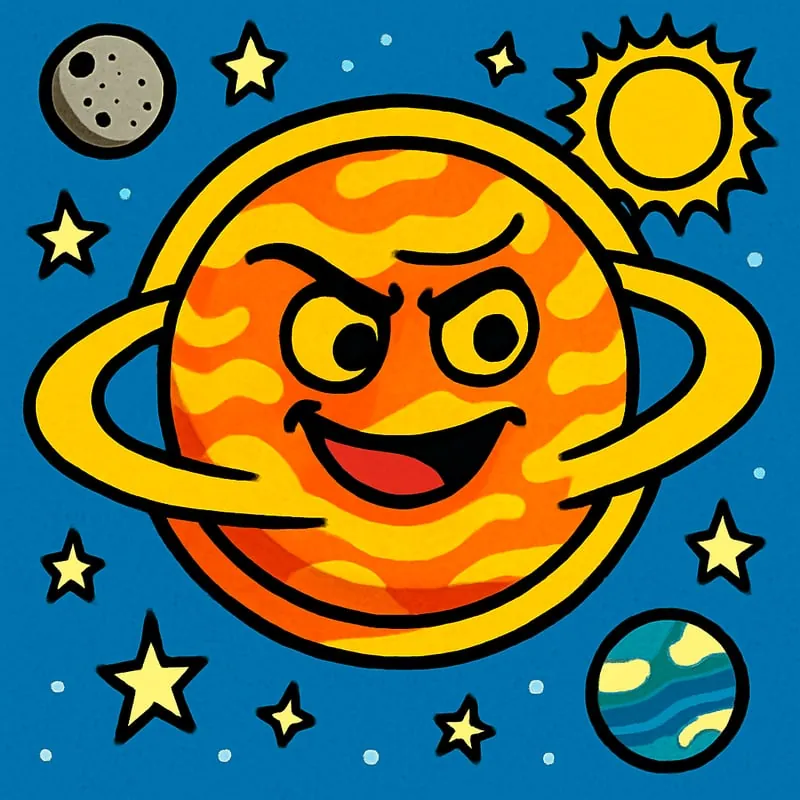
A mischievous orange planet with swirling patterns grins widely, surrounded by stars, a sun, and smaller celestial bodies.
DID YOU KNOW? Venus is hotter than Mercury - even though it's farther from the Sun. Its thick CO₂ atmosphere traps heat like a runaway greenhouse. 2 min read
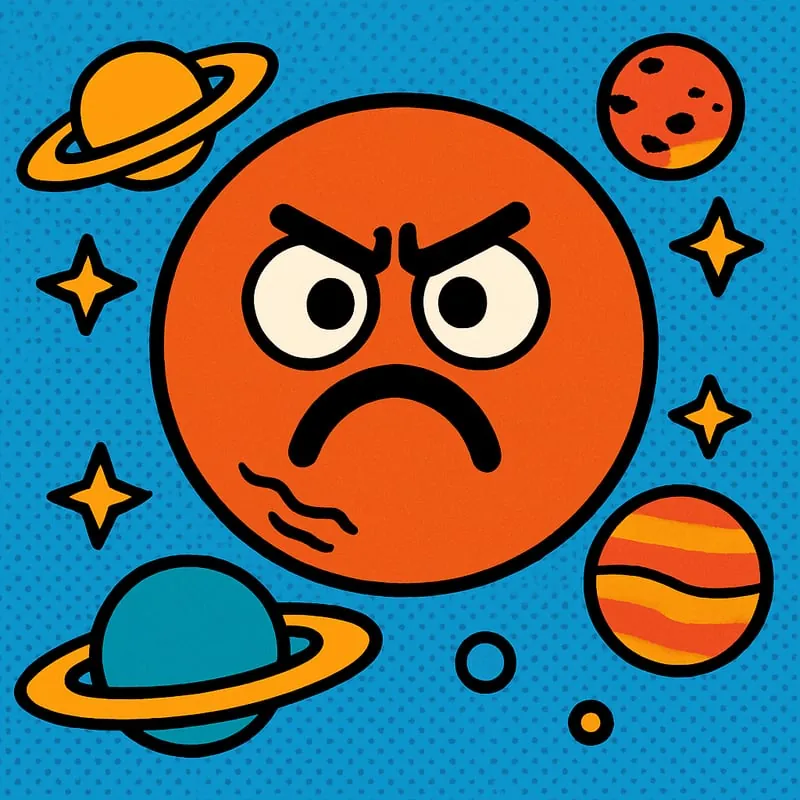
An angry orange planet with furrowed brows frowns at surrounding colorful planets, stars, and a tiny Pluto with a sad face.
DID YOU KNOW? Pluto isn't a planet anymore - and a lot of people are still mad about it. In 2006, astronomers reclassified Pluto as a "dwarf planet." 2 min read
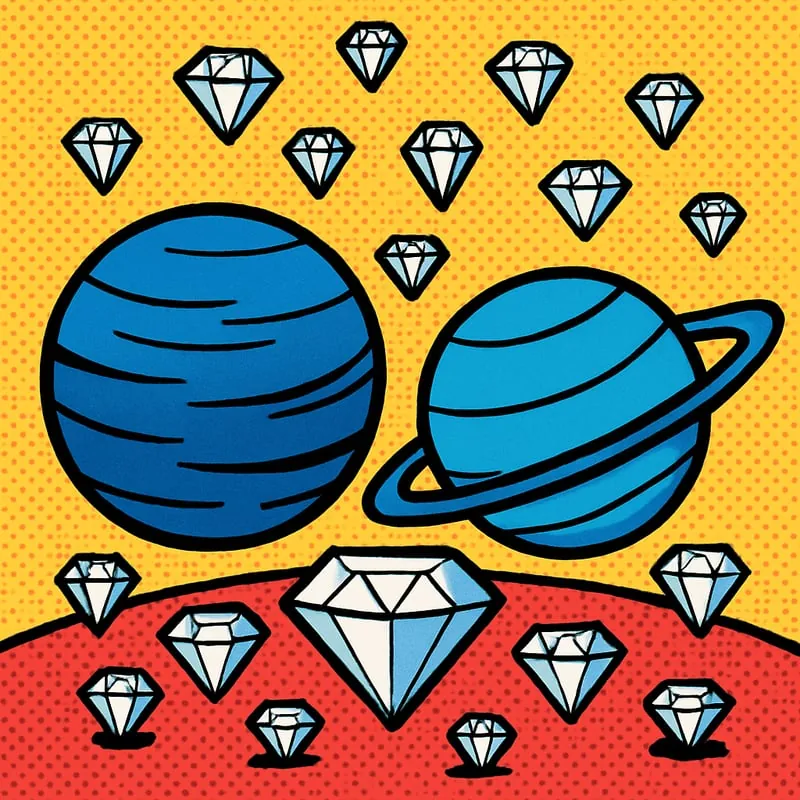
Two vibrant blue planets float in a yellow sky, surrounded by sparkling diamonds raining down like hail over a red surface.
DID YOU KNOW? Diamond rain falls on Neptune and Uranus. Pressure deep inside the ice giants squeezes carbon into sparkling diamond hail. 2 min read
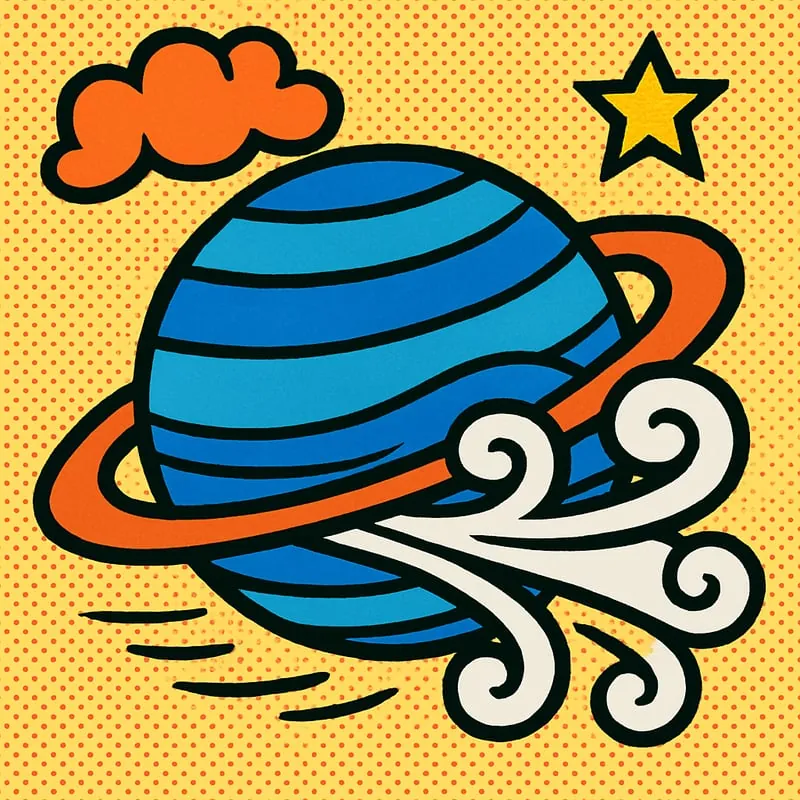
A vibrant blue and teal Neptune spins with swirling winds, cartoon clouds, and a bright star against a sunny yellow backdrop.
DID YOU KNOW? Neptune's winds are faster than the speed of sound. Storms there can reach 1,300 mph - and we still don't know why. 2 min read
A bright blue Uranus rolls through space, surrounded by a shining sun, colorful planets, and twinkling stars.
DID YOU KNOW? Uranus rotates sideways - basically rolling around the Sun. Its axis is tipped 98° from vertical, so each pole gets 42 years of sun then 42 years of darkness. 2 min read
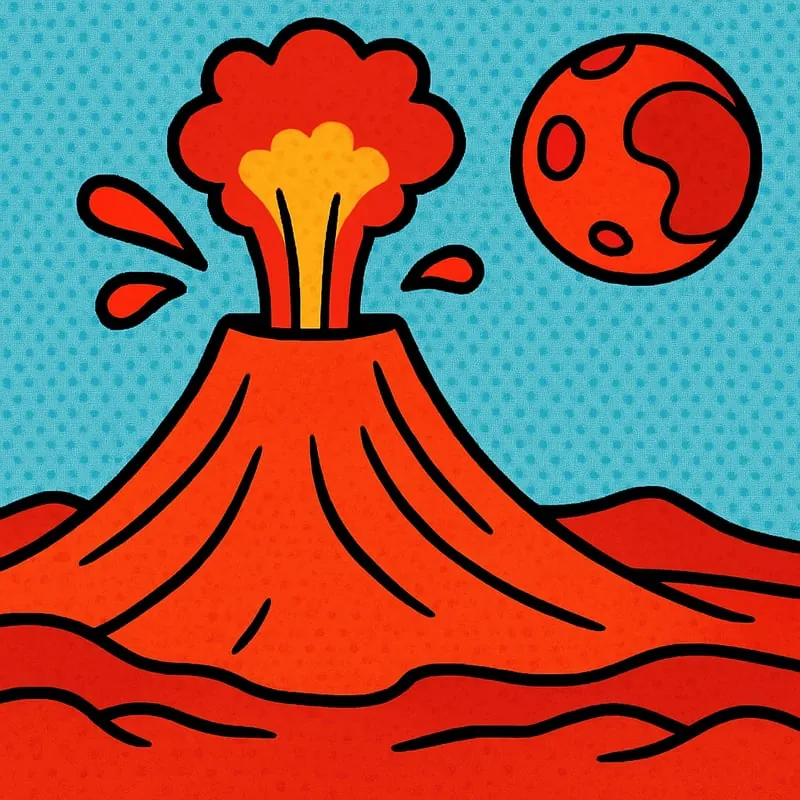
A massive red volcano erupts on a barren Martian landscape, with bright yellow lava and a distant planet in the sky.
DID YOU KNOW? Mars has a volcano three times taller than Mount Everest. Olympus Mons is the tallest mountain in the entire solar system. 2 min read
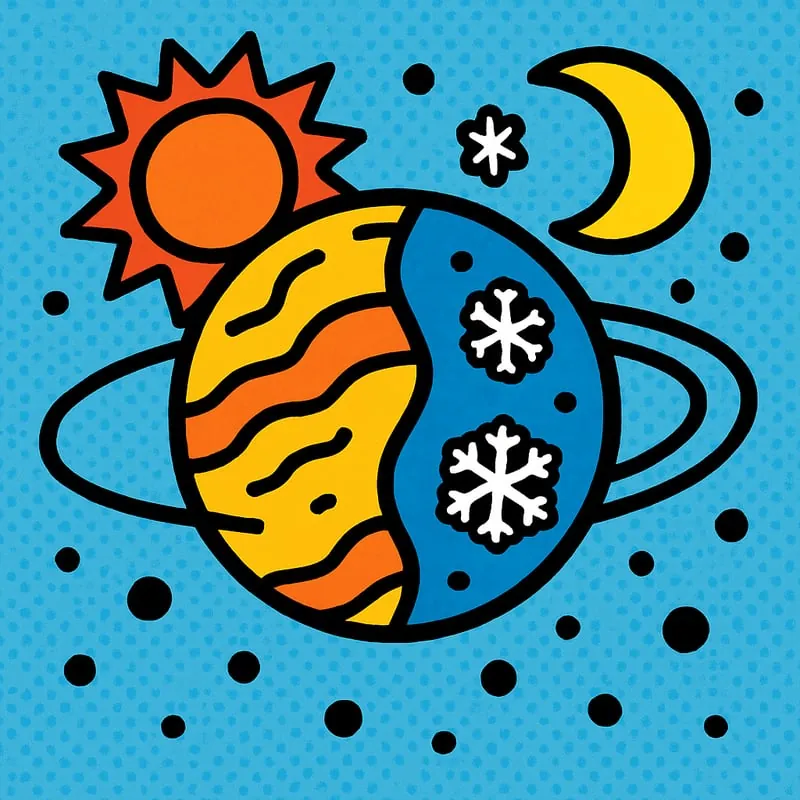
A colorful cartoon planet with a sun and moon, split between a fiery side and a snowy side, showcasing extreme temperature…
DID YOU KNOW? Mercury swings from 800°F by day to -290°F by night. With almost no atmosphere, the closest planet to the Sun can't hold onto its heat. 2 min read
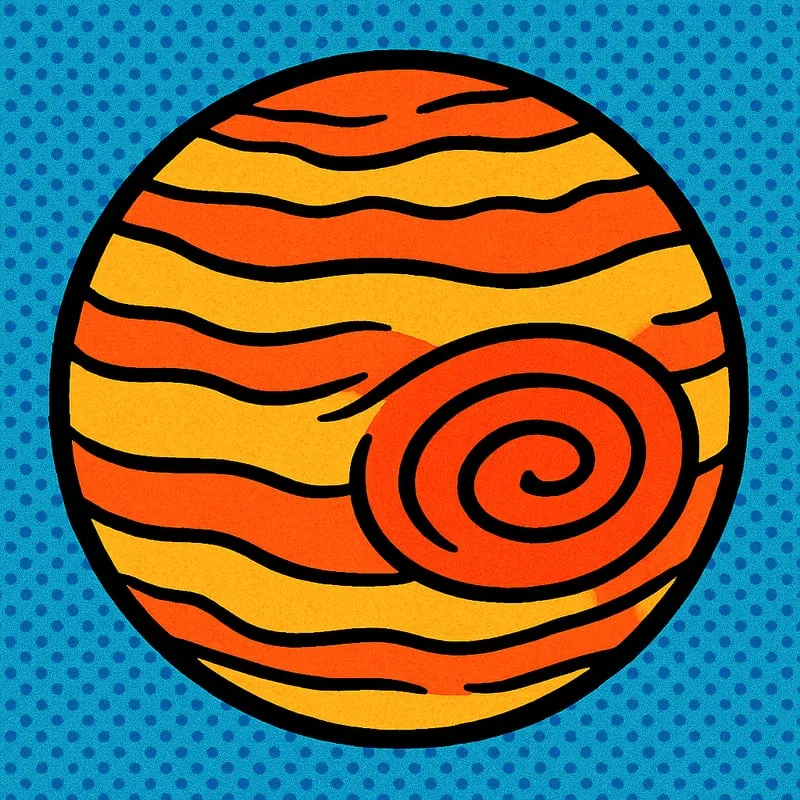
Jupiter swirls with vibrant orange and yellow stripes, featuring a massive red spiral storm on its surface.
DID YOU KNOW? Jupiter has a storm bigger than Earth that has lasted 400 years. The Great Red Spot is a hurricane wider than our entire planet. 2 min read
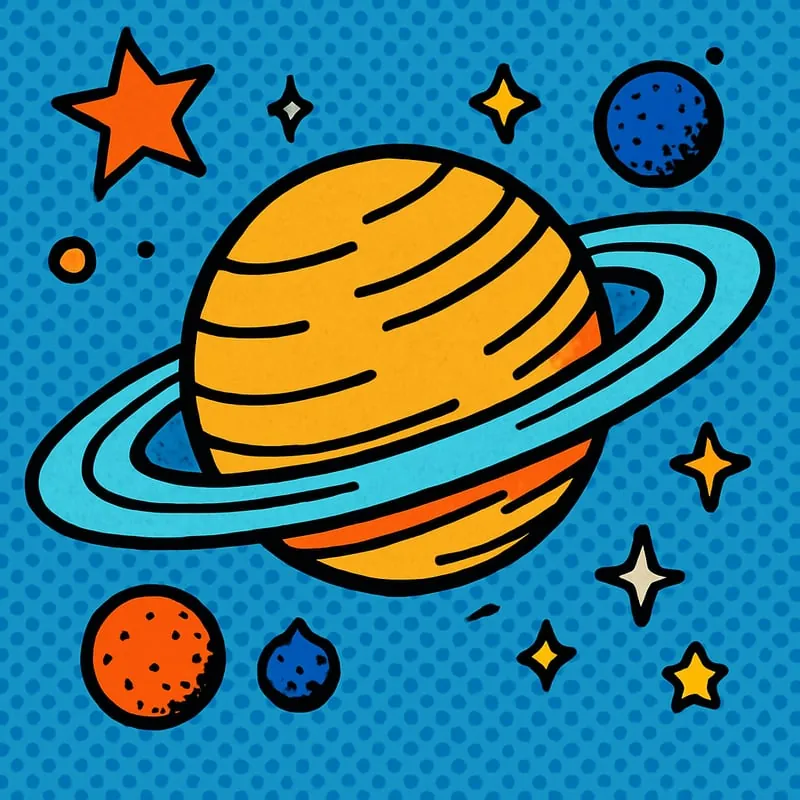
Saturn, with its vibrant yellow and blue rings, floats among colorful planets and twinkling stars in a bright blue sky.
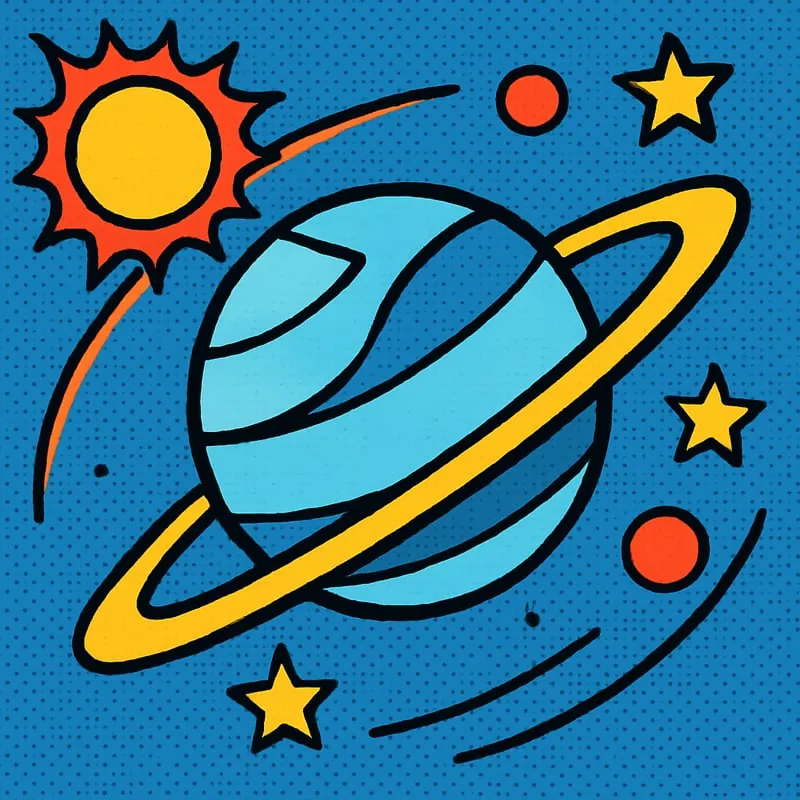
DID YOU KNOW? Saturn's rings are made almost entirely of ice. They stretch 175,000 miles across but are only 30 feet thick in places. 2 min read
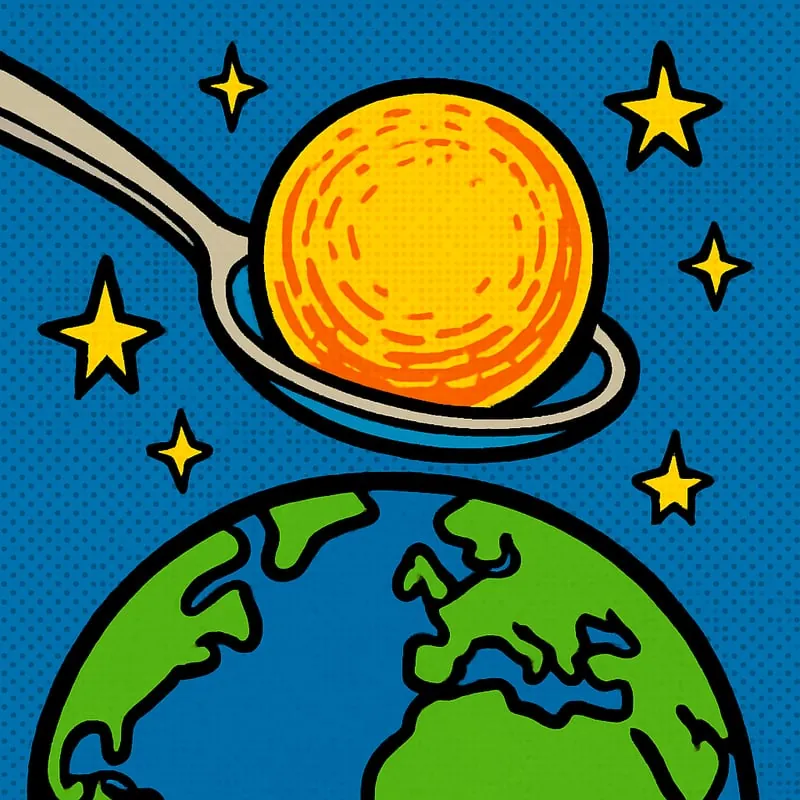
A shiny teaspoon holds a glowing neutron star above a colorful Earth, surrounded by twinkling stars in a bright blue sky.
DID YOU KNOW? A teaspoon of neutron star would weigh a billion tons. Neutron-star material is so dense, a sugar cube of it would outweigh every car on Earth combined. 2 min read
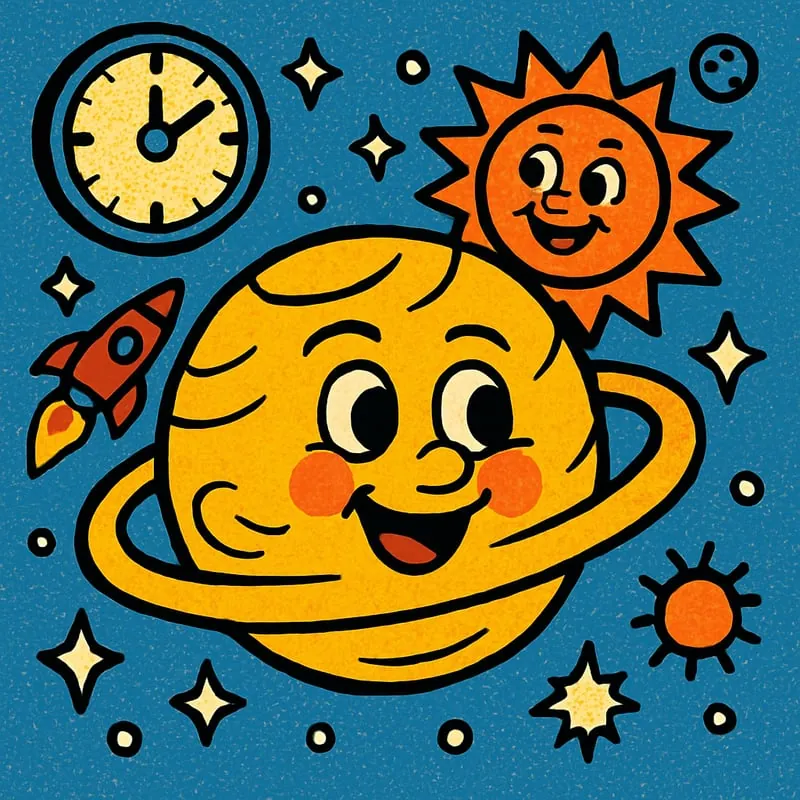
A cheerful, cartoonish Venus with a big smile spins slowly among colorful planets, a clock, and a bright sun in a starry sky.
DID YOU KNOW? A day on Venus is longer than its whole year. Venus rotates so slowly that it goes around the Sun before it finishes spinning once. 2 min read
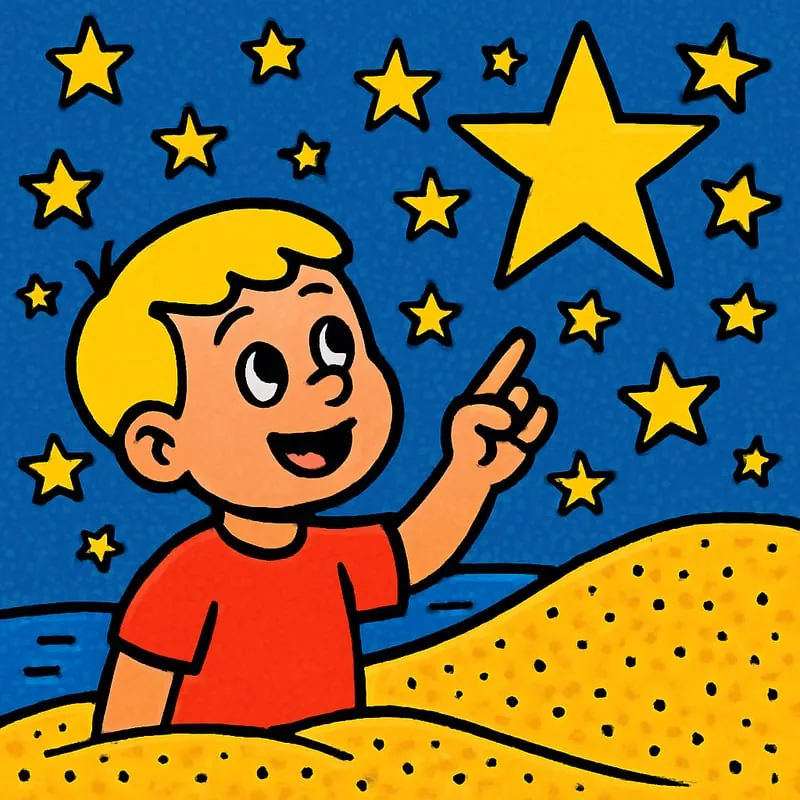
A cheerful boy in a red shirt points up at a giant yellow star, surrounded by twinkling stars against a blue night sky.
DID YOU KNOW? There are more stars in the universe than grains of sand on Earth. Astronomers estimate around 200 billion trillion stars - and the sand-versus-stars race isn't even close. 2 min read

⚡ QUICK-FIRE SPACE WHOAS

61 bite-sized brain-zappers. Click for another.

WHOA!

Roll the dice for an instant whoa.