In the Malheur National Forest in eastern Oregon, scientists in 1998 made a wild discovery. They were investigating why so many pine trees were dying across a huge area. The killer turned out to be a single fungus - Armillaria ostoyae, the “humongous fungus” - spreading underground from one tree to the next.
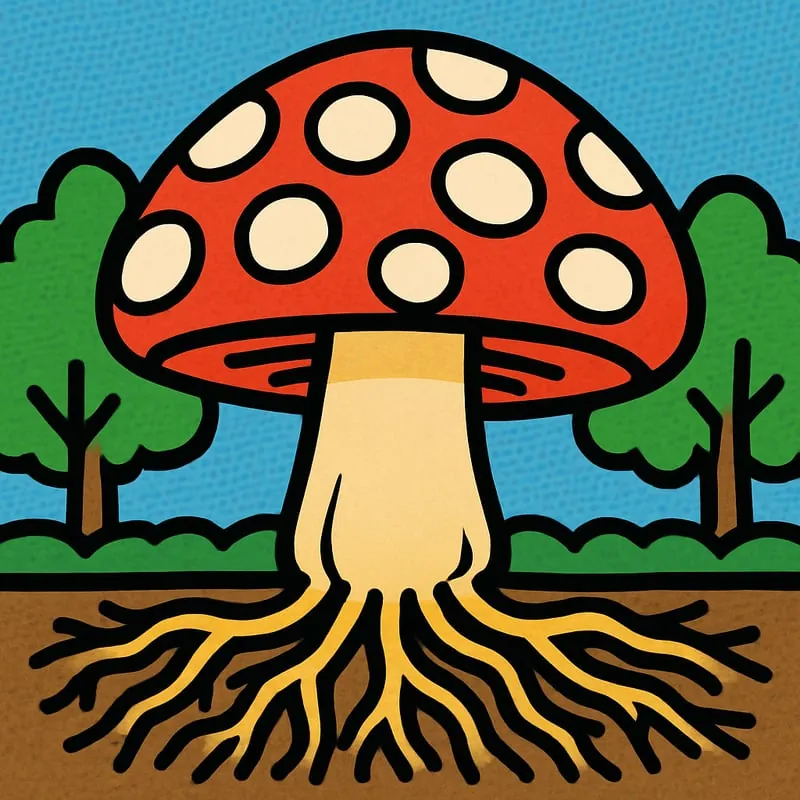
By collecting tissue samples from across the forest and matching their DNA, researchers proved it was all one connected organism. It covers around 9 square kilometres (about 3.5 square miles) and is mostly invisible, made of thread-like networks called mycelium that snake through tree roots. Only the occasional cluster of honey-coloured mushrooms above ground gives it away.
Best estimates put its age between 2,400 and 8,650 years old, depending on how fast you assume it grows. Either way, by sheer area it’s the largest known single living organism on the planet - bigger than Pando the aspen grove or any blue whale ever measured.