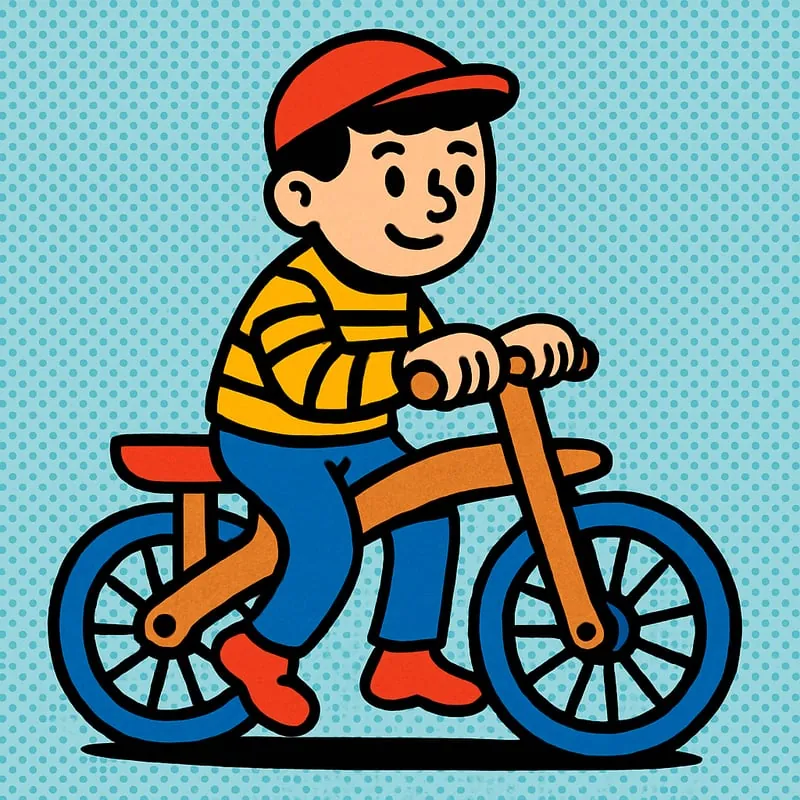
In 1817 a German baron named Karl von Drais built a strange-looking wooden contraption. It had two wheels, a seat and a handlebar. There were no pedals, no brakes and no chain. You just sat on it, pushed off with your feet and balanced as you rolled. He called it the “running machine” (Laufmaschine). It briefly became a craze in Europe before being banned in some cities for going too fast.
Pedals didn’t get added to bikes until the 1860s, when French inventors put cranks on the front wheel. Then came the bicycle with a giant front wheel and tiny back wheel - the “penny-farthing” - which was great for speed but dangerous to fall off. The modern bike with two same-size wheels, a chain and rubber tires arrived in the 1880s.
The bicycle turned out to be the most energy-efficient way for a human to travel. Pedalling at a normal speed, you use less energy per mile than walking. About 2 billion bicycles now exist on Earth - more than cars.