The oldest known soap recipe is on a Babylonian clay tablet from around 2800 BCE. It says to boil animal fat with wood ashes and water. The result is a slimy paste that, while not very nice-smelling, dissolves grease and dirt. The Babylonians used it mostly to wash wool and clothes - not bodies.
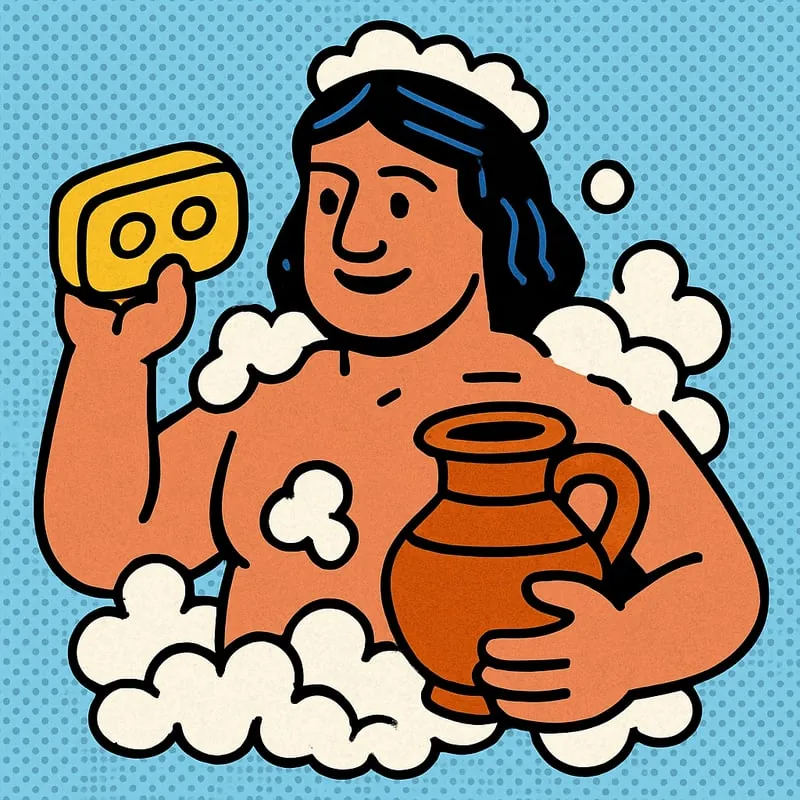
Most ancient peoples didn’t really use soap for bathing. The Romans had famous public baths but cleaned themselves with olive oil and a curved metal scraper called a strigil. For centuries soap was a luxury, taxed heavily in many places and made in small batches.
In the 1800s factories started producing cheap soap in huge quantities, and doctors started realising germs cause disease. Until then, even surgeons didn’t wash their hands between patients. A Hungarian doctor named Ignaz Semmelweis showed in 1847 that hand-washing in maternity wards cut deaths dramatically. He was laughed at. Today everyone agrees: soap is one of the simplest, most powerful tools in medicine.