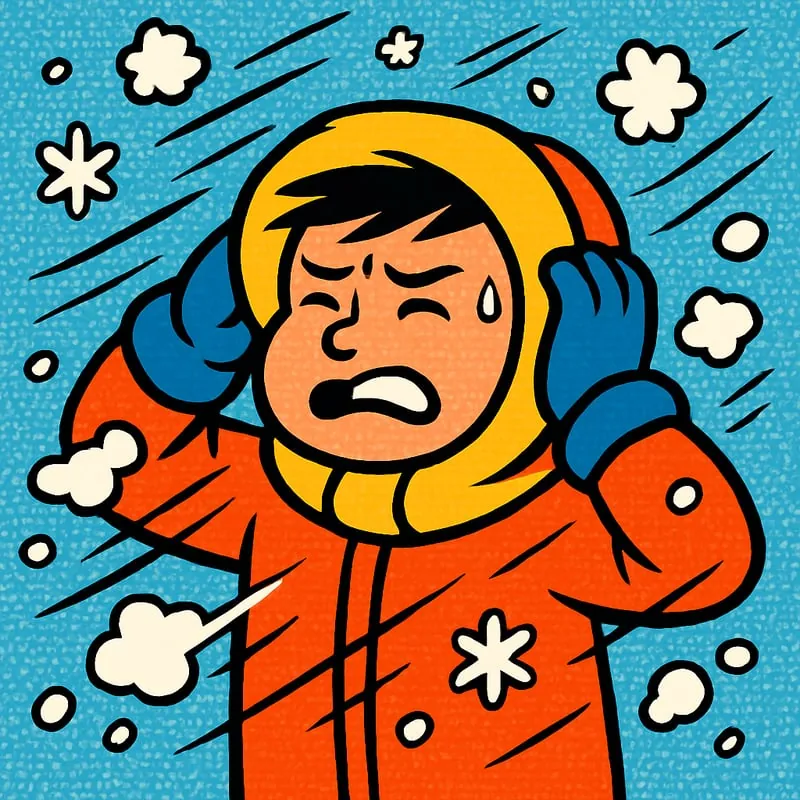
People sometimes call any big snowstorm a “blizzard.” Meteorologists use the term more strictly. To officially count as a blizzard, three things have to be true at the same time. First, winds have to be sustained at 35 miles per hour or more, or have frequent gusts that strong. Second, visibility must be reduced to less than a quarter of a mile by blowing or falling snow. Third, those conditions need to last for at least three hours.
It’s the wind that really makes a blizzard dangerous. Heavy snow on its own can be beautiful. But once strong wind starts whipping snow around, visibility crashes to near zero, drifts pile up against buildings, and going outside becomes a real risk. Travelers caught in blizzards can get disoriented just walking from a car to a house.
Blizzards are most common in the central and northern US, Canada, and northern Europe, where cold air and moisture meet regularly. The infamous Great Blizzard of 1888 dumped 50 inches of snow on New York and New England, killed over 400 people, and locked the cities down for days. Modern weather forecasts and warning systems make blizzards far less deadly than they used to be - but they’re still events to take seriously.