← All topics

WEATHER

Storms, seasons, lightning and snow - the engine of the sky in motion.

50 facts

MORE WEATHER FACTS

49 facts
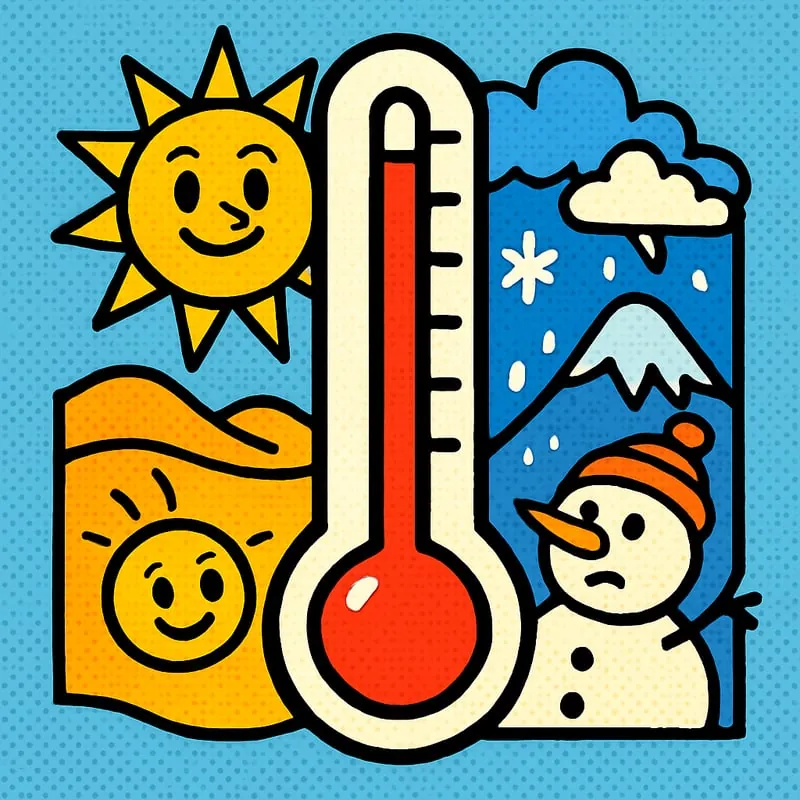
A cheerful thermometer shows a bright sun and a snowman with a worried expression, surrounded by mountains and clouds.
DID YOU KNOW? The temperature range on Earth spans over 260°F. The hottest temperature on Earth hits 134°F in Death Valley, while the coldest drops to -128°F in Antarctica, creating a stunning 260°F difference. 2 min read
A fluffy white cloud sits on a colorful scale, tipping the needle to show its heavy weight in a bright blue sky.
DID YOU KNOW? A single cloud can weigh over a million pounds. Even fluffy white clouds are made of huge amounts of water - they just float on warm air. 2 min read
A cheerful cloud with rosy cheeks floats just above a grassy field, creating a playful scene of fog at ground level.
DID YOU KNOW? Fog is just a cloud touching the ground. Same tiny water droplets, just lower altitude. 2 min read
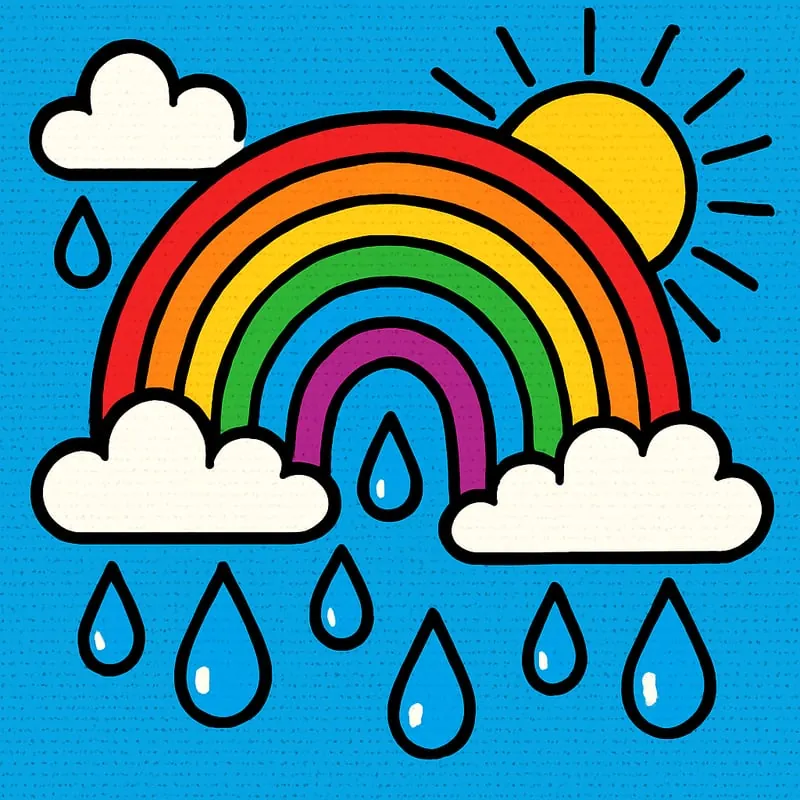
A vibrant rainbow arches across a bright blue sky, with fluffy white clouds and sparkling raindrops falling below.
DID YOU KNOW? A rainbow happens when sunlight bends inside raindrops. Each tiny drop acts like a prism, splitting white light into its colors. 2 min read
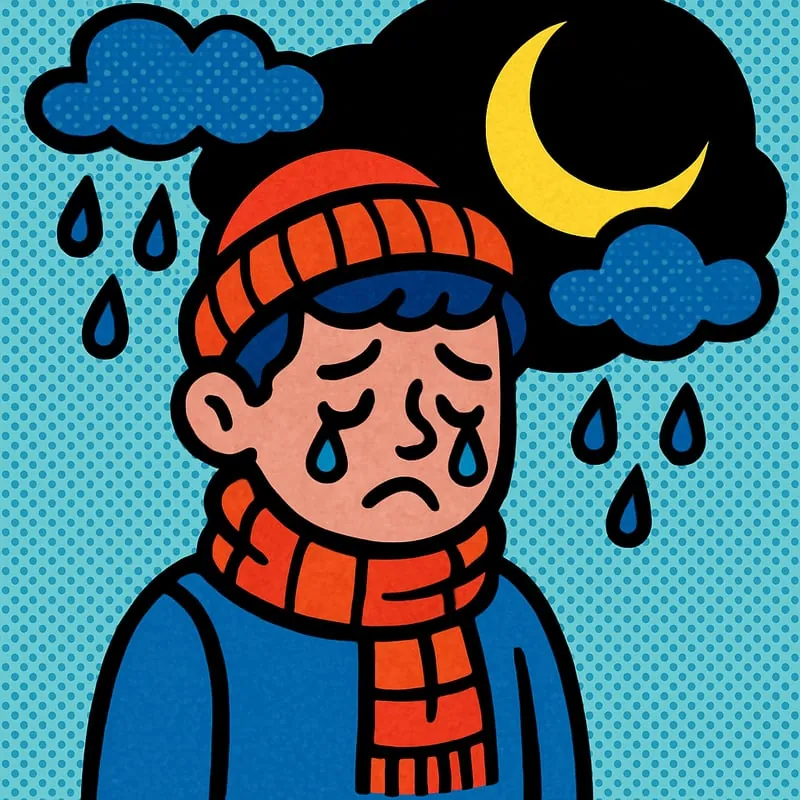
A sad boy in a winter hat and scarf stands under dark clouds with raindrops and a crescent moon, expressing his feelings.
DID YOU KNOW? Some people feel sad every winter - and there's a real reason. Seasonal Affective Disorder is depression triggered by the lack of winter sunlight. 2 min read
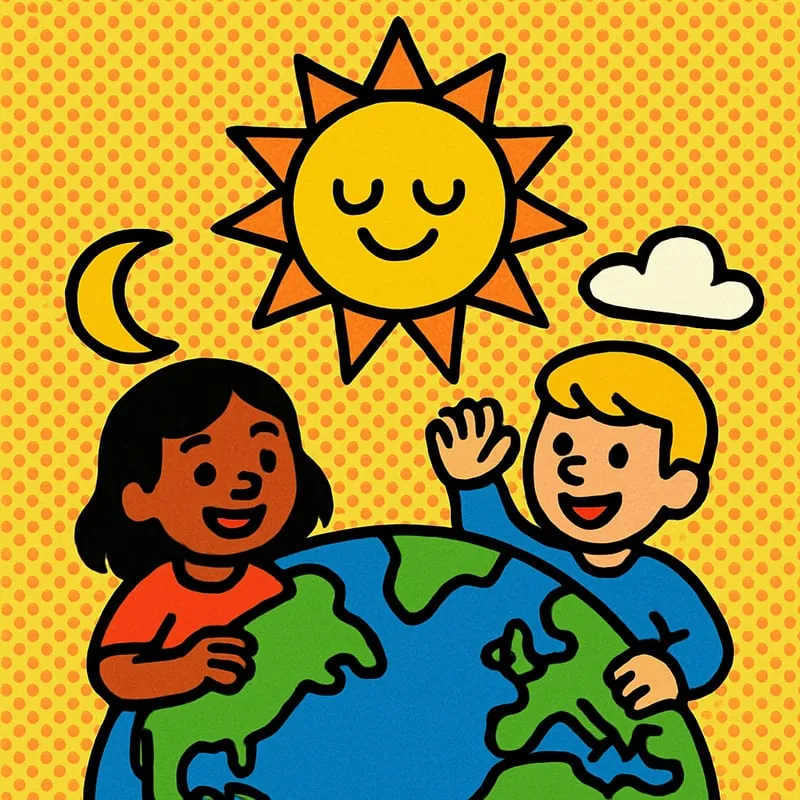
Two cheerful kids, one with dark hair and the other with blonde, hug a colorful Earth while a smiling sun shines above them.
DID YOU KNOW? How much daylight you get depends on where you are on Earth. Near the equator - always 12 hours. Near the poles - anywhere from 0 to 24. 2 min read
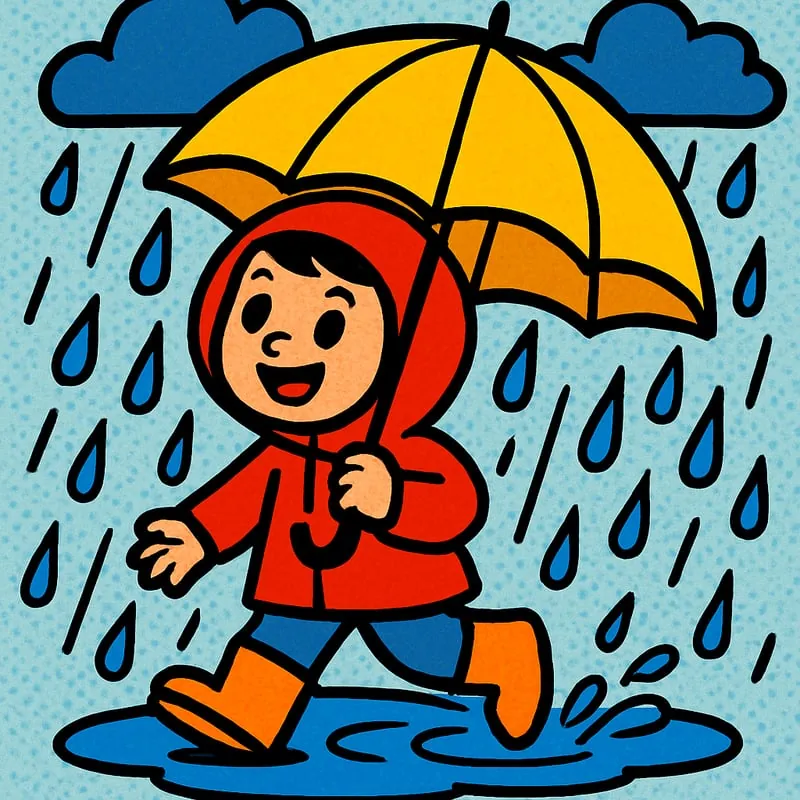
A cheerful child in a red raincoat and yellow boots splashes through puddles, holding a bright yellow umbrella under falling…
DID YOU KNOW? Monsoons bring half a year's worth of rain in a few months. They're not just storms - they're seasonal shifts of wind direction that flip rainfall on and off. 2 min read
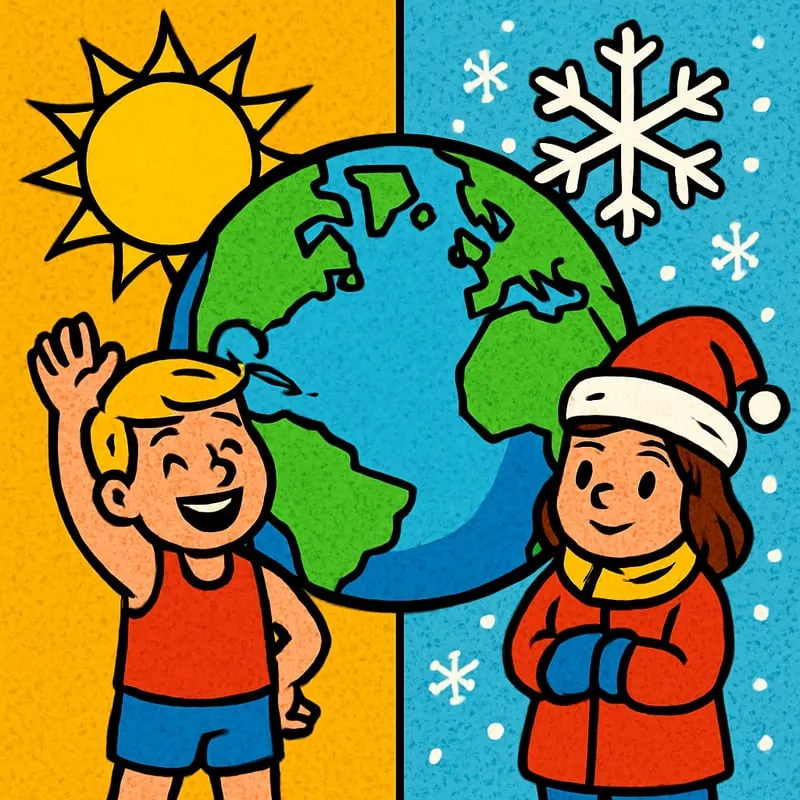
A cheerful boy in summer clothes waves under a sun, while a girl in winter attire stands with crossed arms beside a…
DID YOU KNOW? The Southern Hemisphere has opposite seasons from the Northern. When it's summer in Australia, it's winter in the US - and Christmas in Sydney is hot. 2 min read
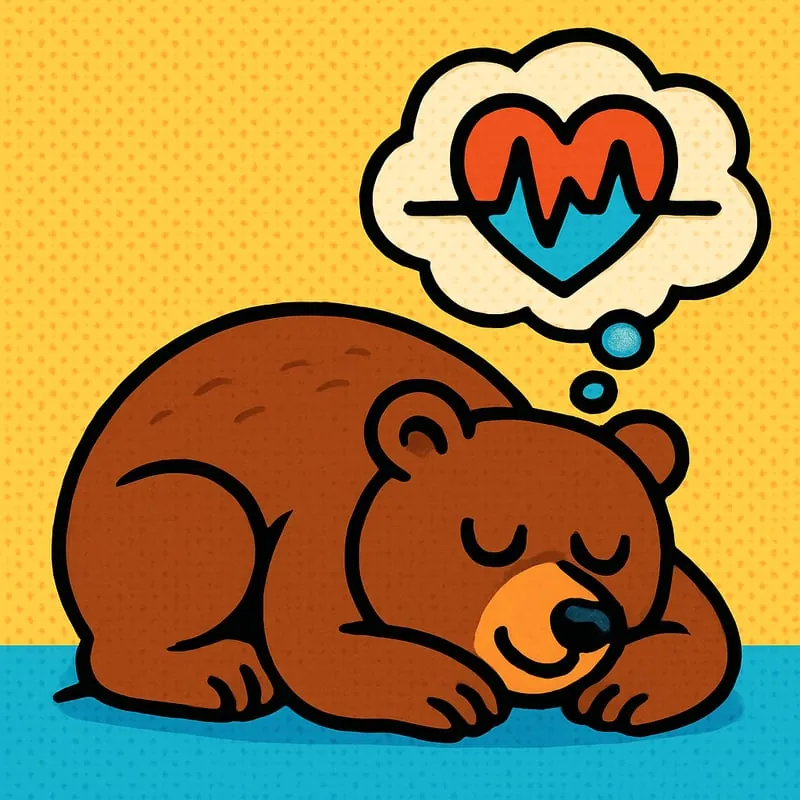
A cozy brown bear snoozes soundly, dreaming of a heart rate monitor with a heartbeat line and a colorful heart symbol.
DID YOU KNOW? Hibernation is way more extreme than just sleeping. A hibernating animal's heart rate can drop from 200 to 5 beats per minute. 2 min read
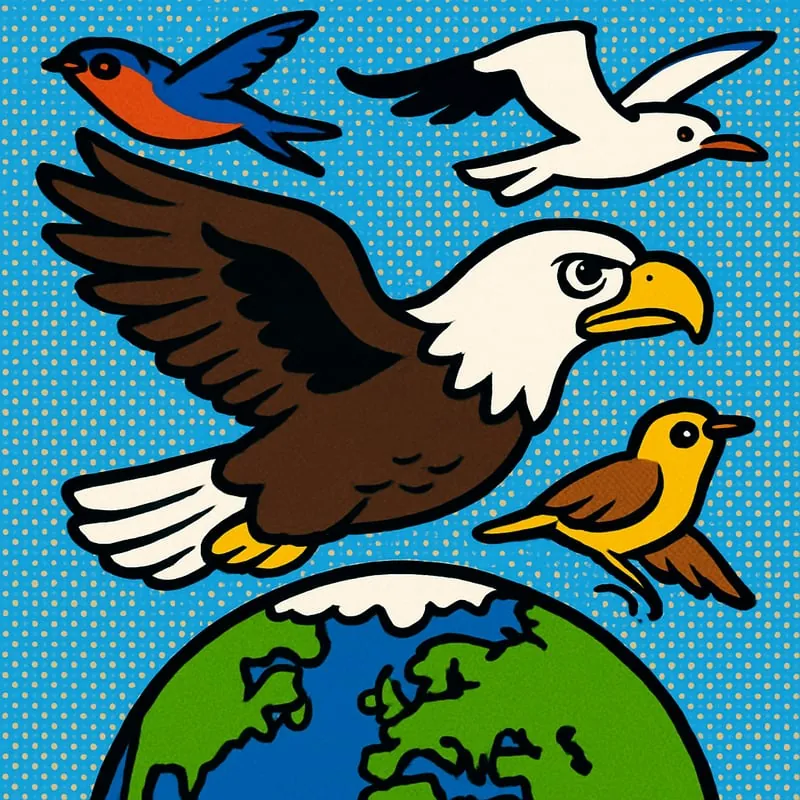
Colorful birds soar above a vibrant Earth, showcasing a blue sky dotted with clouds and a playful pop-art style.
DID YOU KNOW? Billions of birds migrate every year. Some travel from the Arctic to Antarctica and back - pole to pole each year. 2 min read
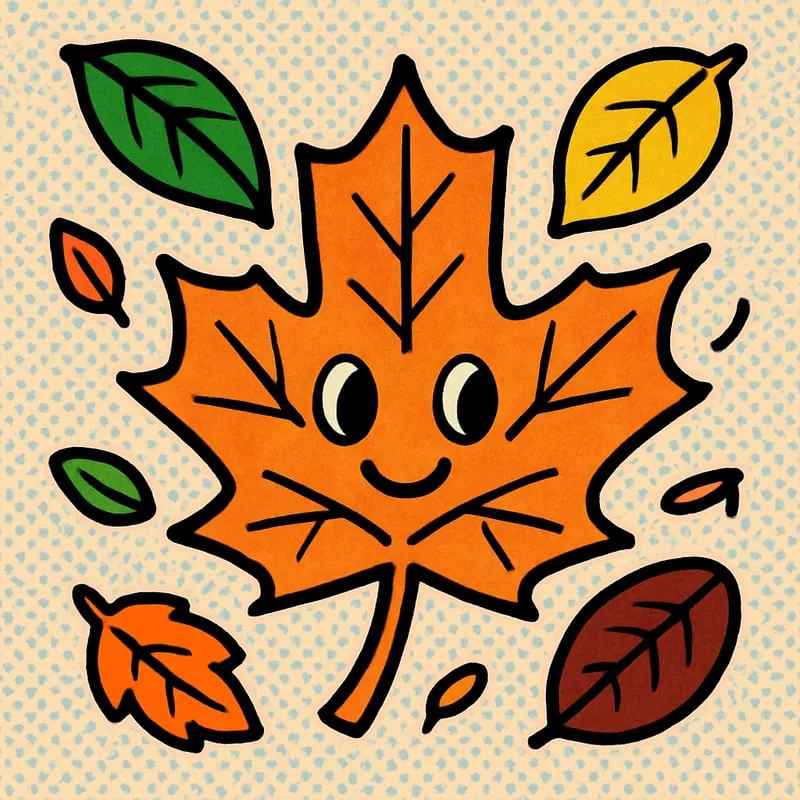
A cheerful orange maple leaf with big eyes surrounded by smaller yellow, green, and brown leaves on a dotted background.
DID YOU KNOW? Autumn leaves were always those colors - they were just hidden. Yellow and orange pigments are in the leaves all summer. Green chlorophyll just covers them up. 2 min read
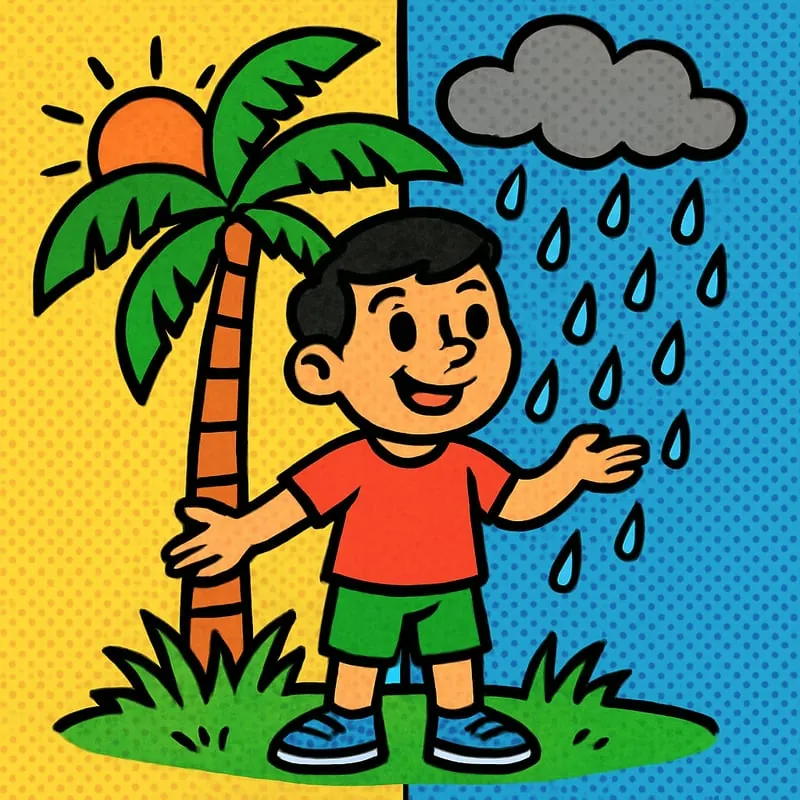
A cheerful boy stands between a sunny side with a palm tree and a rainy side with dark clouds, arms outstretched in wonder.
DID YOU KNOW? Near the equator, there's no real winter or summer. The tropics have warm weather all year - but they have rainy and dry seasons instead. 2 min read
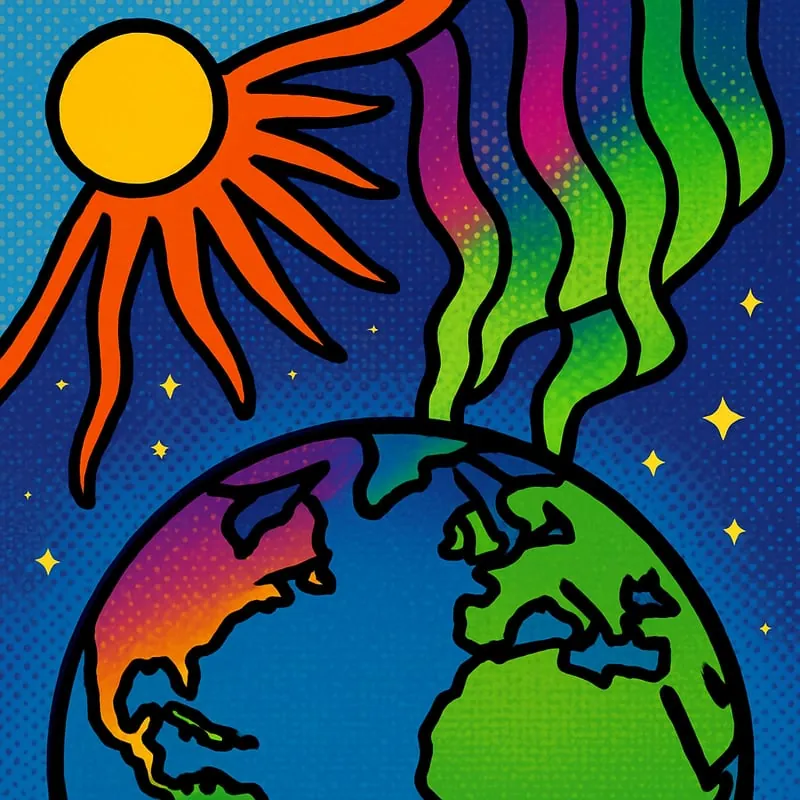
A vibrant sun sends colorful waves of light towards a cartoon Earth, surrounded by twinkling stars in a dark blue sky.
DID YOU KNOW? The northern lights are caused by solar wind hitting Earth's atmosphere. Charged particles from the Sun crash into our magnetic field - and the result is a sky-wide light show. 2 min read
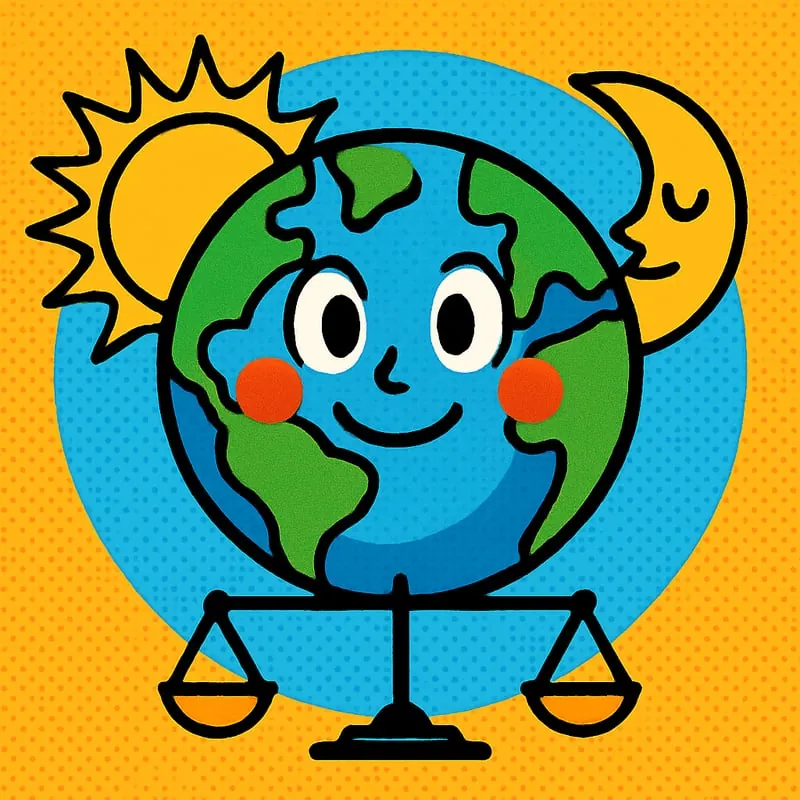
A cheerful Earth character balances a bright sun on one side and a smiling moon on the other against a vibrant background.
DID YOU KNOW? On the equinoxes, day and night are nearly equal everywhere on Earth. These are the two days a year when the Sun shines on both hemispheres equally. 2 min read
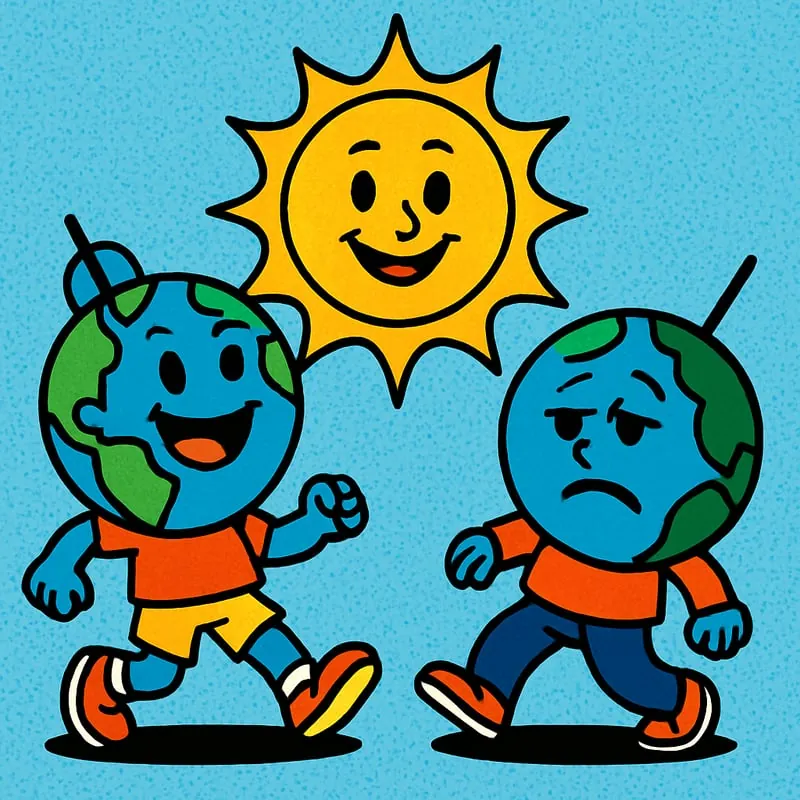
Two cartoon Earths with happy and sad faces walk under a bright, smiling sun, representing the solstices' contrasting days.
DID YOU KNOW? Solstices are the longest and shortest days of the year. When Earth's tilt is most extreme toward or away from the Sun. 2 min read
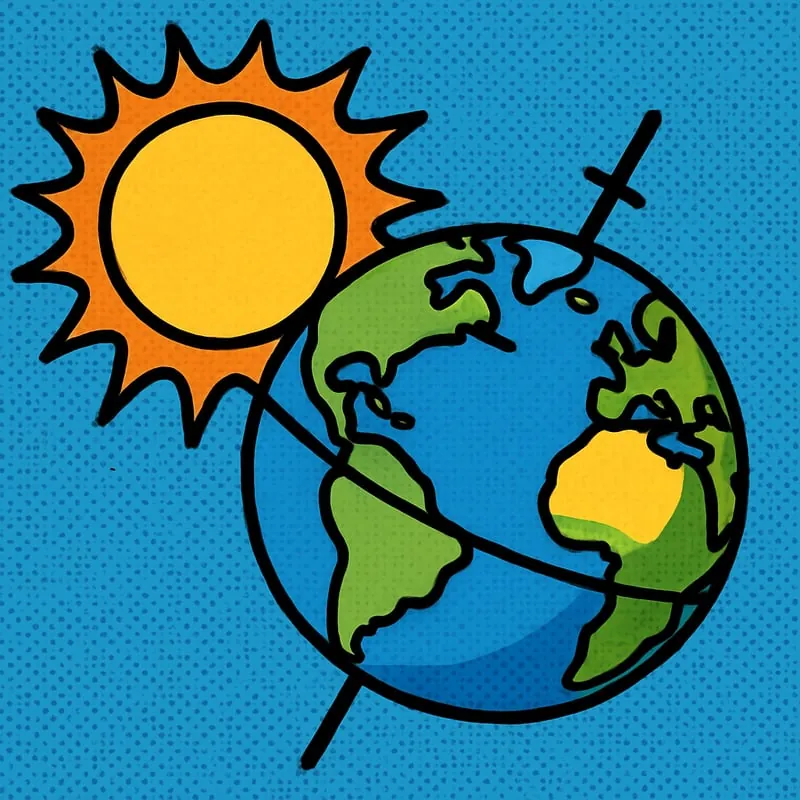
A colorful Earth with a bright sun shines down at an angle, highlighting the planet's tilt and vibrant continents.
DID YOU KNOW? We have seasons because Earth is tilted - not because we get closer to the Sun. The Earth's 23.5° tilt means different parts get more direct sunlight at different times of year. 2 min read
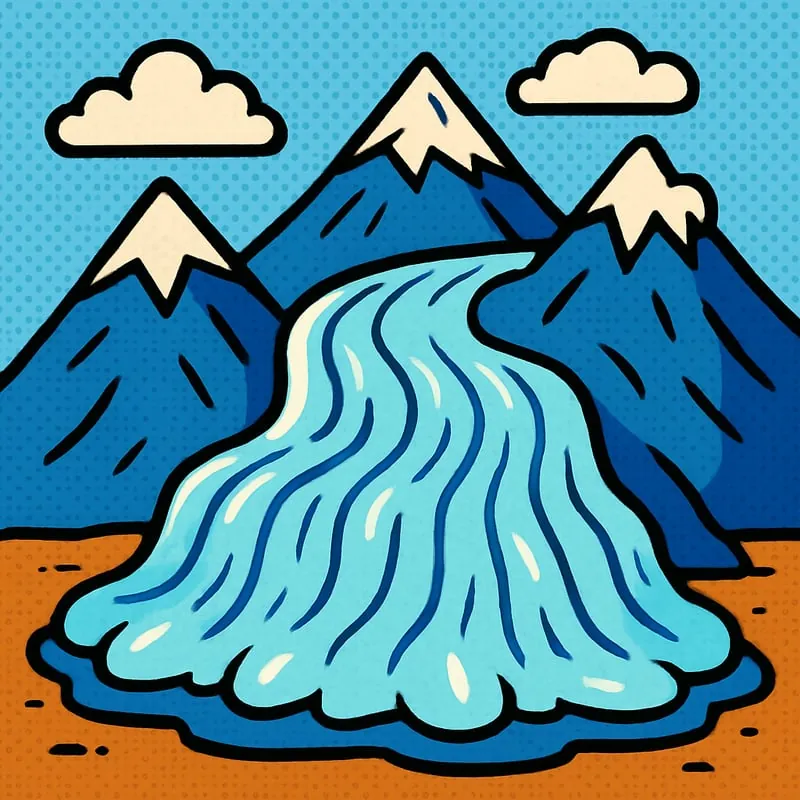
A vibrant blue glacier flows down from jagged, snow-capped mountains, merging with a sandy valley under a bright sky.
DID YOU KNOW? Glaciers are basically slow rivers of ice. They flow downhill, just much slower than water - a few feet a year. 2 min read
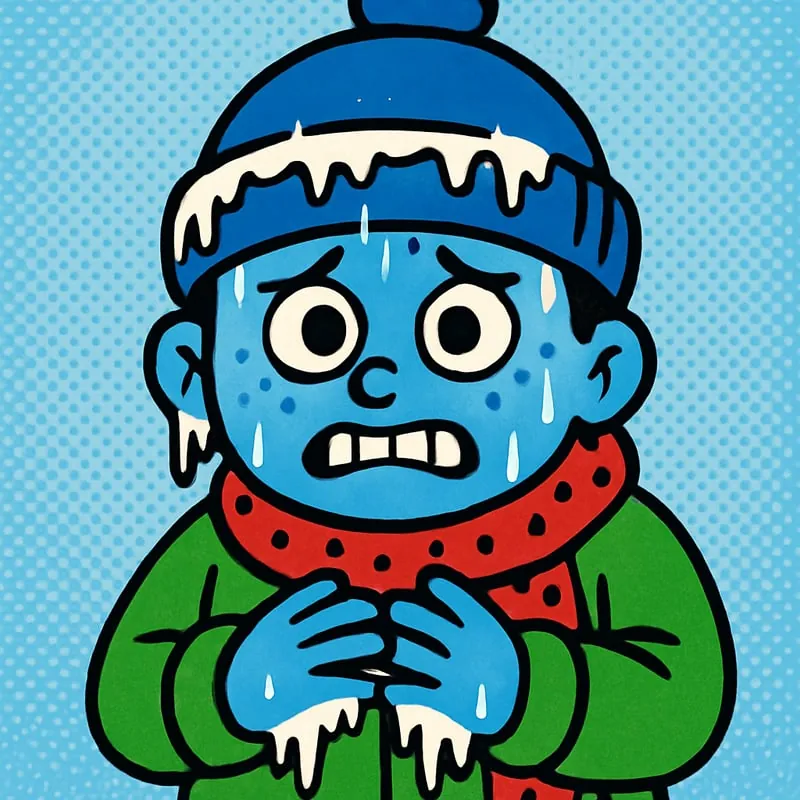
A worried blue-skinned child in a winter hat and scarf shivers, icicles hanging from their hat and droplets of water…
DID YOU KNOW? Frostbite freezes your skin solid - and can happen in minutes. When skin freezes, the water inside cells turns to ice crystals. 2 min read
A cheerful penguin stands on a small ice floe, with a towering blue iceberg and fluffy clouds in a bright blue sky behind it.
DID YOU KNOW? Antarctica contains 60% of the planet's fresh water. It's a continent-sized block of ice - about a mile thick on average. 2 min read
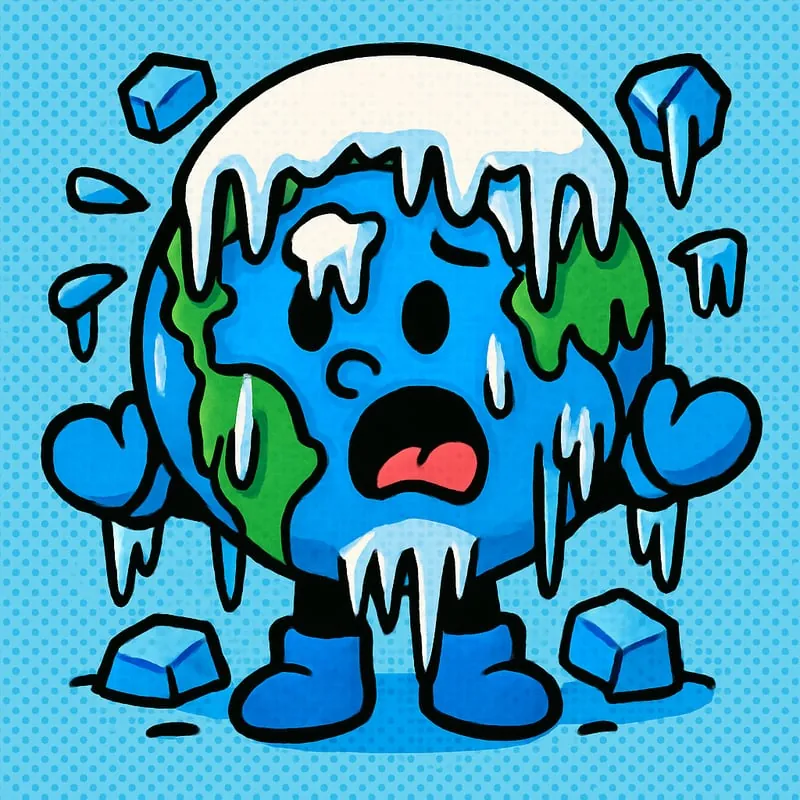
A cartoon Earth with a worried face is covered in melting ice and snow, surrounded by ice cubes on a bright blue background.
DID YOU KNOW? Earth has gone through several ice ages - and we're technically in one right now. Ice ages aren't single events. They cycle over hundreds of thousands of years. 2 min read
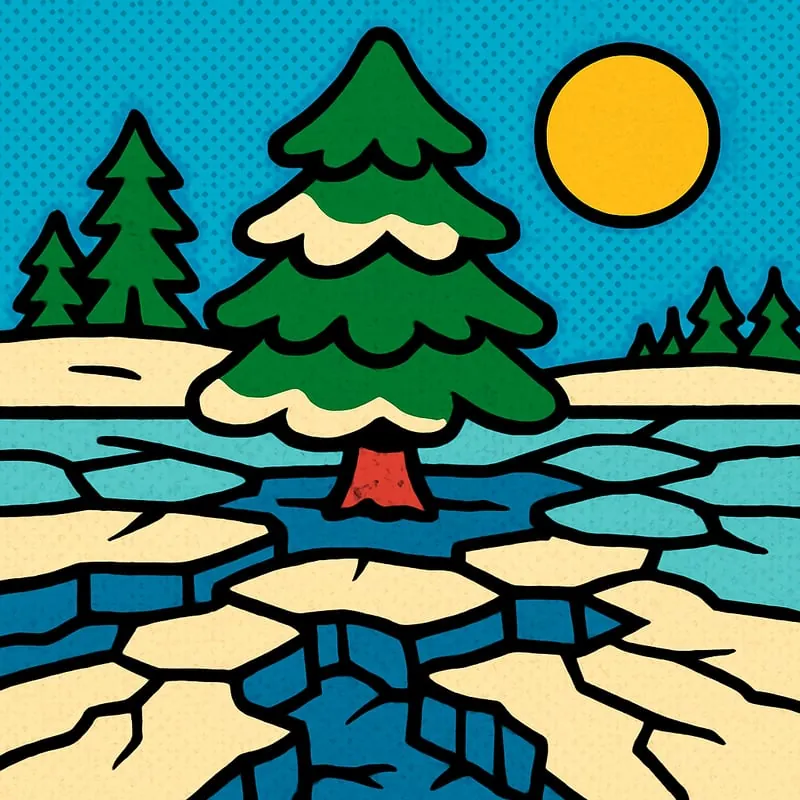
A vibrant green pine tree stands alone on cracked, icy ground under a bright yellow sun against a blue sky.
DID YOU KNOW? A huge area of the planet has ground that hasn't thawed in centuries. Permafrost - perpetually frozen soil - covers about a quarter of Earth's land surface. 2 min read
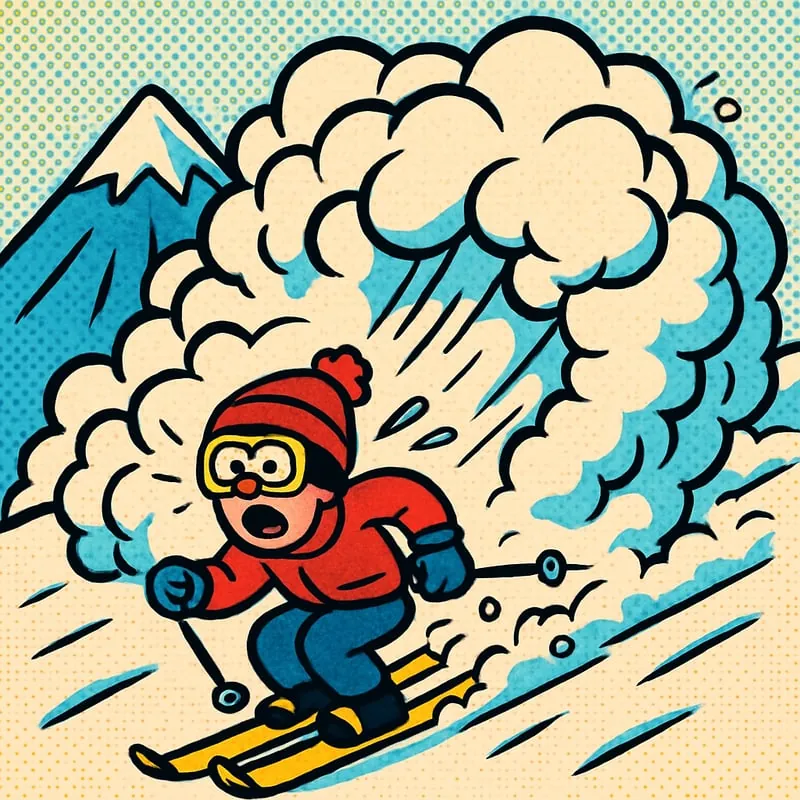
A skier in a red jacket and beanie races down a slope as a massive wave of snow crashes behind him.
DID YOU KNOW? An avalanche can hit 60 miles per hour in seconds. A wall of snow racing down a mountain is one of nature's fastest natural disasters. 2 min read
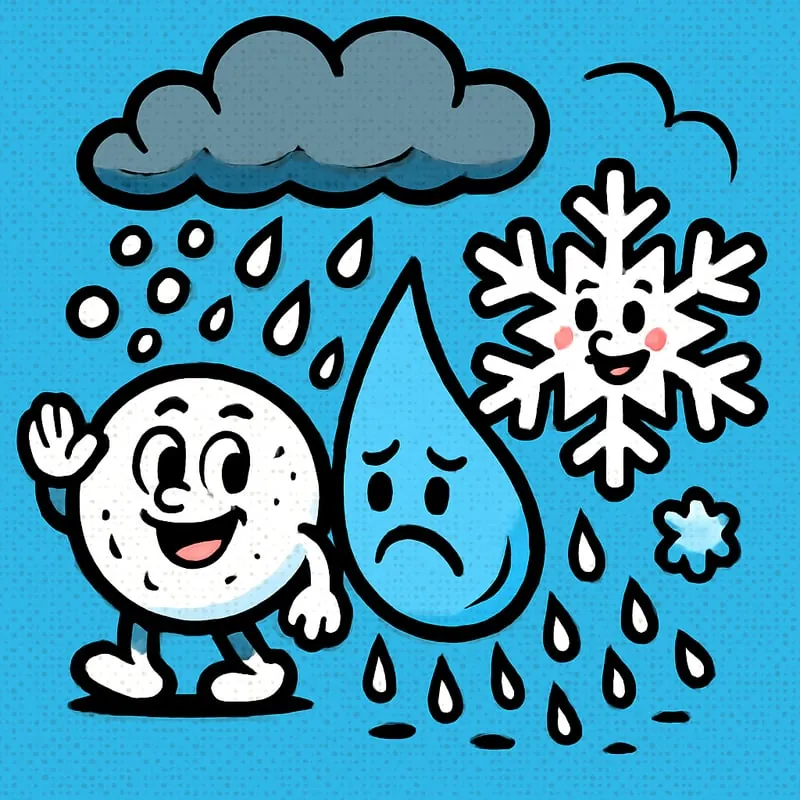
A cheerful snowball waves next to a sad blue droplet and a smiling snowflake, all under a gray cloud with raindrops.
DID YOU KNOW? Hail, sleet, and snow are all frozen water - but completely different. They form at different altitudes, in different weather, with very different shapes. 2 min read
A towering iceberg juts out of the bright blue water, with a massive submerged section hidden below the surface.
DID YOU KNOW? 90% of an iceberg is hidden underwater. What you see floating is just the tip - most of the ice is below the surface. 2 min read
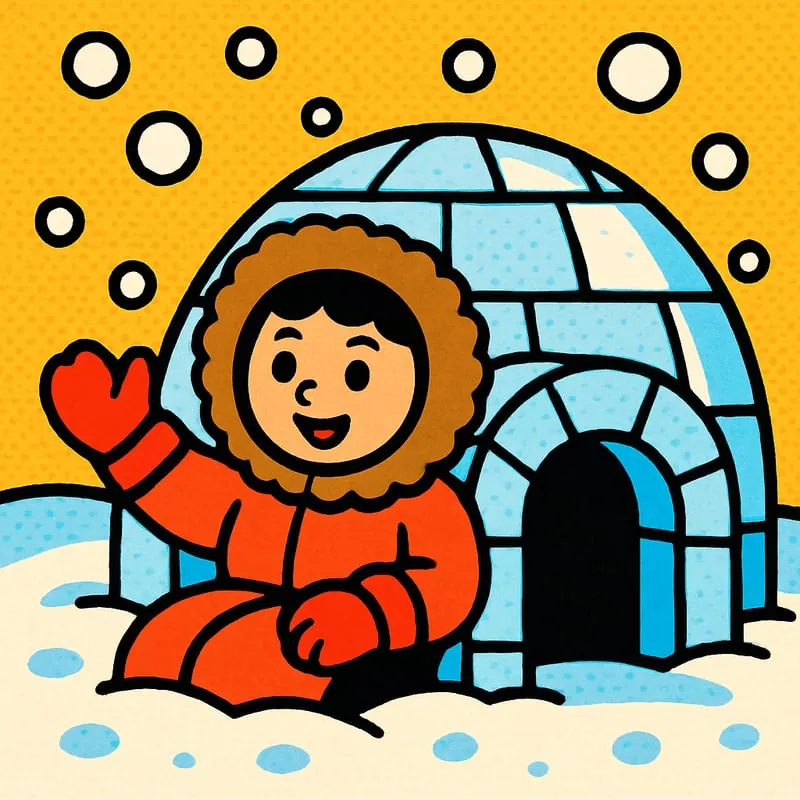
A cheerful child in a bright orange coat waves from inside a cozy igloo, surrounded by swirling snowflakes against a sunny…
DID YOU KNOW? An igloo can be 60°F warmer inside than outside. Snow is a brilliant insulator - and an igloo turns it into a tiny indoor climate. 2 min read
A cheerful child in a blue coat and red hat joyfully catches falling snowflakes against a bright blue background.
DID YOU KNOW? Snow is technically clear - it just looks white. The white color is light scattering off thousands of tiny ice surfaces. 2 min read
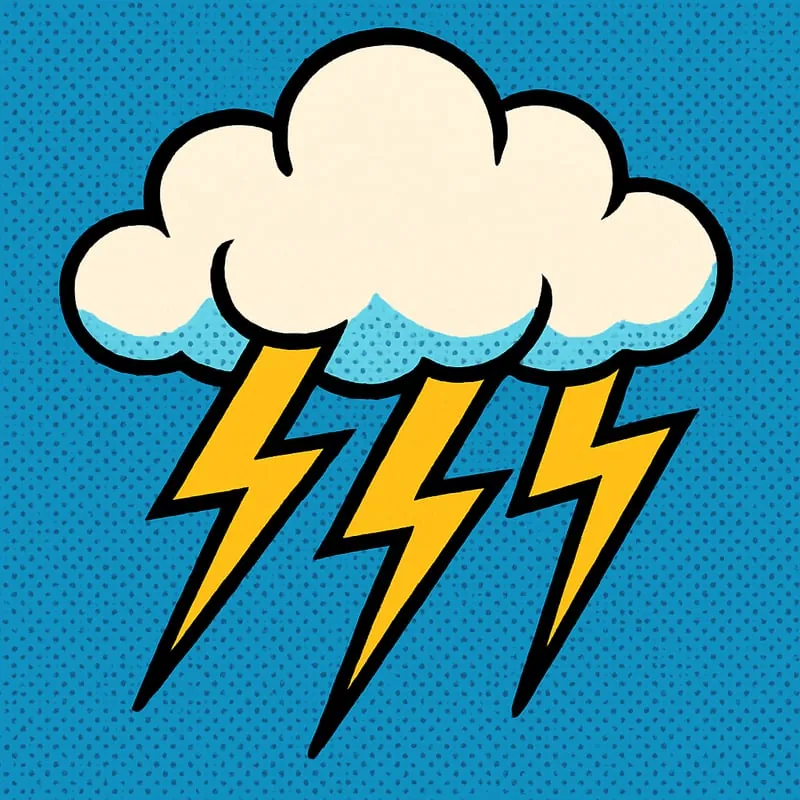
A fluffy white cloud bursts with vibrant yellow lightning bolts against a bold blue polka-dotted background.
DID YOU KNOW? Most lightning never reaches the ground. Cloud-to-cloud lightning is far more common than the bolts you see hit the dirt. 2 min read
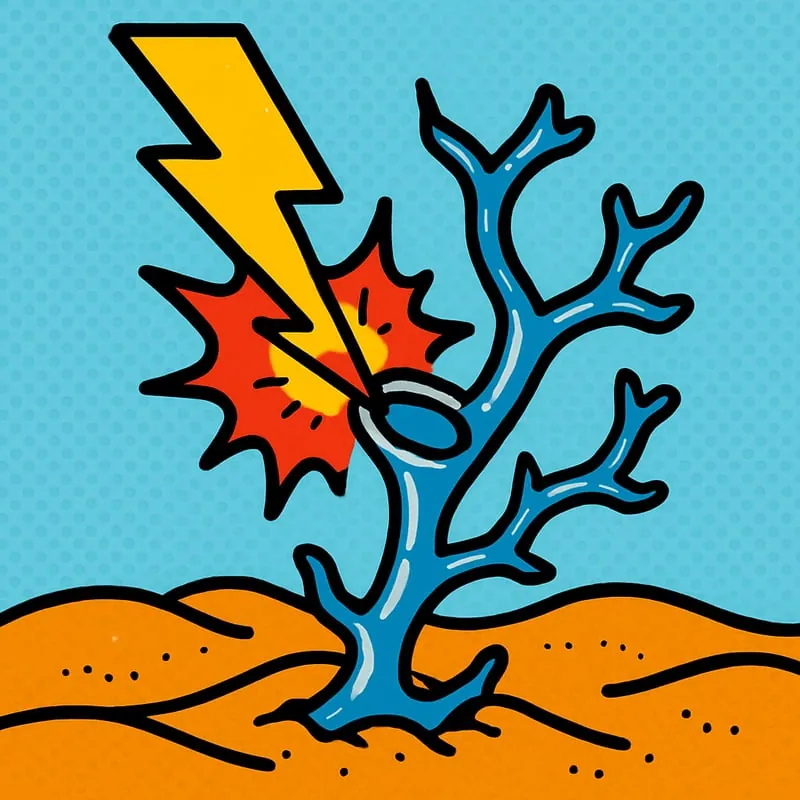
A bright yellow lightning bolt strikes a sandy landscape, creating a glowing blue fulgurite shaped like a branching coral.
DID YOU KNOW? When lightning strikes sand, it can fuse it into glass. The result is a hollow, branching glass tube called a fulgurite. 2 min read
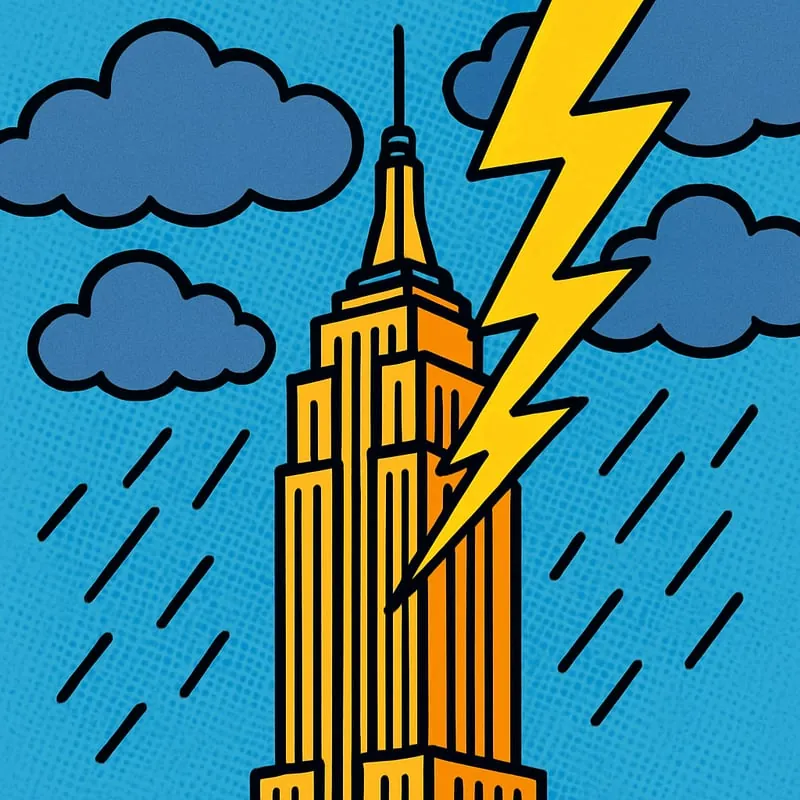
The bright yellow lightning bolt zaps the top of the tall, orange Empire State Building under a stormy blue sky.
DID YOU KNOW? The Empire State Building gets struck by lightning about 25 times a year. It's the tallest building in a thunderstorm-prone area, basically asking for it. 2 min read
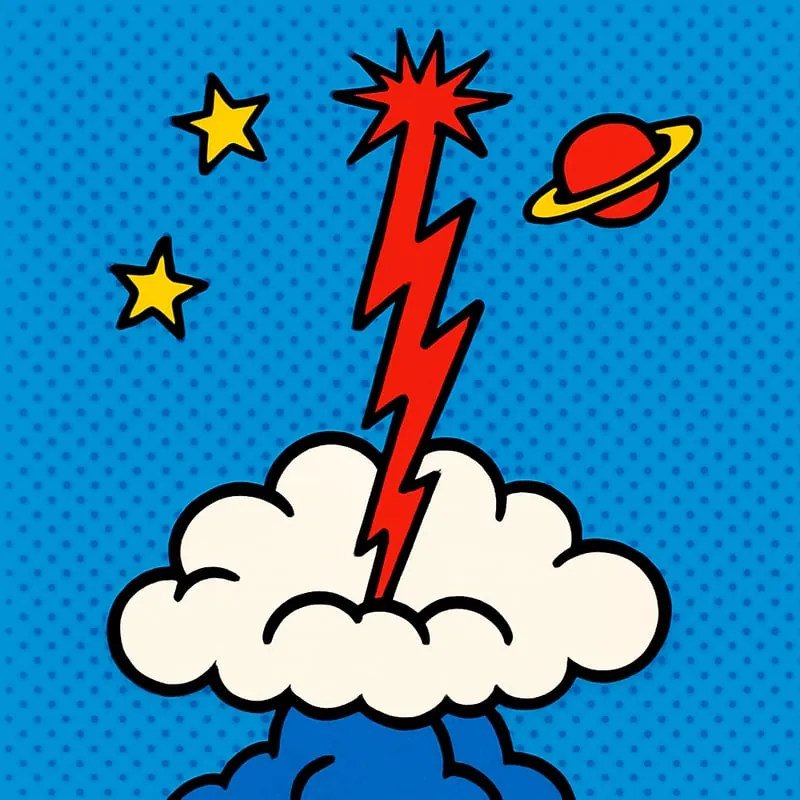
A vibrant red lightning bolt shoots upward from a fluffy white cloud, surrounded by stars and a colorful planet in a blue…
DID YOU KNOW? There's lightning that shoots upward into space - and it's red. "Sprites" flash above thunderstorms, often unseen from the ground. 2 min read
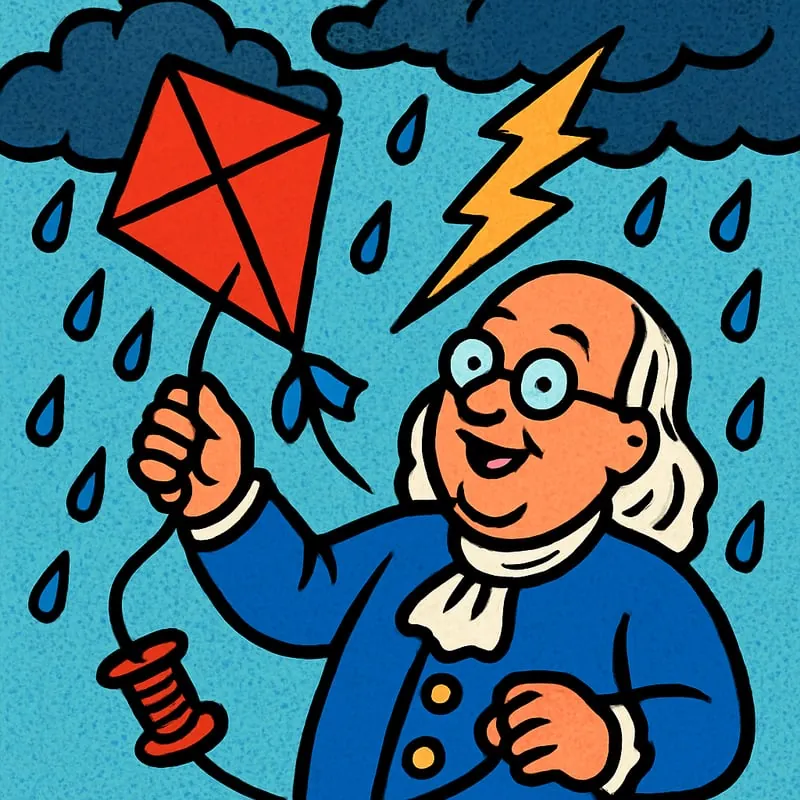
Benjamin Franklin grins widely, holding a red kite as a bolt of lightning strikes nearby, rain pouring from dark clouds.
DID YOU KNOW? Benjamin Franklin really did fly a kite in a thunderstorm. He was trying to prove lightning was electricity - and then invented the lightning rod. 2 min read
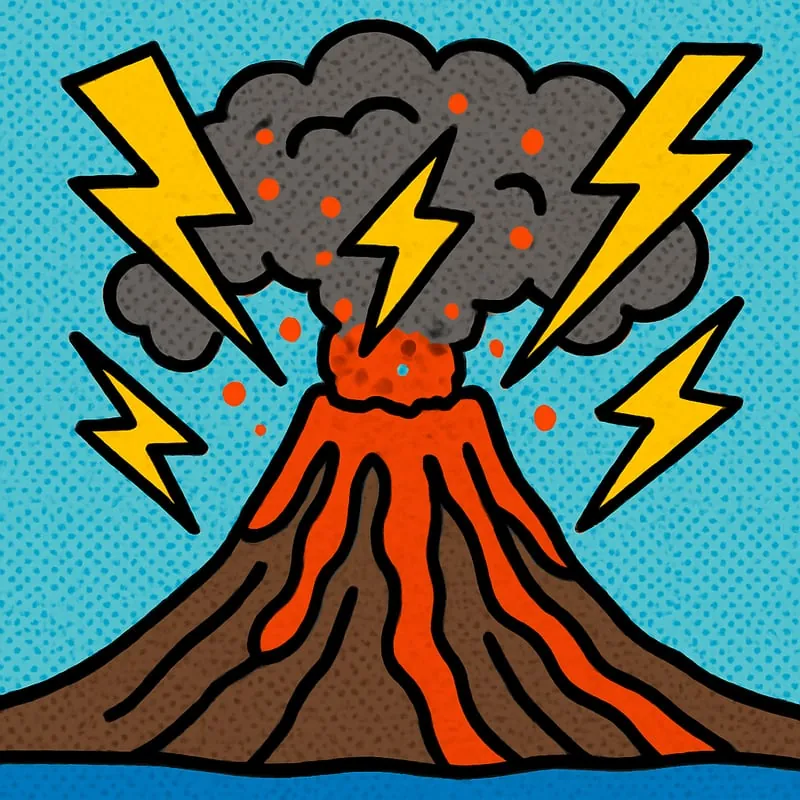
A vibrant volcano erupts with bright orange lava, surrounded by dark ash clouds and striking yellow lightning bolts.
DID YOU KNOW? Volcanoes can make their own lightning. As ash particles rub together in eruption clouds, they build up powerful electrical charges. 2 min read
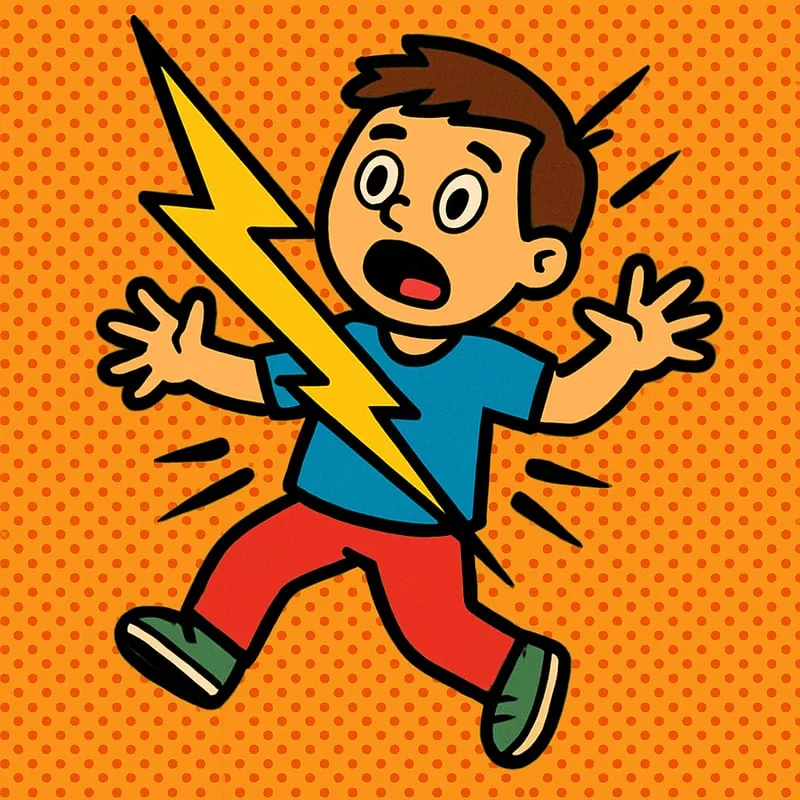
A surprised boy in a blue shirt and red pants jumps back as a bright yellow lightning bolt zaps down beside him.
DID YOU KNOW? Most people who get struck by lightning survive. About 9 out of 10 lightning strike victims live to tell the story. 2 min read
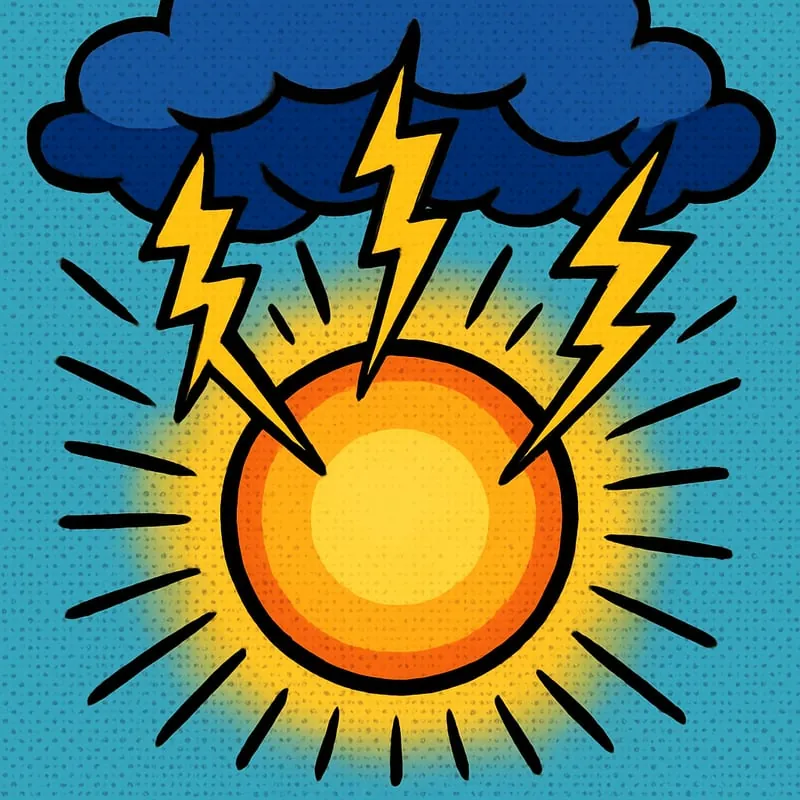
A bright sun bursts with rays beneath a dark storm cloud, while three jagged lightning bolts zigzag down from the cloud.
DID YOU KNOW? Ball lightning is real - and scientists still aren't sure what it is. Glowing orbs of light have been reported during thunderstorms for centuries. 2 min read
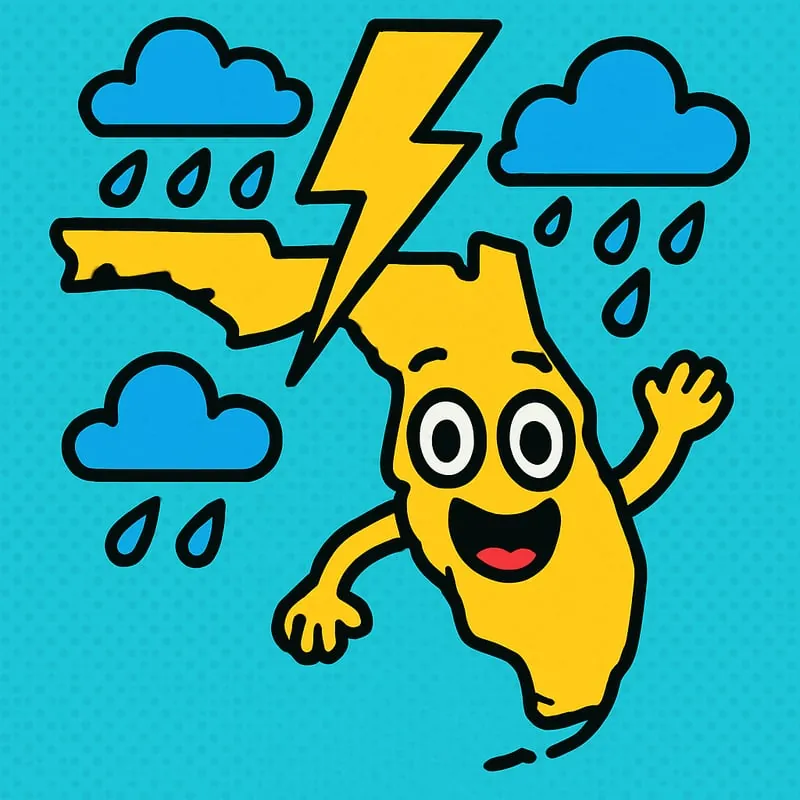
A cheerful cartoon Florida map with big eyes waves while a bright lightning bolt strikes above, surrounded by rain clouds.
DID YOU KNOW? Florida is the lightning capital of the United States. It gets struck more often than any other state - by a wide margin. 2 min read
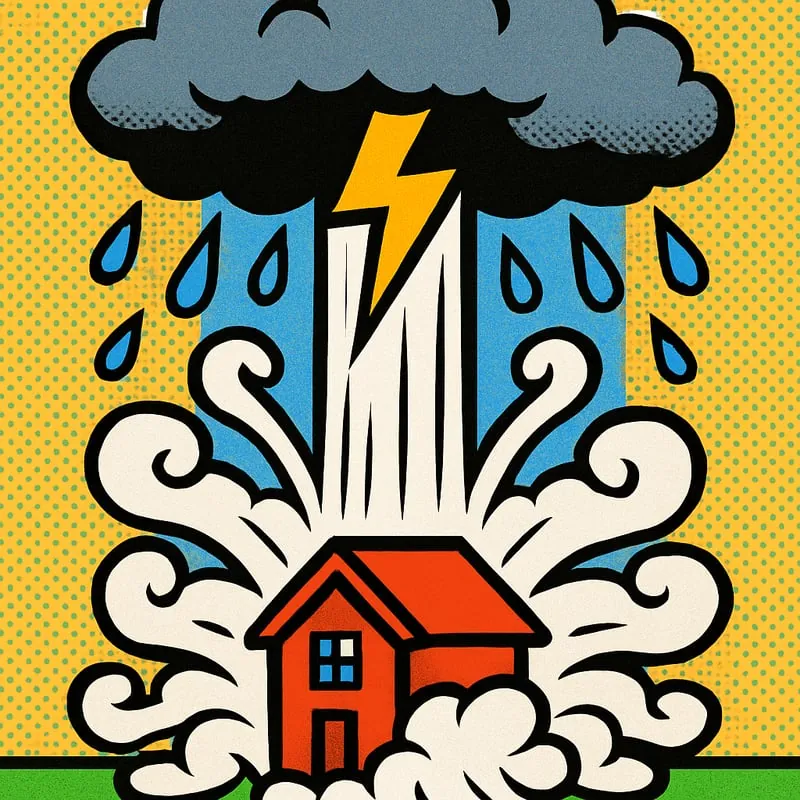
A cartoon house is engulfed by swirling winds and rain as a lightning bolt strikes from a dark storm cloud above.
DID YOU KNOW? A microburst is a column of wind that crashes straight down from a thunderstorm. They've taken down planes - and can flatten buildings in seconds. 2 min read
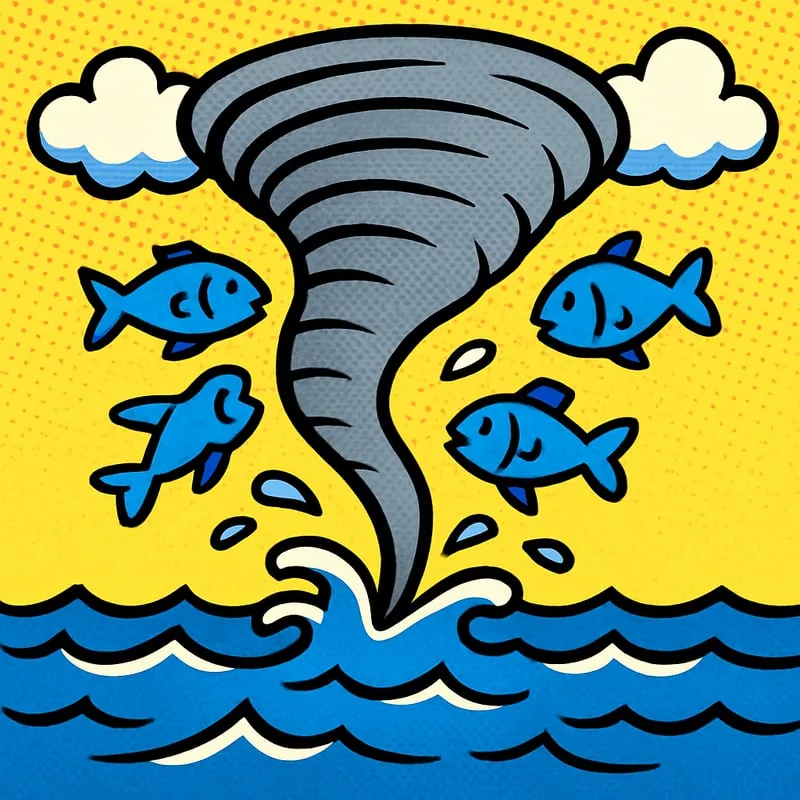
A swirling waterspout spins above the ocean, launching blue fish into the air against a bright yellow sky with fluffy clouds.
DID YOU KNOW? Tornadoes can form over water - they're called waterspouts. They're usually weaker than land tornadoes, but they can pick up fish and rain them down. 2 min read
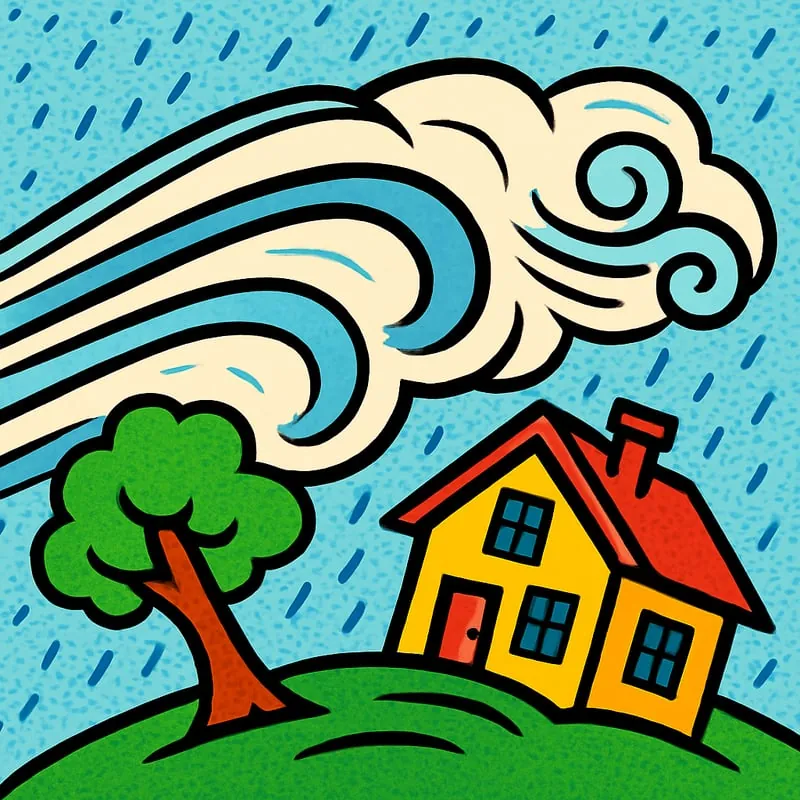
A bright yellow house sits on a green hill as strong winds swirl ominously above, bending a nearby tree.
DID YOU KNOW? A derecho is a hurricane-force windstorm with no rotation. It's a wave of damaging straight-line wind that can stretch for hundreds of miles. 2 min read
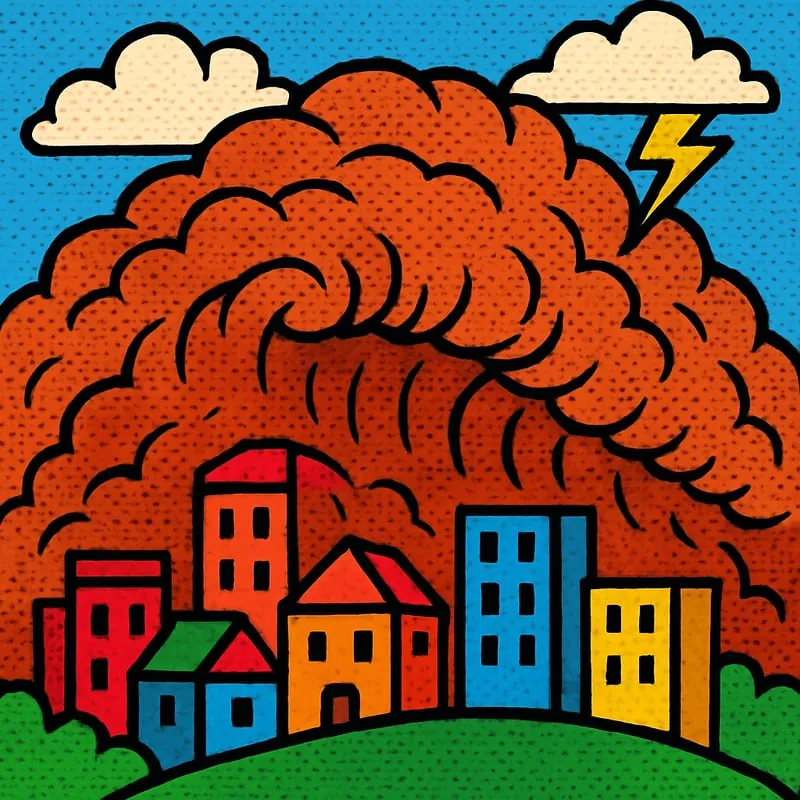
A towering wall of orange dust looms over colorful cartoon buildings, with a lightning bolt flashing in the blue sky.
DID YOU KNOW? A haboob is a giant wall of dust that can swallow whole cities. Haboobs can reach heights of over a mile and travel at speeds of 30 miles per hour, turning clear skies into a swirling wall of dust. 2 min read
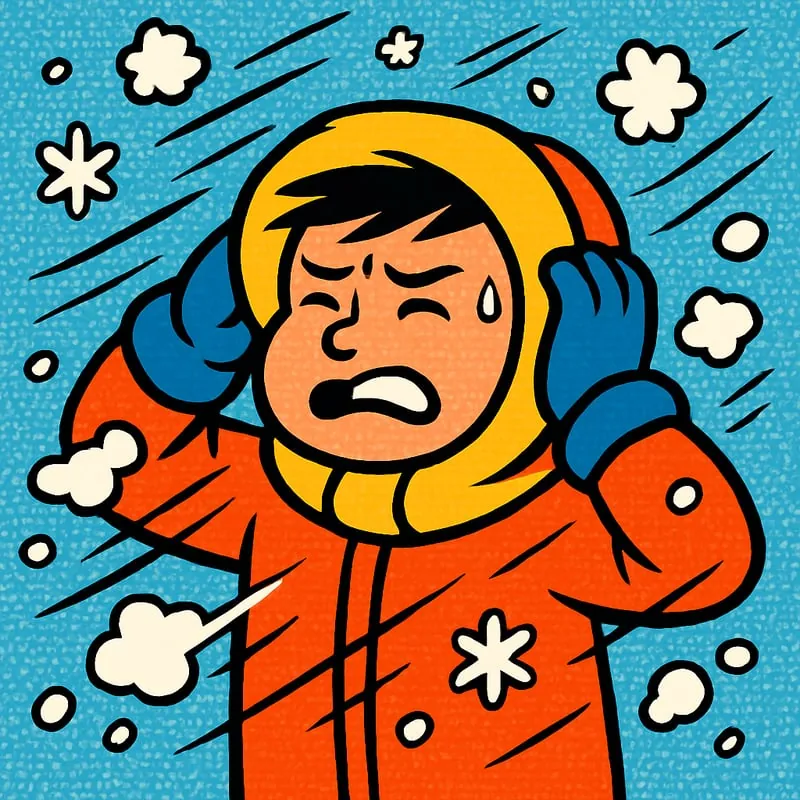
A boy in a bright orange parka covers his ears, squinting against swirling snowflakes and fierce winds in a blizzard.
DID YOU KNOW? A blizzard isn't just a snowstorm - it has to meet three specific tests. Lots of snow and strong winds and low visibility, all at once. 2 min read
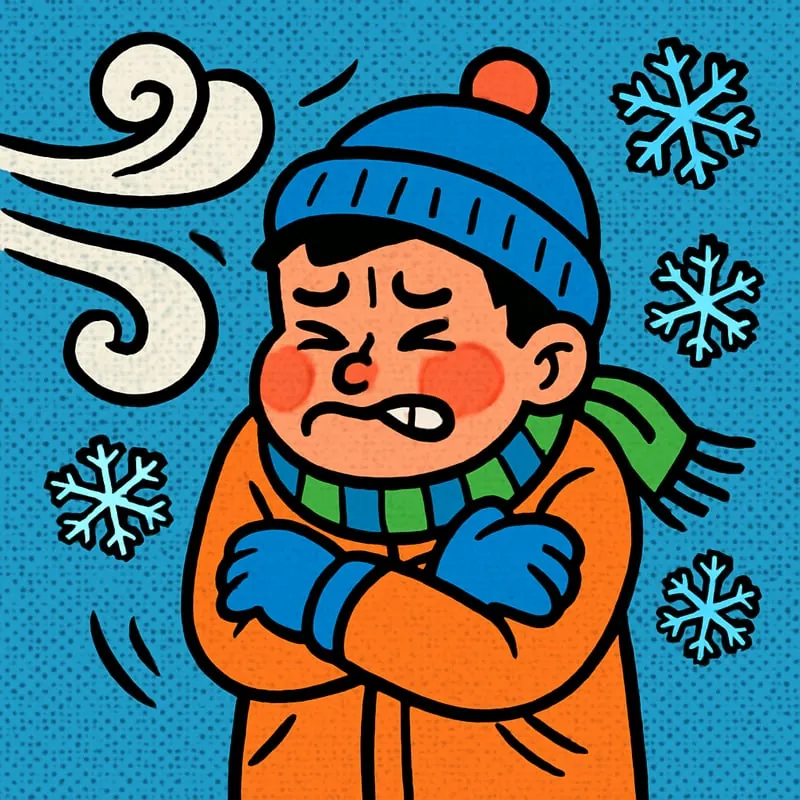
A shivering boy in a bright orange coat and blue hat hugs himself tightly, surrounded by swirling wind and falling…
DID YOU KNOW? Wind makes cold air feel much colder than it actually is. Wind chill can make temperatures feel up to 20 degrees colder, tricking your body into thinking it's freezing even when it’s not! 2 min read
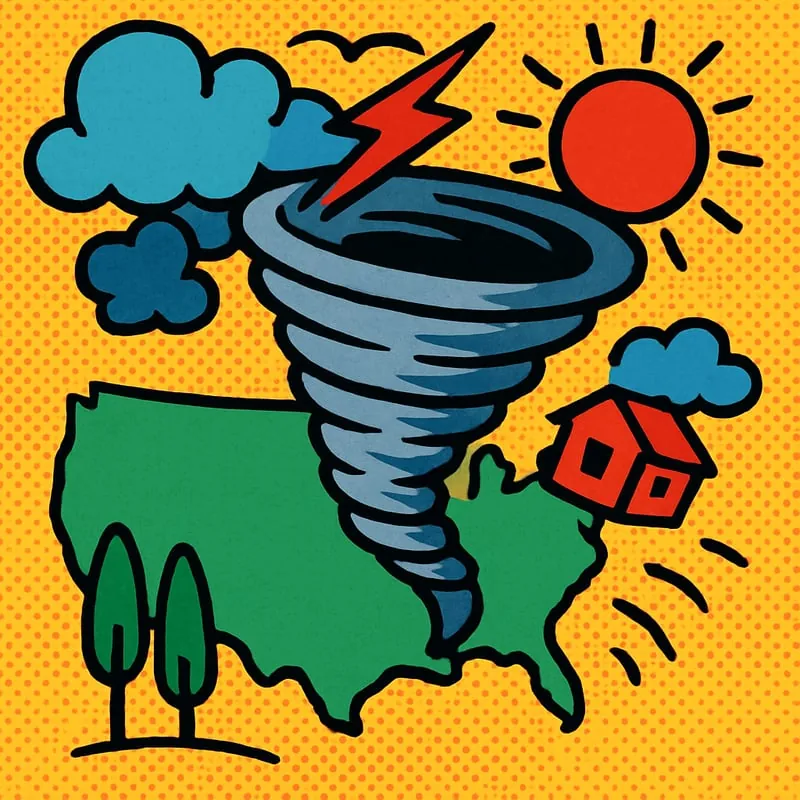
A swirling tornado towers over the United States map, with a bright sun and fluffy clouds, and a small house nearby.
DID YOU KNOW? The United States gets more tornadoes than the rest of the world combined. A specific weather setup over the central states makes it the world's tornado factory. 2 min read
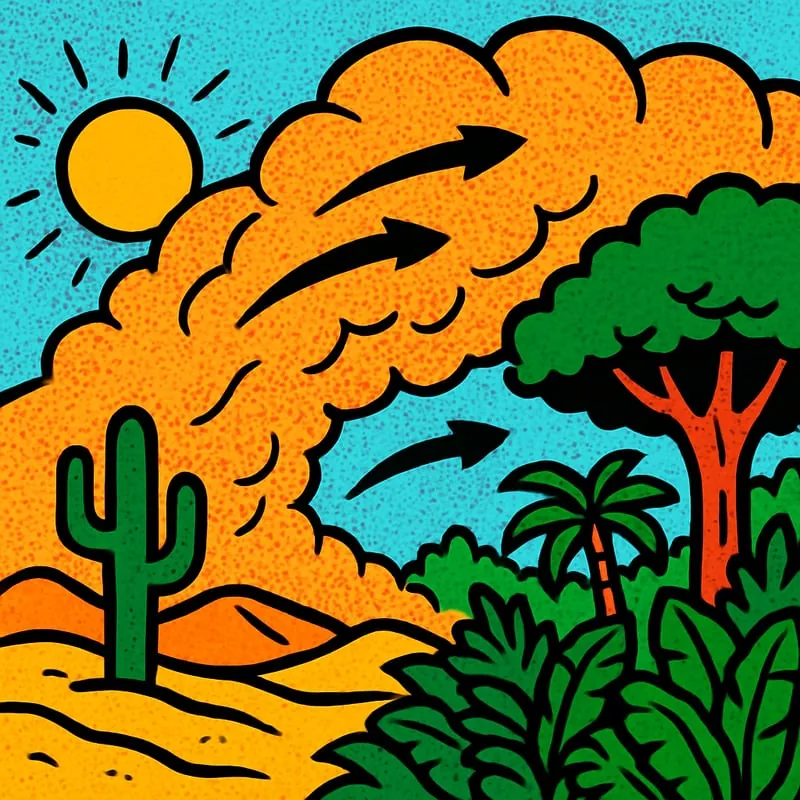
A vibrant desert scene shows a swirling dust cloud moving from a sandy landscape towards a lush rainforest, with a bright…
DID YOU KNOW? Sandstorms can carry dust across entire oceans. Sand from the Sahara desert lands in the Amazon rainforest - and fertilizes it. 2 min read
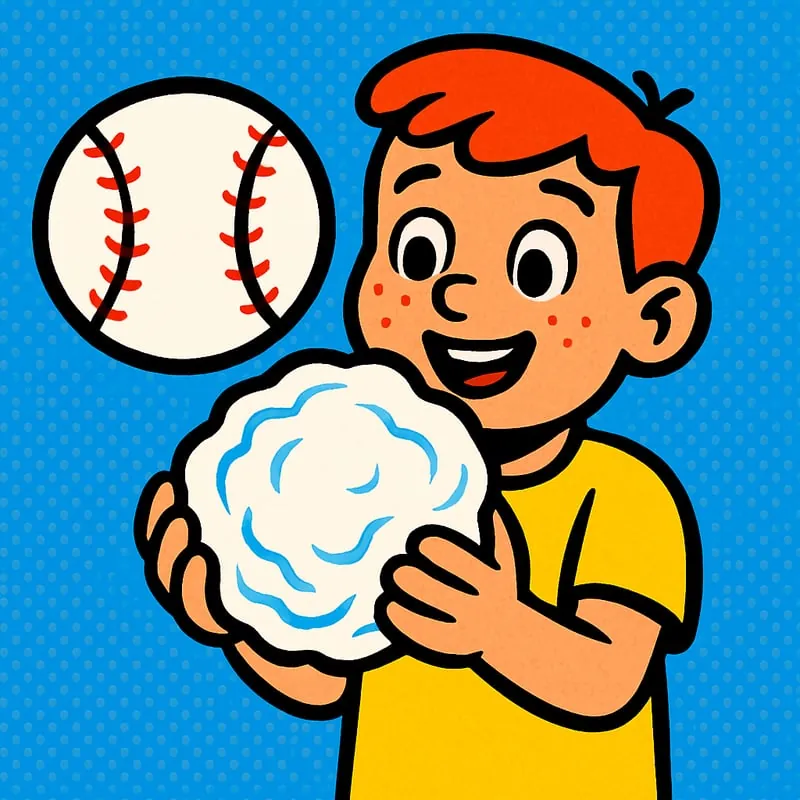
A cheerful boy in a yellow shirt holds a large, fluffy hailstone while a baseball floats above him against a bright blue…
DID YOU KNOW? Hailstones can be the size of baseballs. The largest hailstone ever recorded measured 8 inches across, falling from a thunderstorm that packed a powerful punch of updrafts and freezing temperatures. 2 min read
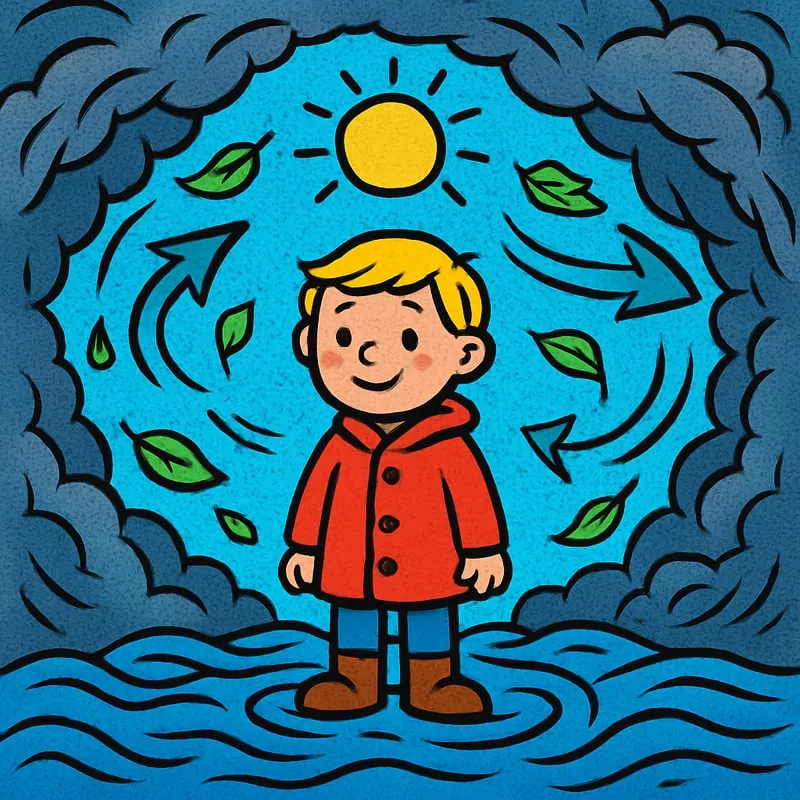
A cheerful child in a red raincoat stands in calm waters, surrounded by swirling clouds and flying leaves under a bright sun.
DID YOU KNOW? The middle of a hurricane is eerily calm. Right in the eye of the storm, the wind drops and the sky clears. 2 min read
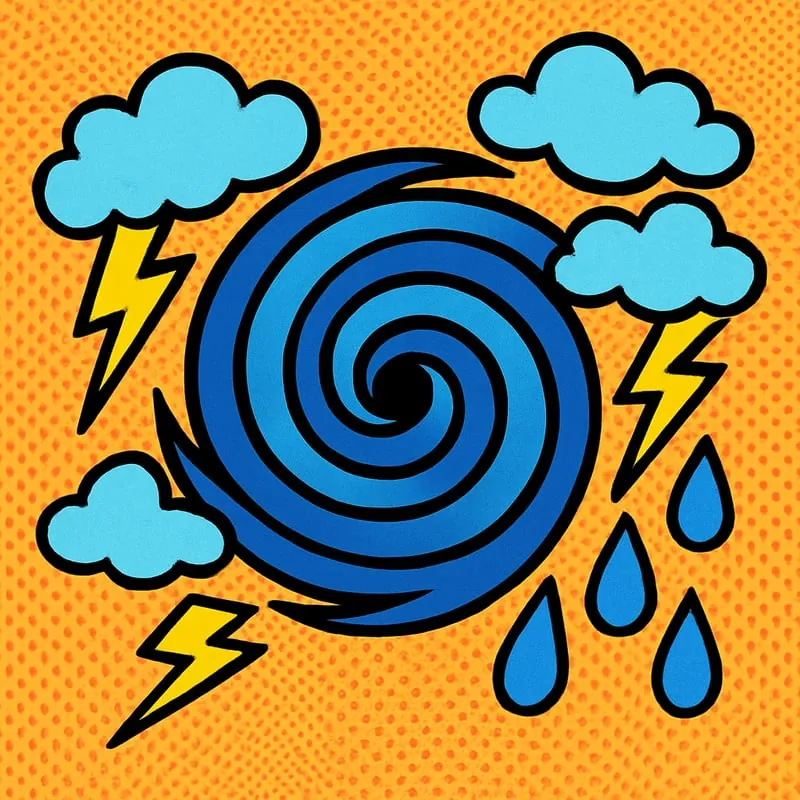
A swirling blue storm with lightning bolts and raindrops, surrounded by fluffy clouds on a bright yellow background.
DID YOU KNOW? Hurricanes, typhoons, and cyclones are all the same storm - just in different places. The name changes depending on which ocean the storm forms in. 2 min read
A swirling tornado spins dramatically with bright orange and yellow bursts around it, set against a sunny sky.
DID YOU KNOW? Tornadoes can have winds over 300 miles per hour. The strongest tornadoes, rated EF5, can whip winds over 300 miles per hour, making them the most powerful storms on Earth. 2 min read
A large, bold six-sided snowflake floats above a bright orange hill, surrounded by smaller snowflakes against a blue sky.
DID YOU KNOW? Snowflakes always have six sides - and no two are exactly alike. Water molecules naturally bond into six-sided crystals, but each flake's journey is unique. 2 min read
A bright yellow lightning bolt strikes down from a red sun, exploding against fluffy blue clouds on a vibrant yellow…
DID YOU KNOW? A bolt of lightning is five times hotter than the surface of the Sun. It briefly heats the air to 30,000°C - and that's what makes the BOOM of thunder. 2 min read

⚡ QUICK-FIRE WEATHER WHOAS

60 bite-sized brain-zappers. Click for another.

WHOA!

Roll the dice for an instant whoa.