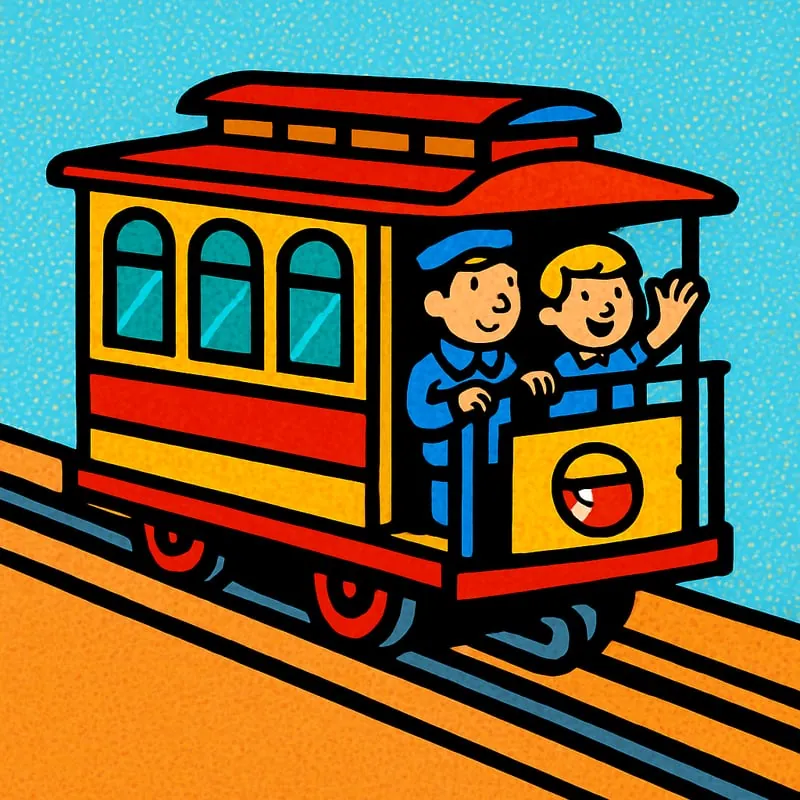
In 1873, a Scottish-born engineer named Andrew Smith Hallidie watched horses struggle and sometimes die hauling streetcars up San Francisco’s brutally steep hills. He had an idea - what if the cars were pulled by a long steel cable hidden under the street? His first line opened that same year, and cable cars quickly spread across the city.
It still works the same way today. A powerful motor in a central powerhouse turns giant pulleys that drag a steel cable in a continuous loop beneath the streets at about 9.5 mph. To move, the operator squeezes a grip lever that pinches the cable. To stop, the grip releases and the car uses brakes. There’s no engine on the cars themselves.
Most cities replaced their cable cars with electric streetcars or buses by the early 1900s. San Francisco kept three lines running, partly because the steep hills still gave electric cars trouble and partly because tourists loved them. The system is the only moving National Historic Landmark in the United States.