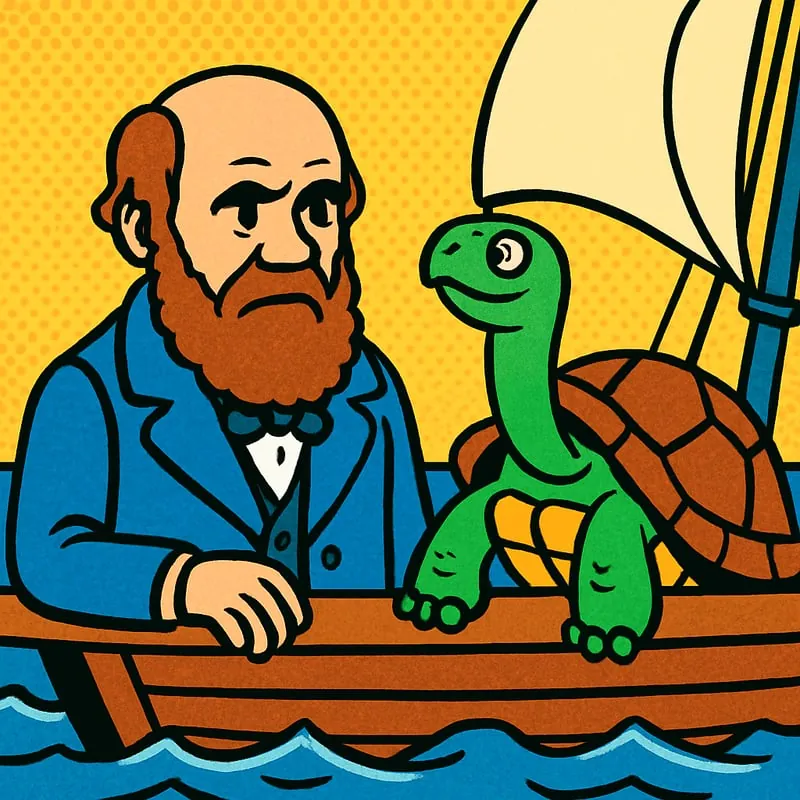
When Charles Darwin boarded the HMS Beagle in 1831, he was a 22-year-old university dropout who liked collecting beetles. The captain wanted an educated friend to share meals with on a long mapping voyage. Darwin signed up to see the world.
For nearly five years he sketched fossils in Patagonia, climbed in the Andes, and watched giant tortoises and finches on the Galápagos Islands. He noticed that the finches on each island had slightly different beaks - perfect for the food on that island. Something was clearly going on.
Back home, he spent decades quietly working it out: living things change over generations, and the ones best suited to their surroundings tend to survive and pass on their traits. He called it natural selection. His 1859 book On the Origin of Species became one of the most important science books ever written.