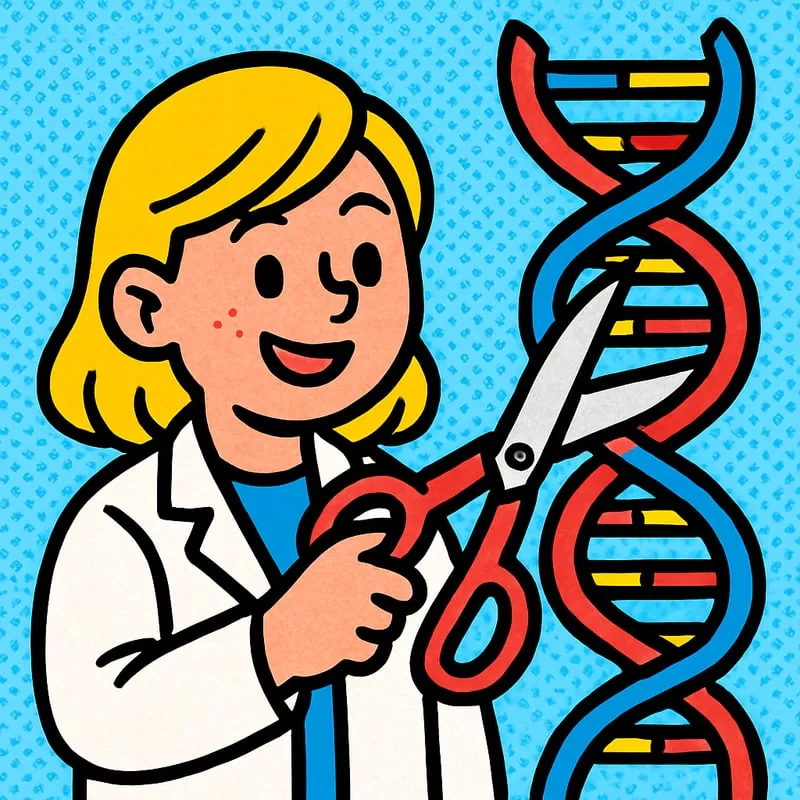
Until recently, editing DNA was slow, expensive, and not very precise. Then scientists discovered a tool called CRISPR - and it completely changed what’s possible. CRISPR lets researchers cut DNA at exactly the spot they want and either remove a section or replace it with new code.
The amazing twist: CRISPR isn’t a human invention. It’s a defense system that bacteria evolved long ago to fight off viruses. When a virus attacks a bacterium, the bacterium saves a snippet of the virus’s DNA in its own genome, like keeping a wanted poster. Next time it sees that virus, it uses an enzyme called Cas9 to recognize and chop up the invader. Scientists discovered this trick in the 1980s and 2010s figured out how to repurpose it to edit any DNA they wanted.
The applications are huge. CRISPR is already being used to treat genetic diseases like sickle-cell anemia and certain blindnesses. Researchers are using it to grow disease-resistant crops, develop new ways to fight viruses, and potentially even create animal organs that can be transplanted into humans. With great power comes great responsibility - there are ongoing debates about ethical limits. But the basic ability to edit life’s code is here and getting more powerful every year.