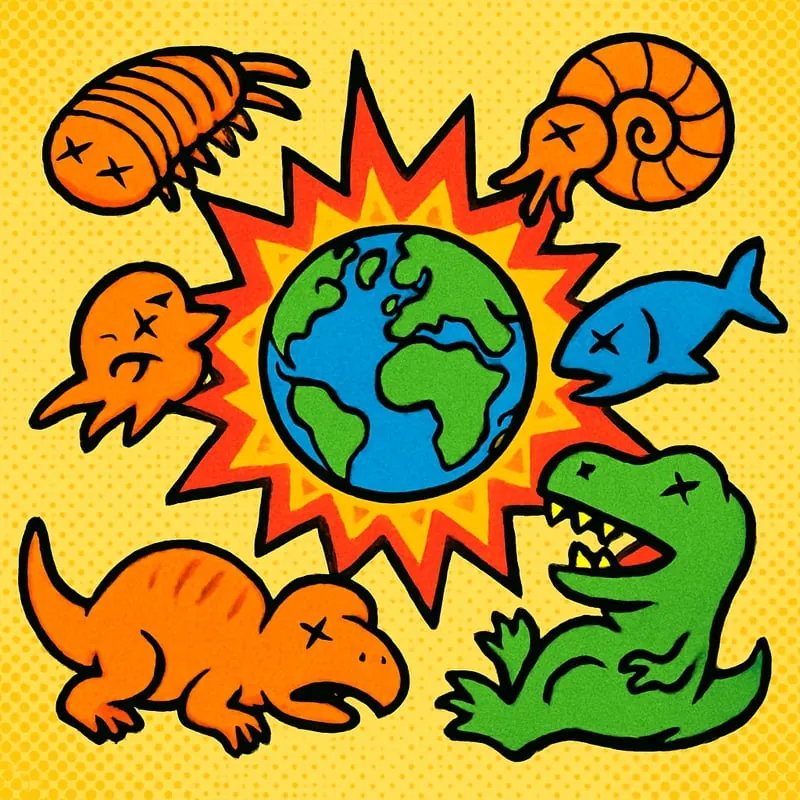
Earth’s history isn’t a smooth story. It’s been punctuated by five “mass extinctions” - events where most species alive at the time were killed off in a geologically short period. Each one was triggered by a different cataclysm: volcanic eruptions, asteroid impacts, climate changes, ocean chemistry shifts.
The first, around 444 million years ago, killed off about 85% of marine species. The second, 360 million years ago, was a long crisis that wiped out 75%. The third - the Permian Extinction, around 252 million years ago - was the worst. It killed about 96% of marine species and 70% of land vertebrates. Sometimes called the “Great Dying,” it nearly ended complex life entirely.
The fifth and most famous was the Cretaceous-Paleogene extinction 66 million years ago - when an asteroid struck and killed off the dinosaurs along with 75% of all species. Each time, life rebounded from a tiny fraction of survivors and eventually became more diverse than before. Some scientists argue humans are causing a sixth mass extinction right now, through habitat destruction, hunting, and climate change.