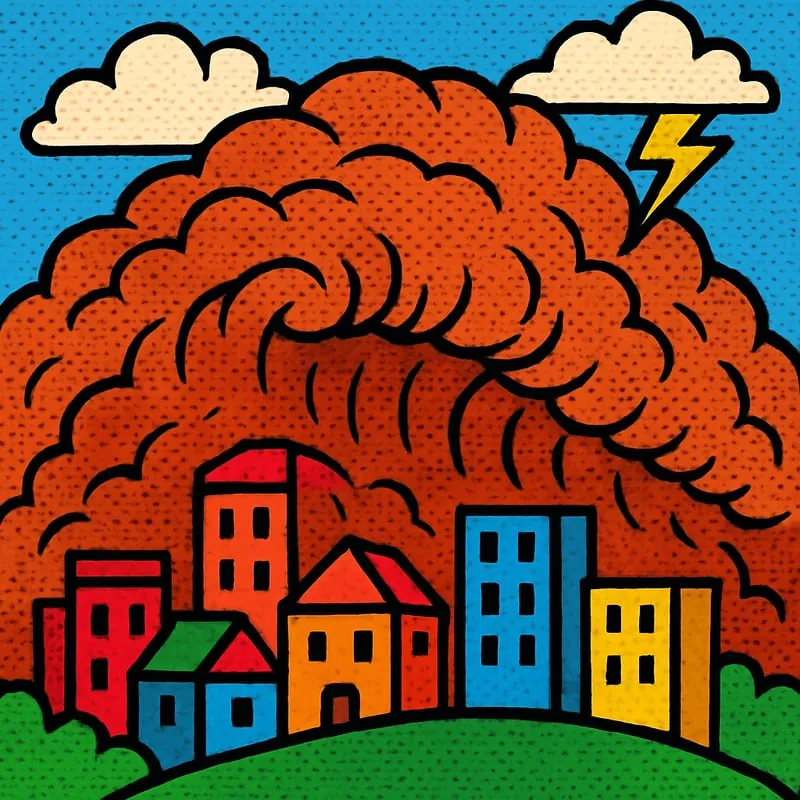
In hot, dry parts of the world, thunderstorms behave a little differently. When a thunderstorm collapses or its rain evaporates before reaching the ground, the cold air rushes down and outward at high speed. In a desert, that wind picks up massive amounts of dust and sand from the ground and pushes it into a wall - sometimes a mile or more high - that races outward.
This wall is called a haboob, from the Arabic word habūb, meaning “wind.” Haboobs were first scientifically described in Sudan, where they’re common. They also frequently strike Iraq, Saudi Arabia, and other Middle Eastern countries. In the U.S., they happen in the Southwest - Phoenix and Tucson get hit several times a year, particularly during monsoon season.
Watching a haboob arrive is unforgettable. The sky turns brown, then orange, then dark. Visibility drops to zero. Cars stop, planes are grounded, and dust gets into everything. The largest haboobs can blanket cities for hours and dump literal tons of dust on streets and rooftops.