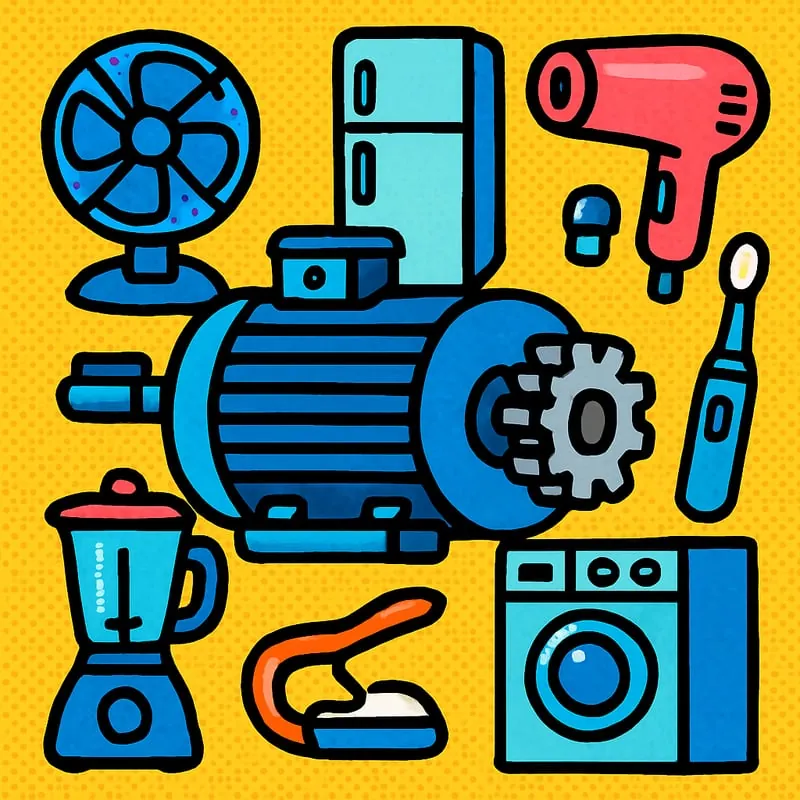
Take a quick mental tour of your home. The fridge has a motor. The washing machine has two or three. Your hair dryer spins a fan. So do the bathroom extractor, the microwave turntable, the blender, the electric toothbrush, the dishwasher, your laptop’s cooling fan and even the little vibrator in a phone. A typical house contains 50 or more electric motors hiding in plain sight.
They all work using the same simple trick. When electricity flows through a coil of wire, it acts like a magnet. Put that magnet next to other magnets, and you can make it spin. Engineers built the first practical electric motors in the 1830s - but it took the spread of home electricity to make them everywhere.
Electric motors are also much more efficient than gas engines. About 90% of the energy in the electricity becomes useful spinning, versus only about 20–30% in a gasoline engine. That’s a big reason electric cars and bikes are taking over from older designs.