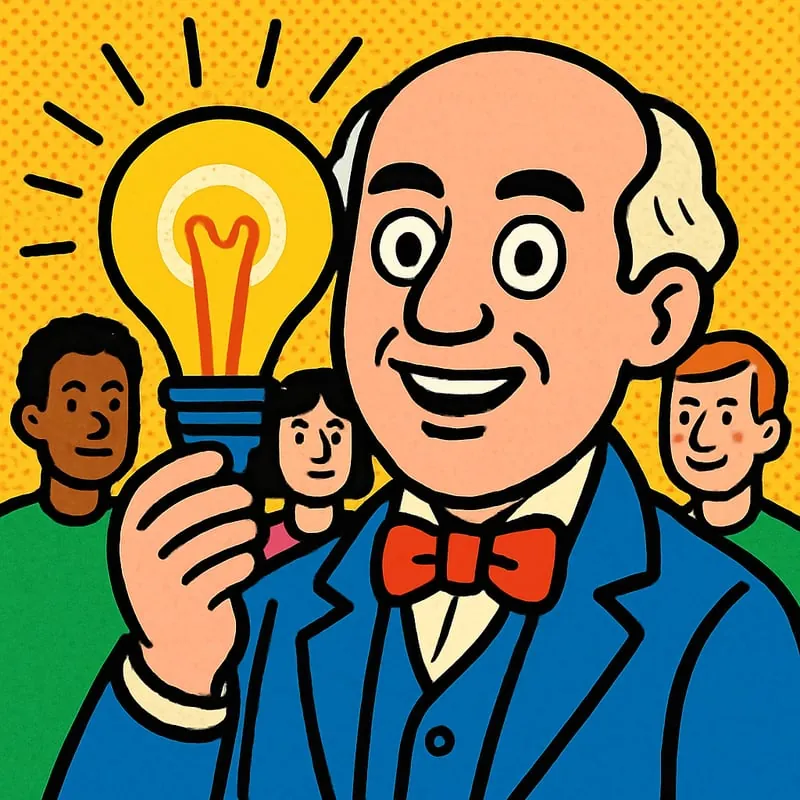
History often gives one person credit for big inventions, but the truth is usually messier. The light bulb is a perfect example. Long before Thomas Edison, the English chemist Humphry Davy showed off a glowing electric “arc light” in 1802. Through the 1800s, at least twenty other inventors built bulbs of one kind or another. English physicist Joseph Swan demonstrated a working one in 1878 - a year before Edison’s famous patent.
What Edison did was turn the light bulb into a real product. He and his team in Menlo Park, New Jersey tested over 6,000 different materials for the thin glowing “filament” inside. They finally settled on carbonized bamboo, which could burn for over 1,000 hours.
Edison also built the whole system around it - generators, wires, switches, sockets and the power station to feed them. Without that, his bulbs would have been a fun lab demo. Instead, electric light spread across cities within a couple of decades, and humans stopped going to bed when the sun went down.