For most of human history, people assumed that animals and plants had always existed in their current forms. Then in 1859, an English naturalist named Charles Darwin published On the Origin of Species, and a wave of evidence steadily showed something different: species change over time.
The process is called evolution by natural selection. Each generation produces offspring with small random variations. Some variations help survival a little bit - slightly better camouflage, slightly faster legs, slightly better eyes - and those individuals are more likely to survive and have offspring of their own. Over millions of generations, tiny improvements stack up into massive changes.
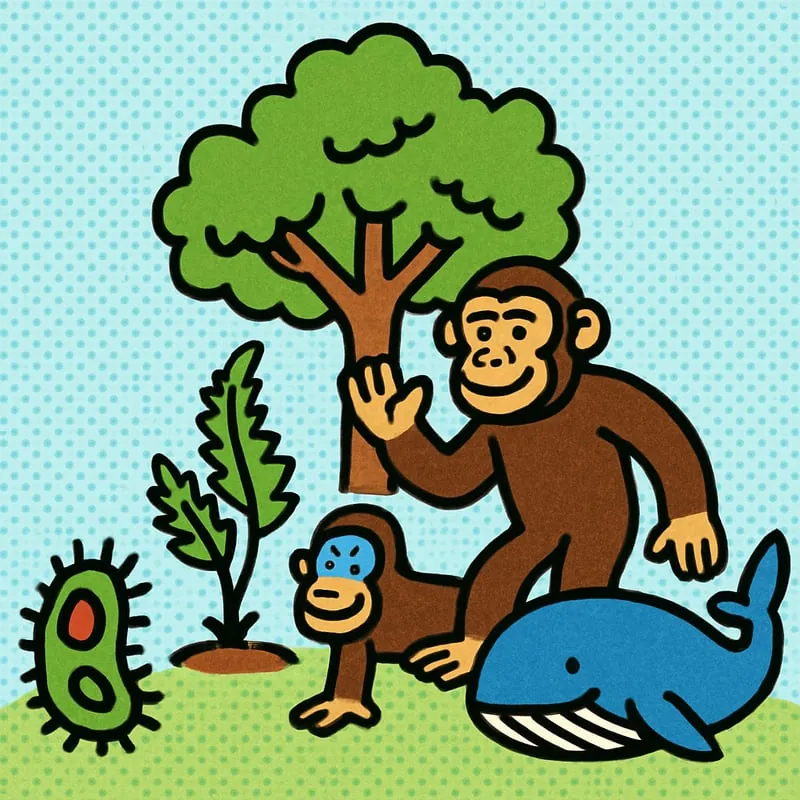
We’ve now confirmed evolution through countless lines of evidence - fossils, DNA comparisons, observed changes in fast-reproducing species like bacteria, and detailed transitional forms in the fossil record. All life on Earth is connected. Every plant, animal, mushroom, and microbe traces back to a single common ancestor that lived around 4 billion years ago. We’re all distant relatives.