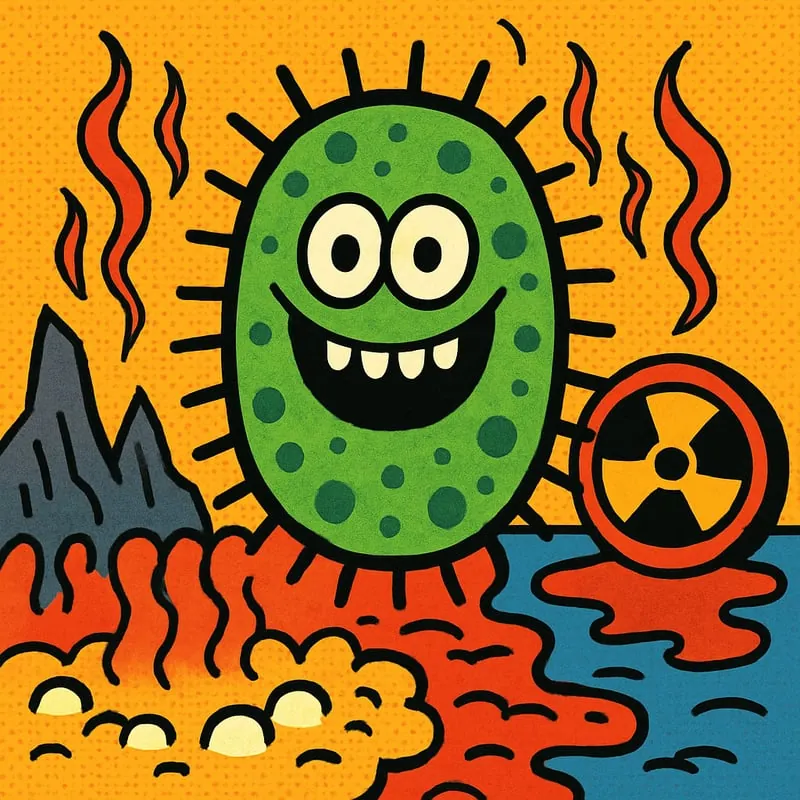
For a long time, biologists assumed there were strict limits to where life could exist: not too hot, not too cold, not too salty, not too radioactive. Then scientists started finding bacteria - called extremophiles - that don’t seem to care about any of those limits.
Some thrive in water above 250°F, around the boiling point or hotter, including in scalding hot springs and deep-sea vents. Others live in acid lakes with pH 0 - strong enough to dissolve nails. Deinococcus radiodurans (literally “strange berry that withstands radiation”) survives radiation levels 3,000 times higher than what would kill a human. Some bacteria live in the cooling pipes of nuclear reactors. Others live in nearly-frozen brine pockets inside Antarctic ice.
The discoveries of extremophiles have completely changed what scientists think is possible for life. They’ve expanded the search for life on other planets - Mars, Europa, Enceladus - to include environments we once dismissed as too harsh. If life can thrive in nuclear reactors, why not in the briny seas under an icy moon?