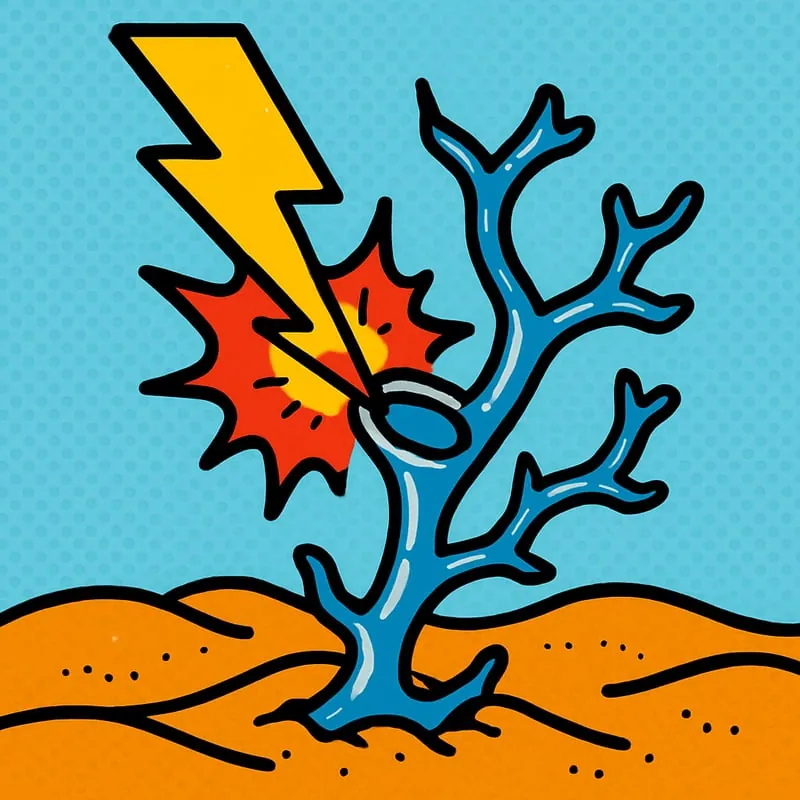
Lightning is incredibly hot - about 30,000°C, five times hotter than the surface of the Sun. When such a hot, fast bolt strikes the ground, it can do something amazing. If the ground is sandy enough, the lightning’s heat melts the sand instantly, fusing it into glass along the exact path the lightning took.
The resulting structures are called fulgurites (from the Latin fulgur, meaning lightning). They’re hollow, branching tubes of glass that form underground, following the path the electricity took as it discharged through the soil. Some are just a few centimeters long. The biggest ever found stretched over 15 feet.
Fulgurites have been studied for hundreds of years and provide a kind of physical fossil of lightning strikes. Each one captures a unique moment - the exact shape and direction of a particular bolt at the instant it hit the ground. Geologists can sometimes use them to study how often lightning historically struck specific regions, since fulgurites can survive in the ground for thousands of years.