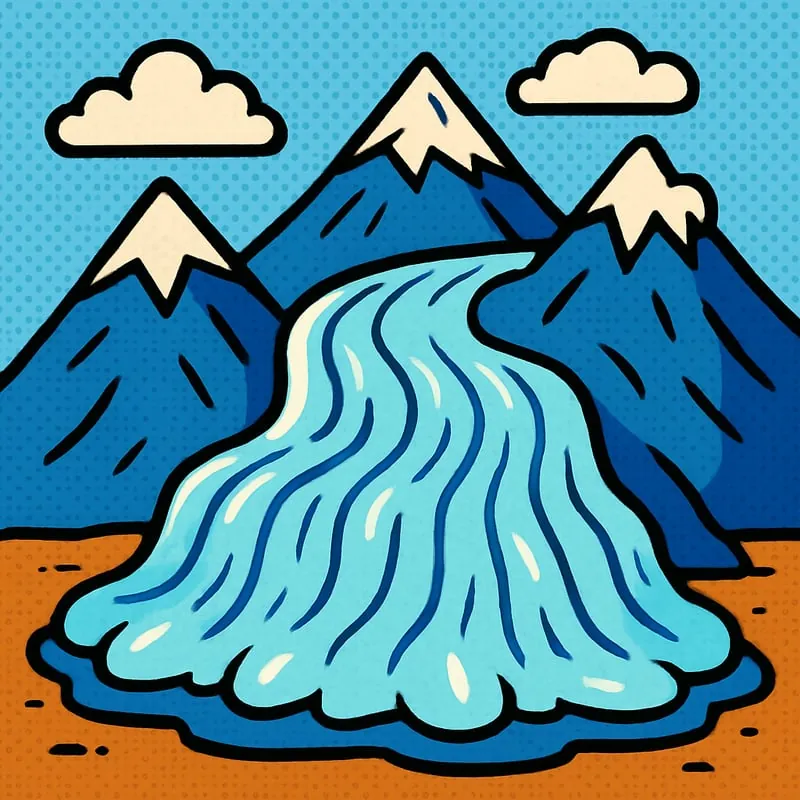
Glaciers look static - giant blocks of ice sitting on mountainsides or polar landscapes. They’re actually flowing. Slowly. Glacial ice, under its own enormous weight, behaves like an extremely viscous fluid, deforming and creeping downhill at speeds anywhere from a few feet to several hundred feet per year.
This is called glacial flow, and it’s been happening continuously for millions of years. As snow piles up at the top of a glacier, it compresses into ice and pushes the older ice below it downhill. At the bottom of the glacier, the ice eventually melts, breaks off into icebergs, or sublimates back into water vapor - completing the cycle.
The slow flow of glaciers has shaped a lot of Earth’s surface. Glaciers carve out U-shaped valleys (unlike the V-shaped valleys made by rivers). They scrape rocks against bedrock, leaving long parallel scratches called glacial striations that geologists can still see thousands of years later. Most of Canada, the Great Lakes, Norway’s fjords, and Yosemite Valley were all carved by glaciers during the last ice age. The Earth still has thousands of glaciers - though many are now shrinking faster than they’re growing, due to a warming climate.