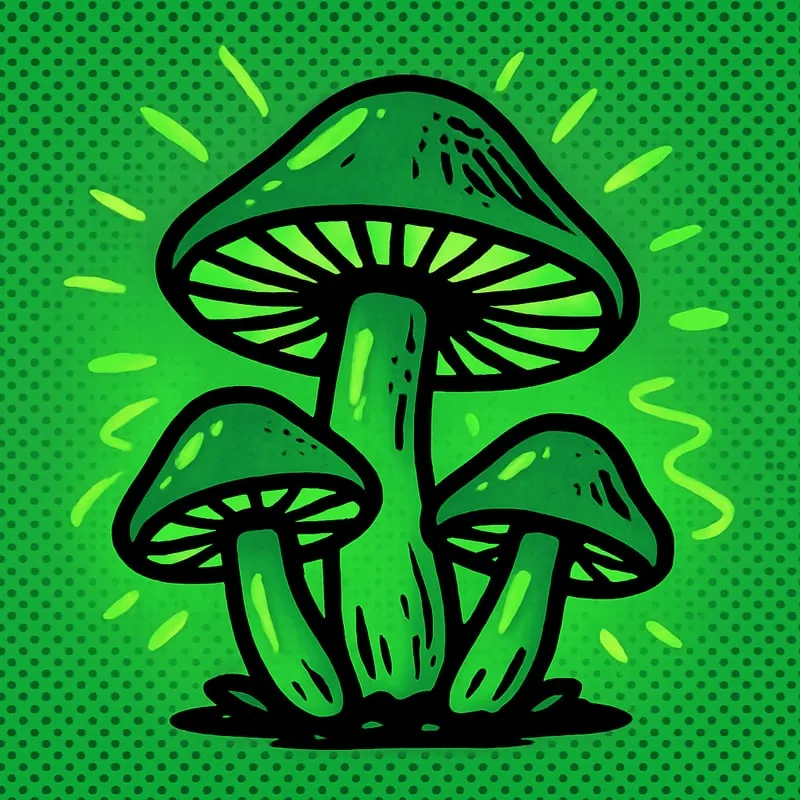
Walk through a damp forest at night and, in some parts of the world, you might spot a soft green glow seeping out of rotten logs or tiny mushrooms. Around 100 fungus species can actually produce their own light, a trick called bioluminescence. The eerie effect is also known as foxfire.
The light is made by the same kind of chemical reaction that fireflies and deep-sea creatures use. A molecule called luciferin reacts with oxygen and an enzyme called luciferase, releasing a faint green glow. Scientists still aren’t 100% sure why some fungi do this - one good theory is that the glow attracts insects to spread their spores at night.
Before electric lights, this gentle natural glow was actually useful. Soldiers in World War I reportedly read maps by the light of glowing wood. American submarines used foxfire chunks for low-level lighting. The mushrooms basically invented night-lights long before humans did.