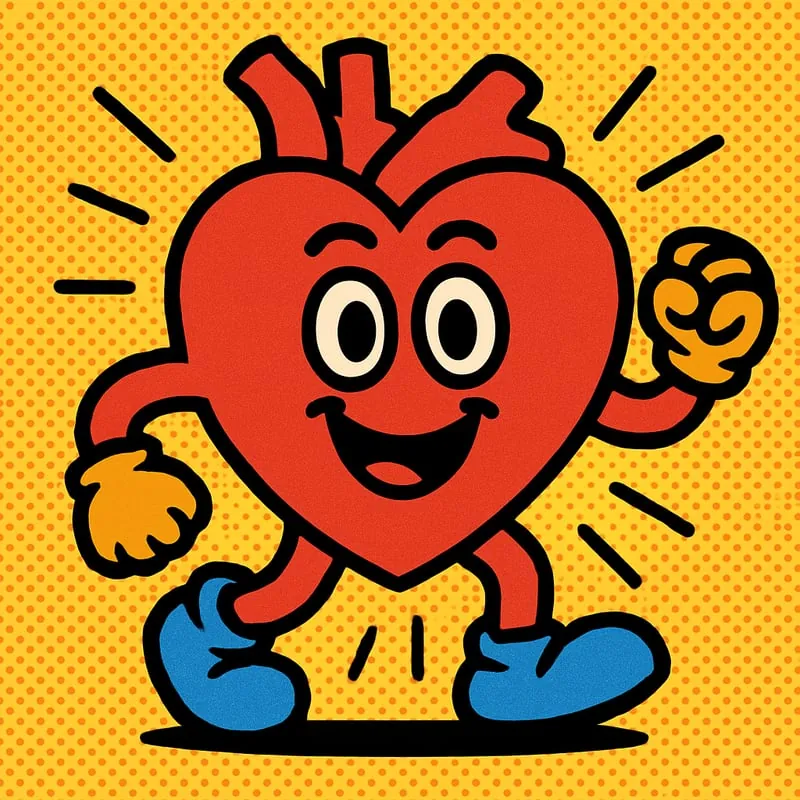
Your heart is a remarkable little engine. About the size of your fist, made of muscle unique to it, it beats roughly 100,000 times every single day. Over an 80-year lifetime, that adds up to around 2.5 billion beats, with no break, ever.
Each beat pumps about 2.4 ounces of blood. Multiply that out and your heart moves around 2,000 gallons of blood every single day - enough to fill an above-ground swimming pool. Over a lifetime, your heart pumps roughly 50 million gallons. The blood is circulating through about 60,000 miles of blood vessels - long enough to wrap around the Earth twice.
Cardiac muscle has a special property other muscles don’t have: it can keep working forever without getting fatigued the way arm or leg muscles do. It’s also self-regulating - your heart has its own electrical “pacemaker” cells that fire signals automatically, telling each beat when to happen. Your brain doesn’t need to remember to keep your heart pumping. It just goes.