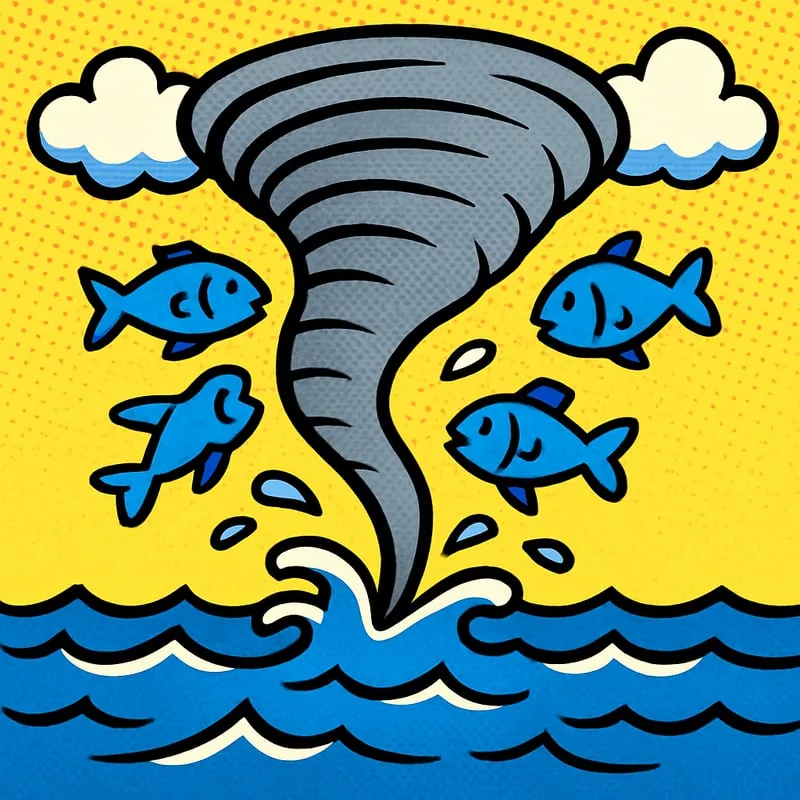
Hurricanes look like giant spinning donuts from satellite photos - and the hole in the middle is real. The center of a hurricane, called the eye, is a region of remarkable calm. The wind drops to almost nothing, the rain stops, and sometimes you can even see blue sky above.
The eye is typically 20-40 miles across (some are smaller, a few are much bigger). Around it spins the eyewall - the band of the storm with the strongest winds and heaviest rain. When a hurricane crosses over a city, the city experiences violent winds, then sudden calm as the eye passes overhead, then violent winds again from the other direction as the eyewall on the far side hits.
This eerie calm can be dangerous. People not familiar with hurricanes have sometimes stepped outside during the eye, assuming the storm has passed. Half an hour later, they’re caught in the back of the eyewall with the worst winds blowing from the opposite direction. Forecasters drill this into people in hurricane zones: if it suddenly goes calm, don’t go outside - the storm is only halfway done.