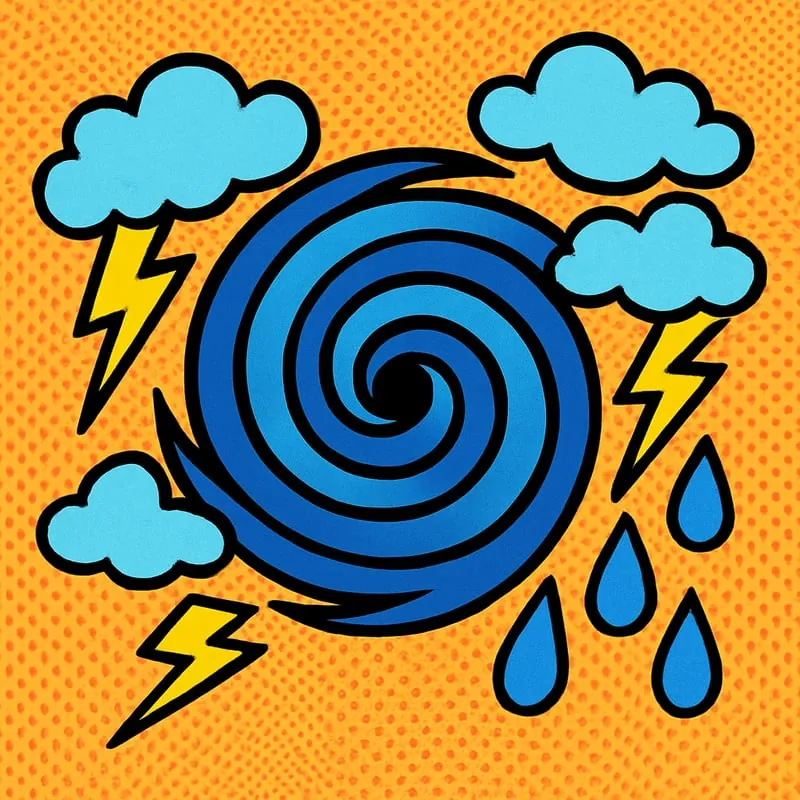
Big tropical storms are some of the most powerful weather events on Earth. You might hear them called hurricanes, typhoons, or cyclones - but those names all describe the same thing. The only difference is the part of the world where the storm forms.
In the Atlantic Ocean and Eastern Pacific (around the Americas), they’re called hurricanes. In the Western Pacific (Japan, Philippines, China), the same kind of storm is called a typhoon. In the Indian Ocean and around Australia, they’re called cyclones. Scientifically, all of them are properly known as tropical cyclones.
Despite the different names, they all form the same way. Warm ocean water - at least 80°F - heats the air above it. That warm air rises, creating low pressure that pulls in more air, which gets heated and rises too. The Earth’s rotation makes the whole system spin (counterclockwise in the Northern Hemisphere, clockwise in the Southern). Once the rotation gets strong enough and the winds hit a certain speed, it earns its name. Same storm, different ocean, three different titles.