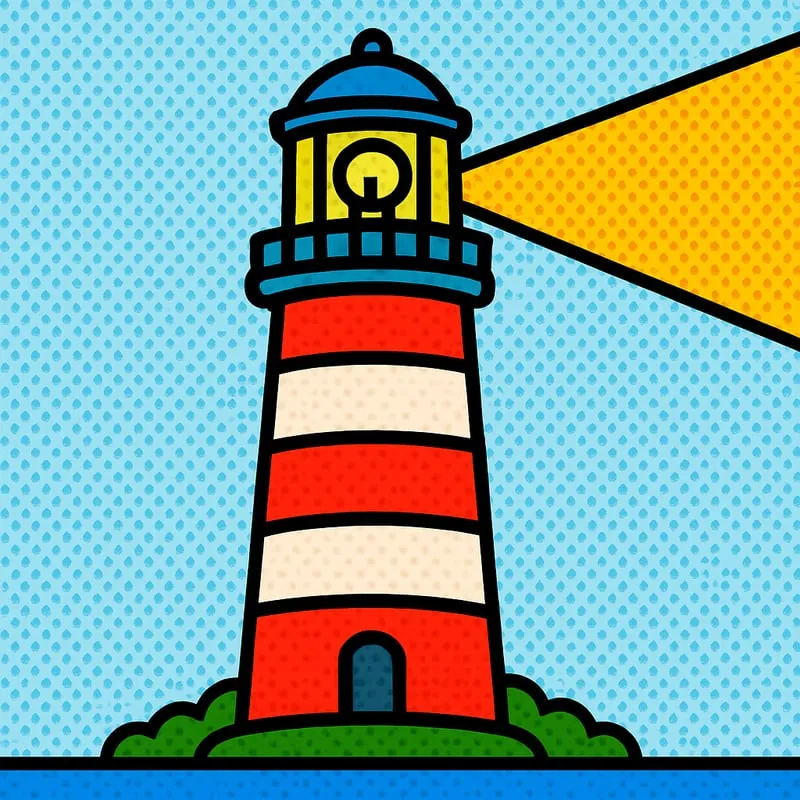
Lighthouses are some of the simplest yet most important navigation tools humans ever invented. A bright light at the top of a tall tower warns ships of rocks, reefs, harbors, and headlands. The earliest ones used wood fires. The Tower of Hercules in Spain has been guiding ships since Roman times - about 1,900 years - and is still working today.
The big leap came in 1822, when French physicist Augustin-Jean Fresnel invented a special lens made of concentric glass rings. The Fresnel lens grabbed light that would normally scatter and bundled it into a tight beam. A single bulb could suddenly throw a beam visible from over 30 miles at sea, replacing the bonfires keepers used to feed every night.
Most lighthouses also flash in a unique pattern so sailors can tell them apart. One might flash every 4 seconds, another every 12, with longer or shorter pauses. By matching a flash pattern against a chart, a captain instantly knows which point of land they’re seeing. Today most lighthouses run automatically - the famous lonely keepers are mostly retired.