The Panama Canal cuts across the narrowest part of Central America, connecting the Atlantic and Pacific oceans. Without it, ships traveling between New York and San Francisco have to sail thousands of miles around the southern tip of South America. The 51-mile canal slashes weeks off the journey. About 5% of world trade by sea passes through it.
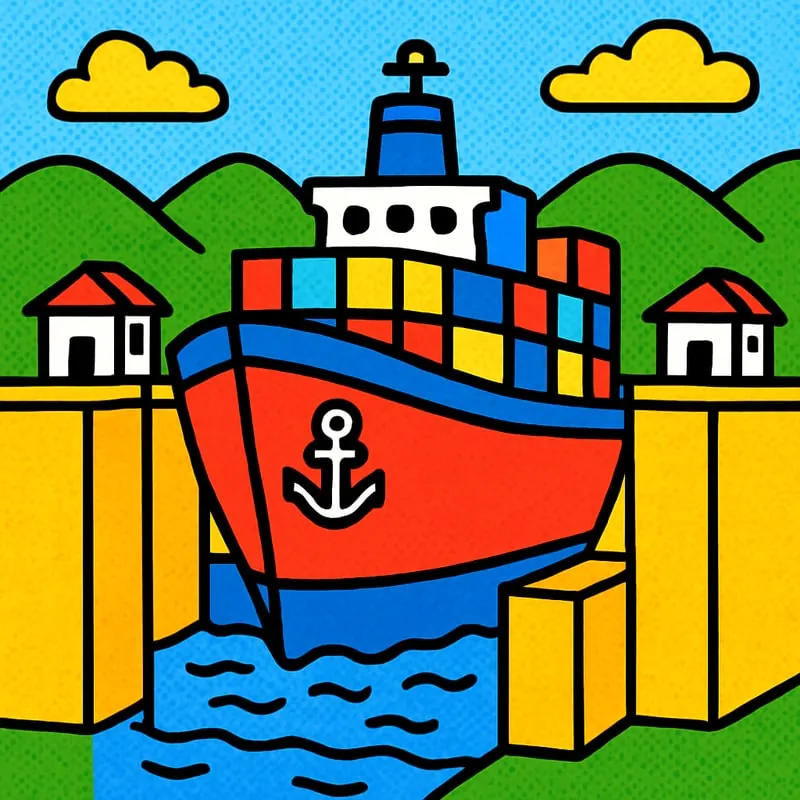
The tricky bit is that Panama isn’t flat. Mountains run through the middle, and the canal would have to be insanely deep to dig straight through them. So engineers built giant water-filled chambers called locks. Ships enter a lock, gates close, and water either floods in to lift the ship higher or drains out to lower it - by as much as 85 feet over the journey.
The water comes from a huge artificial lake in the middle of the canal, fed by tropical rain. Each ship that passes uses around 52 million gallons of fresh water, enough to fill 80 Olympic swimming pools, which then drains into the sea. A wider new set of locks opened in 2016 to handle today’s giant container ships.