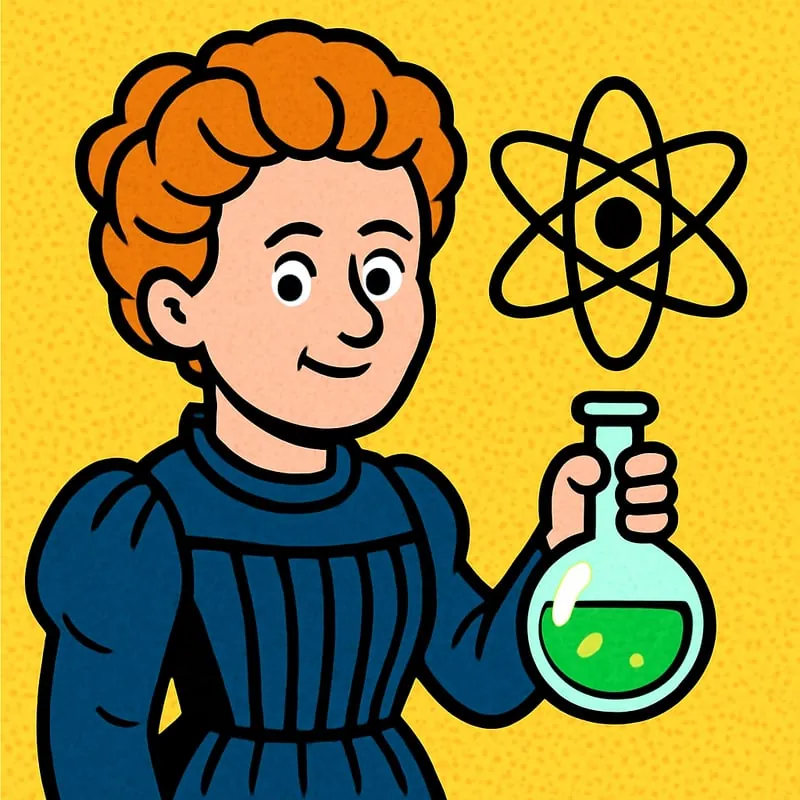
Marie Curie grew up in Poland at a time when girls weren’t allowed to go to university. She moved to Paris, lived on tea and bread, and graduated top of her physics class. Together with her husband Pierre, she started studying mysterious rays coming out of certain rocks.
Working in a leaky shed, they boiled down tons of a black mineral called pitchblende. Hidden inside, they found two brand-new elements: polonium (named for her homeland) and radium. The Curies invented a word for what these elements were doing - radioactivity.
Marie won her first Nobel Prize in 1903, sharing it with Pierre. After he died in a street accident, she kept working and won a second Nobel in 1911 - this time all by herself, and in a totally different science. No one else has ever matched that double.