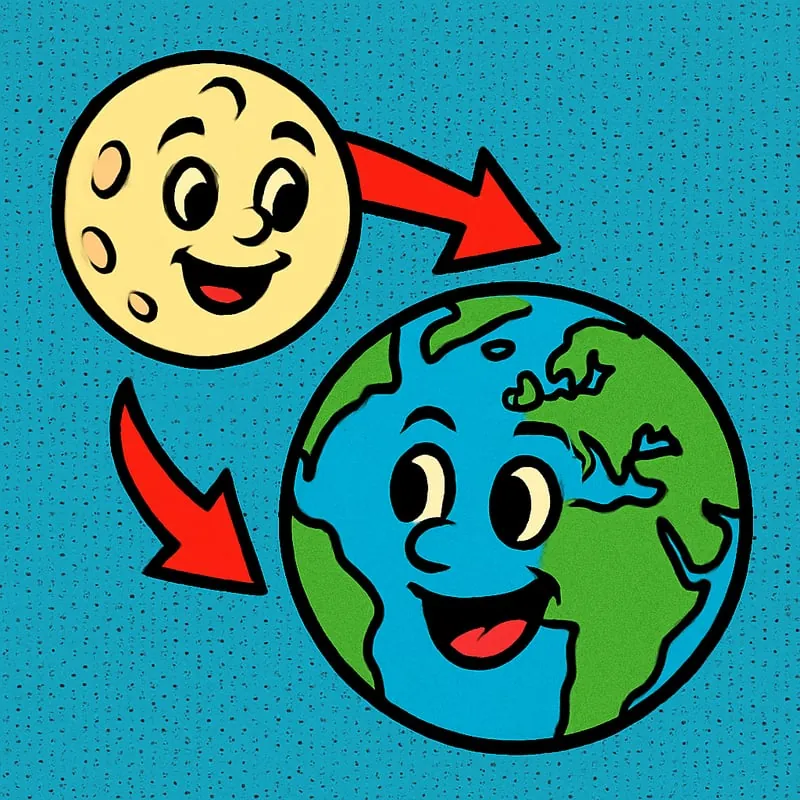
The Moon’s distance from Earth feels permanent - we always see it the same size in the sky. But the Moon is actually moving away from us, very slowly. Right now it’s drifting outward by about 3.8 centimeters (1.5 inches) every year. We’ve measured this with extreme precision using laser reflectors that Apollo astronauts left on the Moon’s surface, which scientists on Earth can bounce light off and measure the round trip down to a few millimeters.
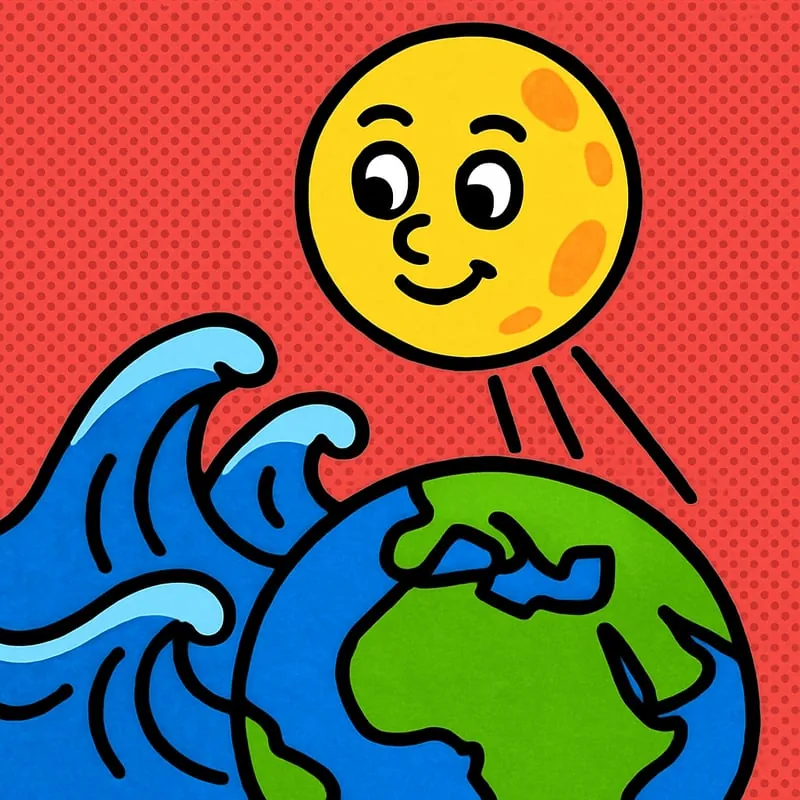
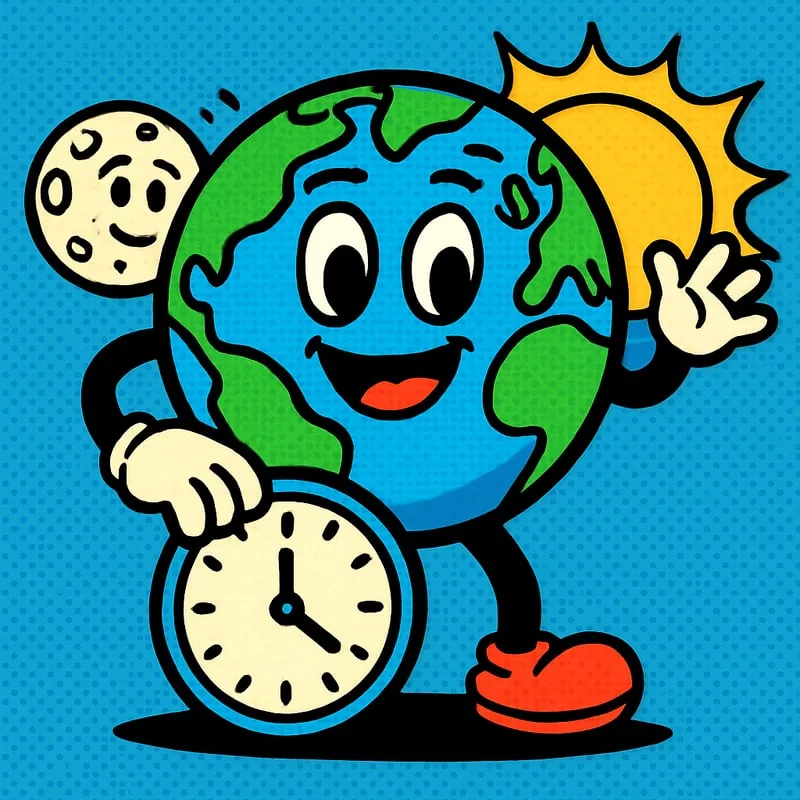
The reason for the drift is tides. The Moon’s gravity pulls on Earth’s oceans, causing the tides. But Earth’s rotation is slightly faster than the Moon’s orbit, so the tidal bulge gets dragged a bit ahead of the Moon. That ahead-bulge pulls the Moon forward, giving it a tiny gravitational nudge that pushes it outward. Meanwhile, the same effect slows Earth’s rotation, lengthening our days by about 2 milliseconds per century.
So the Moon used to be much closer. Right after it formed about 4.5 billion years ago, it may have been only 24,000 miles from Earth - about ten times closer than today. From the ground, it would have filled an enormous part of the sky. Earth’s days were only 6 hours long. Ocean tides were enormous, possibly hundreds of meters high. Both Earth and the Moon have changed enormously over billions of years.