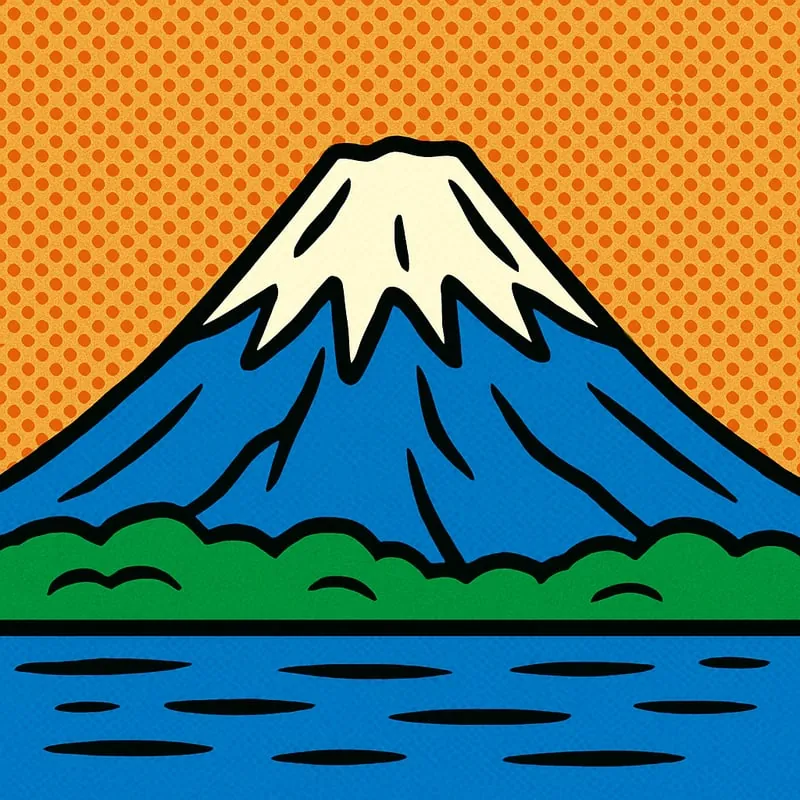
Mount Fuji rises 3,776 metres above central Japan in an almost perfect cone. That shape isn’t an accident. Fuji is a stratovolcano built from many smooth, evenly spread eruptions over the last 100,000 years, each one adding a fresh layer of ash and lava down all sides equally.
Fuji is still considered active. Its last eruption, in 1707, dumped ash on Tokyo (then called Edo) 100 kilometres away. Scientists watch it constantly because a big eruption today would affect millions of people.
For centuries Fuji has been sacred in Japan, treated as a goddess and climbed by pilgrims. The official climbing season runs from July to September - outside those months, the snow on top makes the route truly dangerous.