The Namib desert hugs the southwest coast of Africa, stretching about 2,000 kilometres along Namibia. It’s been dry for at least 55 million years, making it the oldest continuous desert anywhere on Earth.
The Namib gets almost no rain. Instead, plants and animals survive on thick fog that rolls in from the cold Atlantic Ocean. Beetles tip themselves upside-down so droplets run down their backs into their mouths, and a strange plant called welwitschia uses huge leathery leaves to grab moisture from the air.
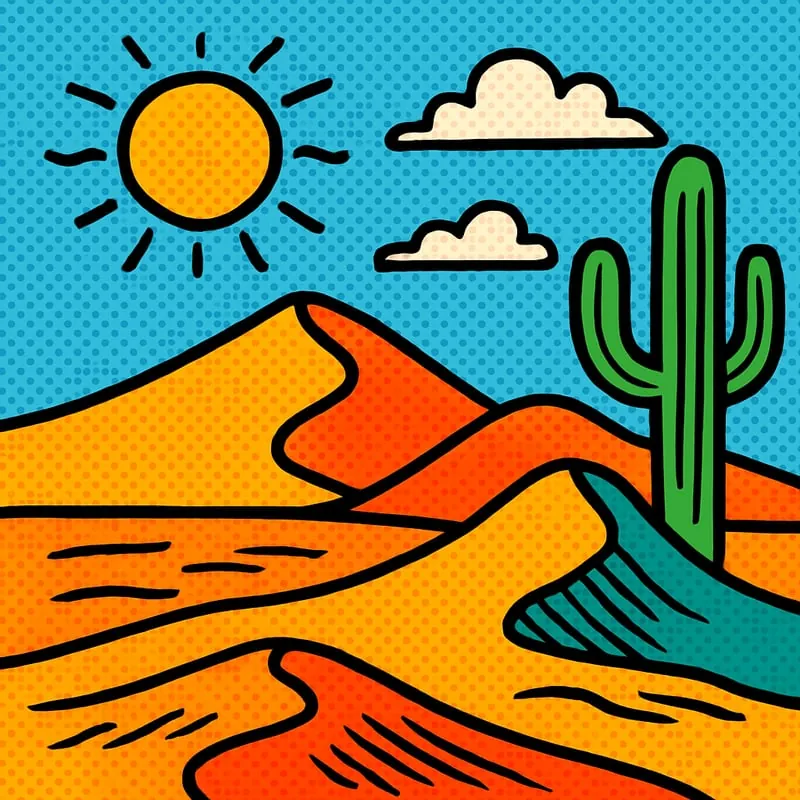
The desert also has the tallest sand dunes on the planet - some over 380 metres high. The dunes glow bright orange because their grains have been rolling around for so long that iron in the sand has oxidised, basically rusting the whole desert red.