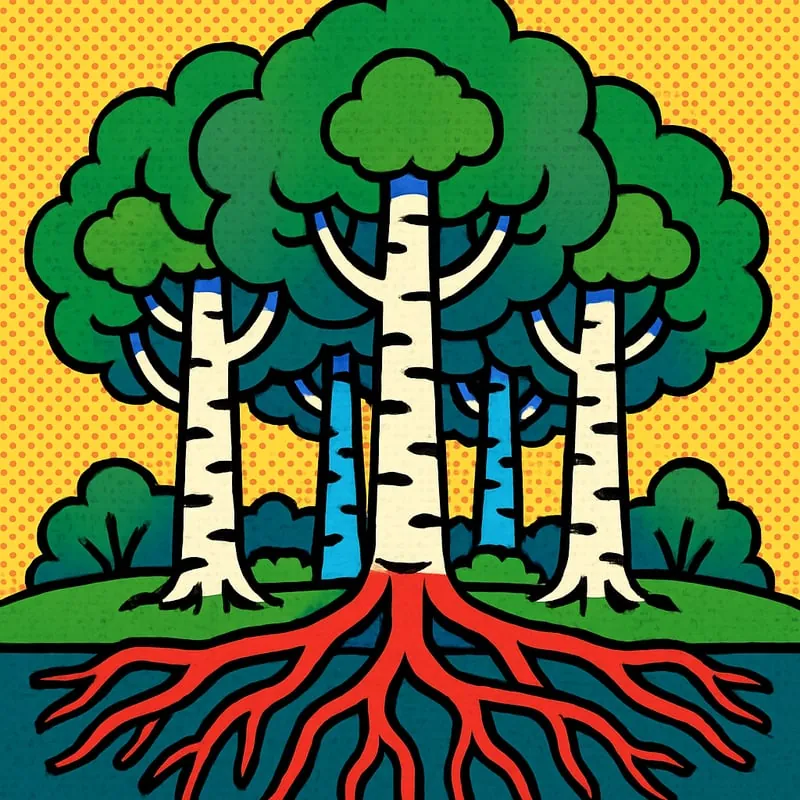
In Utah’s Fishlake National Forest stands a quiet quaking aspen grove called Pando, which means “I spread” in Latin. From a distance, it looks like a normal forest - about 47,000 separate aspen trees covering 106 acres. But every one of those trees is genetically identical, and they’re all connected underground through a single, gigantic root system. Together they form one organism.
That makes Pando the largest single living organism on Earth by mass. It weighs an estimated 6 million kilograms - about 8,000 average humans put together. It’s also believed to be one of the oldest, with the root system estimated to be 80,000 years old or more, though individual trunks die and are replaced over time.
The aspens reproduce mostly by sending up new shoots from their shared roots, rather than spreading seeds. So even when a single tree dies, the larger organism keeps living. Sadly, Pando is now under stress: deer and elk are eating the new shoots faster than they can grow, and parts of the forest are slowly dying back. Conservationists are working to fence off areas to give the world’s biggest organism a chance to keep going.